

How Potassium Humate Helps Farmers Get Bigger Yields Every Season
Farming keeps getting tougher. Fertilizer costs are through the roof, rains come late or not at all, and soils that used to produce great crops now look tired and compacted. In the middle of all this, one simple black powder has been quietly changing the game for farmers on every continent: potassium humate.
It’s not a new chemical. It’s not expensive. It’s not complicated to use. Yet season after season, farmers who add potassium humate to their program see heavier grain in the combine, more pods on the soybean plants, bigger potatoes in the row, and fuller tomato trays at harvest.
First, What Exactly Is Potassium Humate?
Think of it as nature’s own soil booster. Potassium humate comes from ancient layers of decayed plants (called leonardite) that have been buried for millions of years. Companies dig this soft, brownish-black material, grind it up, and treat it with potassium to make it fully soluble in water.
When you open a bag, potassium humate looks like shiny black coffee grounds or small flakes. One handful dissolved in water turns a whole drum dark tea-color – and that dark color is packed with natural humic acids, fulvic acids, and potassium.
Good-quality potassium humate usually contains:
- 70–90 % humic + fulvic acids (the parts that do all the work)
- 10–15 % potassium (as K₂O)
- Tiny amounts of natural iron, zinc, manganese, and other minerals that plants love
It has no smell, doesn’t burn plants, and is completely safe to handle.
How Potassium Humate Makes Crops Produce More
It doesn’t “force” the plant like some synthetic growth regulators. Instead, it removes the roadblocks that hold crops back. Here are the main things it does:
- Unlocks nutrients that are stuck in the soil Every year you put phosphorus, zinc, iron, and manganese in the ground, but a lot gets tied up and the plant never sees it. Potassium humate wraps around those nutrients and carries them straight to the roots.
- Grows massive root systems Farmers who dig up treated plants are always surprised – the roots are longer, thicker, and have way more fine hairs. More roots = more feeding = heavier harvest.
- Holds rainwater in the soil longer Just 100 kg/ha starts gluing soil particles together into crumbs. Those crumbs let air and water move better and stop the topsoil from baking hard after rain.
- Keeps plants calm when the weather turns bad Drought, extreme heat, salty water, or cold nights all stress plants and slash yields. Potassium humate works like a natural shield – plants stay greener longer and keep filling grain or fruit even when conditions are rough.
- Makes every bag of fertilizer go further When you mix or apply potassium humate with your normal N-P-K, plants absorb 20–40 % more of what you paid for. Many farmers now cut their fertilizer rate by 15–30 % and still get the same or higher yield.
- Feeds the good bugs in the soil Earthworms love it. Beneficial bacteria and mycorrhizal fungi explode in numbers. Those tiny helpers fix free nitrogen from the air, break down old crop residue faster, and fight off root diseases.
- Improves fruit and grain quality Bigger size, better color, higher sugar content in fruits, more protein in wheat and soybean – buyers pay extra for that.
- Builds healthier soil for next year and the year after Unlike chemical fertilizers that disappear, a little humate stays behind and slowly turns into real organic matter. After 3–5 years of regular use, many farmers say their soil feels “alive” again.
What Farmers Are Actually Harvesting
| Crop | How Farmers Normally Apply It | Average Extra Yield Reported | Where These Results Are Common |
|---|---|---|---|
| Wheat | 80–150 kg/ha soil + 1–2 foliar sprays | 10–22 % (400–900 kg/ha extra) | India, Pakistan, Turkey, Australia, Canada, Russia |
| Rice (puddled or direct) | 60–150 kg/ha basal + seedling dip | 12–28 % (0.8–2.0 tons/ha extra) | India, Vietnam, Bangladesh, Philippines, Indonesia |
| Maize / Corn | 100–250 kg/ha + seed treatment | 15–35 % (1.0–3.5 tons/ha extra) | USA, Brazil, Argentina, South Africa, Zambia |
| Soybean | 60–120 kg/ha + rhizobium + foliar | 10–25 % (300–700 kg/ha extra) | Brazil, USA, Argentina, Paraguay, India |
| Sugarcane | 150–400 kg/ha in furrow or ratoon | 20–50 tons/ha extra cane | India, Brazil, Thailand, Pakistan, Mexico |
| Cotton | 100–200 kg/ha + 3 foliar sprays | 12–30 % more lint | India, Pakistan, USA, Turkey, China |
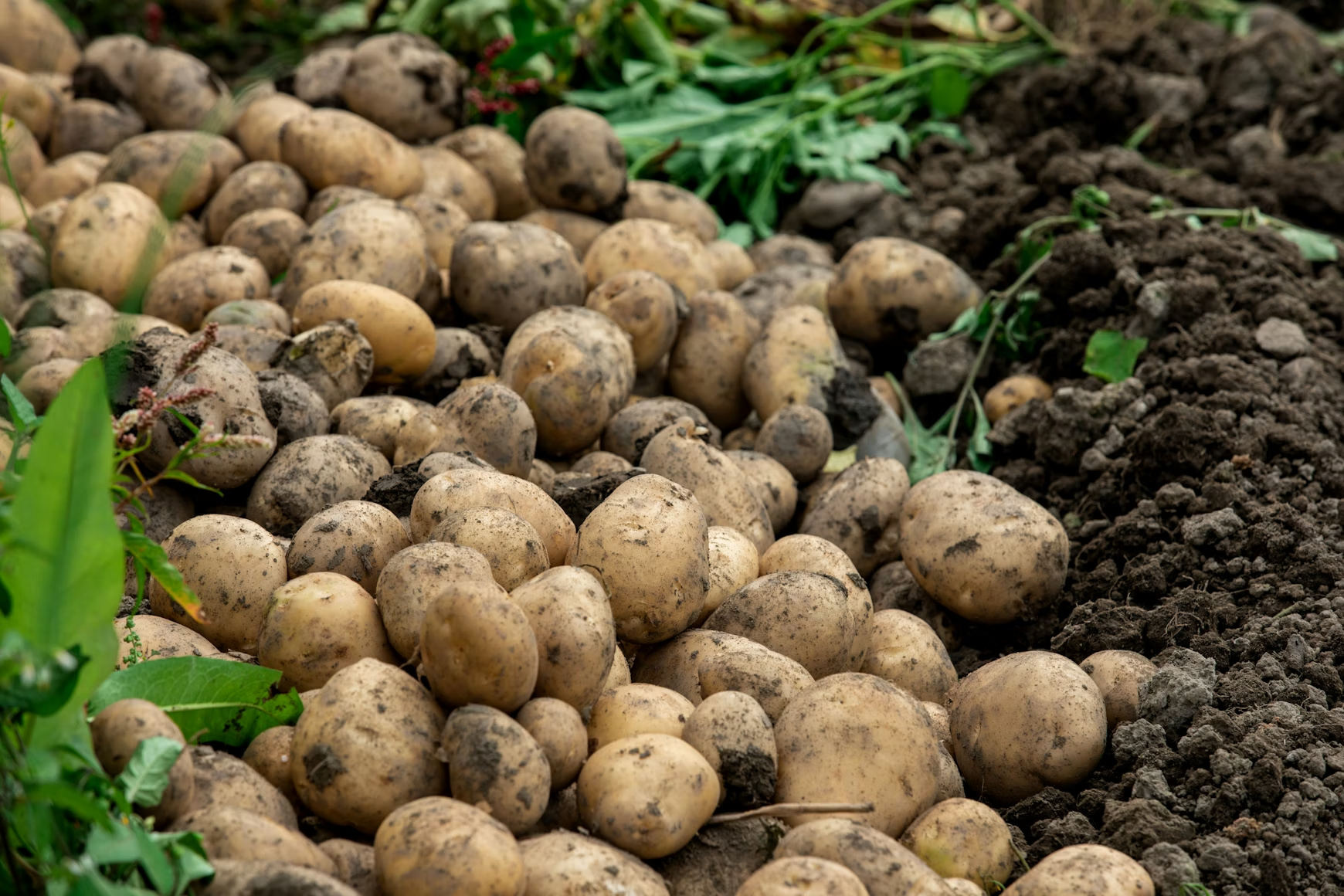
| Potato | 150–300 kg/ha + drip or banding | 15–40 % (4–12 tons/ha extra) | India, Netherlands, Peru, Egypt, USA |
| Tomato (open field) | 100–200 kg/ha + weekly fertigation/foliar | 20–50 % more marketable fruit | Italy, Spain, Turkey, Mexico, Morocco, India |
| Onion & Garlic | 120–250 kg/ha + drip | 18–35 % bigger bulbs | India, China, Egypt, Spain |
| Sunflower | 80–150 kg/ha | 15–30 % more seed | Ukraine, Russia, Argentina, Romania |
| Sorghum / Millet | 60–120 kg/ha | 20–40 % in dry areas | India, Nigeria, Sudan, Mali |
| Chickpea | 50–100 kg/ha + seed treatment | 15–32 % more pods | India, Australia, Canada, Turkey |
| Peanut / Groundnut | 80–150 kg/ha | 18–35 % bigger pods | India, China, USA, Nigeria |
| Coffee | 200–400 kg/ha around trees + foliar | 15–30 % more cherries | Brazil, Vietnam, Colombia |
| Apple & Citrus | 150–300 kg/ha + fertigation | 12–25 % bigger fruit, better color | Spain, USA, South Africa, Turkey |
| Grapes (table & wine) | 100–200 kg/ha + foliar | 15–35 % higher bunch weight | India, Italy, Chile, Australia |
These are not lab numbers – they come from thousands of farmer fields and large demonstration plots over the last 10–15 years.
Best Ways to Use Potassium Humate on Your Farm
You have lots of choices. Most farmers combine two or three methods for the biggest bang:
- Broadcast or band with basal fertilizer Spread 80–200 kg/ha right before or during planting. Mixes easily with urea, DAP, or complex fertilizers.
- Seed treatment (the cheapest and earliest boost) Wet the seed with a 0.2–0.5 % solution or mix 300–600 grams powder per 100 kg seed. Works wonders on wheat, maize, soybean, pulses.
- Drip irrigation or pivot fertigation Dissolve 20–60 kg/ha and inject in 4–8 splits during the season. Vegetables, sugarcane, and orchards love this.
- Foliar spraying (fastest visible response) 2–4 sprays of 0.2–0.4 % solution (2–4 kg/ha each time). Spray early morning or evening. Plants turn dark green in 3–5 days.
- Seedling root dip before transplanting Rice, tomato, chili, tobacco farmers dip trays or bundles in 0.3 % solution for 30–60 minutes. Reduces transplant shock dramatically.
- Mix with farmyard manure or compost Add 3–10 kg per ton of manure. The manure becomes “super manure” – nutrients release slowly and evenly.
- Side-dress or top-dress with nitrogen Many maize and sugarcane farmers mix potassium humate with their second or third urea application – cuts nitrogen loss and boosts uptake.
How Much Does Potassium Humate Really Cost – And How Fast Do You Get the Money Back?
- Global price range today: USD 550–1,300 per ton (cheaper in big bags, more expensive in small retail packs)
- Normal use per crop: 80–200 kg/ha (rarely more than 300 kg)
- Cost per hectare per crop: USD 45–220
- Extra harvest value: usually USD 180–800 per hectare (depending on crop price that year)
Even in a bad year, most farmers get their money back 3–5 times. In a good year with high crop prices, it can be 10–20 times.
Is It Safe?
- No toxicity to humans, livestock, bees, fish, or earthworms
- Approved for organic farming worldwide (EU, USDA-NOP, India NPOP, Japan JAS, Canada COR, Australia ACO, etc.)
- Can be mixed with almost everything: chemical fertilizers, fungicides, insecticides, herbicides, biologicals
- Zero waiting period before harvest
- Leaves no harmful residues
Pro Tips from Farmers Who Have Been Using It for Years
- Always start with seed treatment or early soil application – that sets the foundation for the whole season.
- In salty or sodic fields, go straight to 200–300 kg/ha the first year. You’ll see the difference in weeks.
- Keep records! Treat half a field one way and half with potassium humate the first year. The photos you take will sell it to you forever.
- Use clean water to dissolve it. Very hard water needs a little extra stirring.
- Store bags in a dry shed – it lasts for years.
- After 2–3 seasons, many farmers notice they can drop fertilizer rates even more because the soil is getting healthier.
The Bottom Line – Straight Talk
Potassium humate won’t turn poor land into paradise overnight, but it is the single easiest, safest, and most profitable change thousands of farmers have made in the last decade.
Potassium Humate costs pennies per day per hectare, works on every crop, fits every farming system (organic, conventional, no-till, irrigated, rainfed), and starts paying you back the very first season.
If you are tired of spending more on inputs while yields stay flat, do yourself a favor: buy one ton, try it on a few fields or one full crop cycle, and watch what happens.
Nine times out of ten, you’ll be ordering a truckload for next season.
More weight in the wagon, more money in your pocket, and healthier soil for your kids – all from one simple black powder.
That’s the potassium humate promise, and it’s being kept on farms all over the world right now.


Leave a Reply