
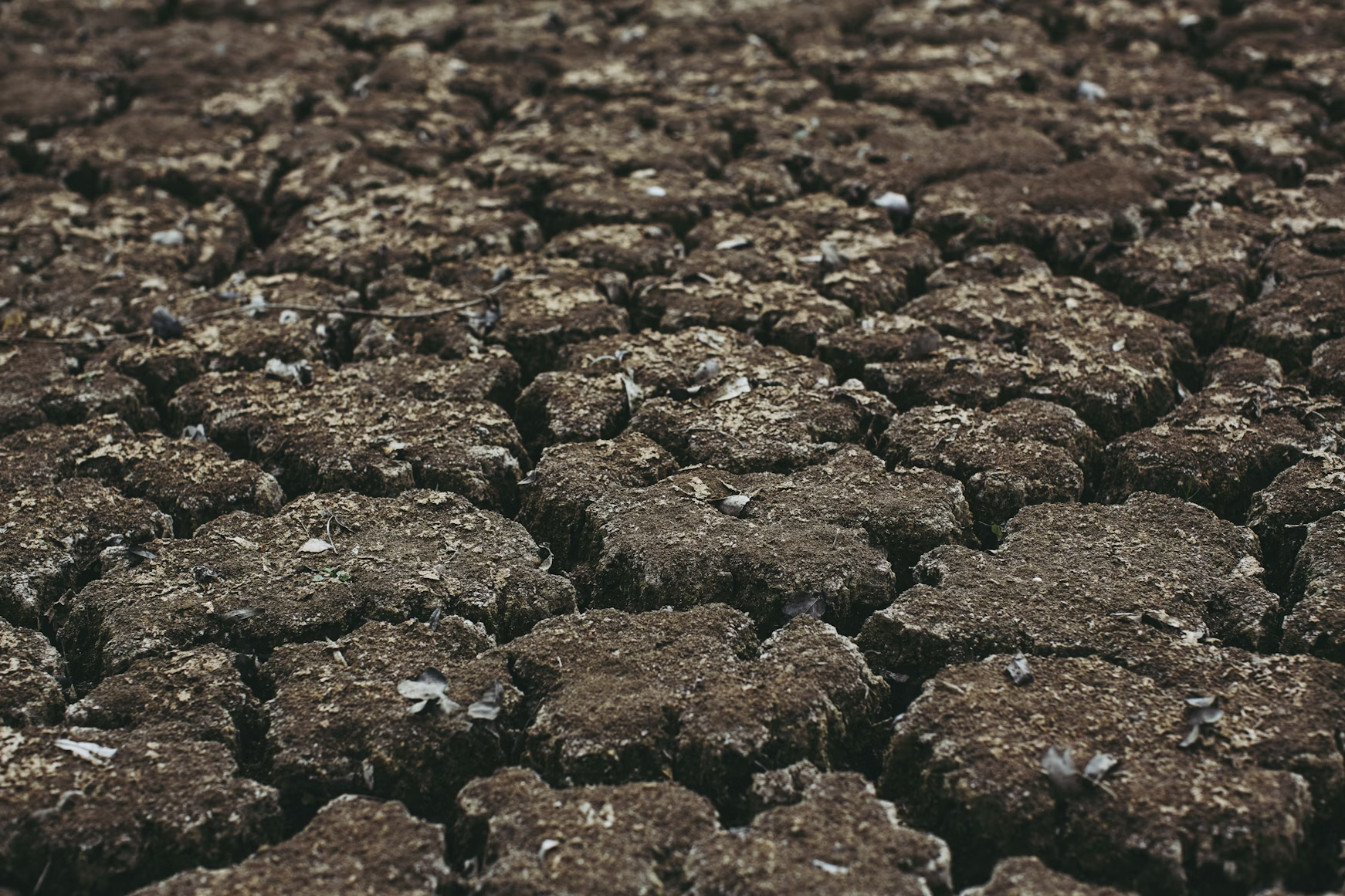

In modern agriculture and gardening, the term “soil amendment” is mentioned almost daily. Among the countless options available, one stands out for its natural origin, versatility, and proven long-term benefits: humic acid. Used for decades by progressive farmers and now increasingly popular among home gardeners, humic acid is widely regarded as one of the most effective and sustainable soil amendments on the market today.
What Makes Humic Acid a True Soil Amendment?
A soil amendment is any material added to improve the physical, chemical, and biological properties of soil. Humic acid excels in all three areas:
1. Physical Improvement – Better Soil Structure
- Increases soil aggregation (formation of stable crumbs)
- Reduces soil compaction and crusting
- Improves aeration and drainage in clay soils
- Enhances water infiltration and moisture retention in sandy soils
- Prevents erosion and runoff
Result: Roots can breathe and grow deeper with less effort.
2. Chemical Improvement – Nutrient Unlocker and Buffer
- Dramatically raises the Cation Exchange Capacity (CEC) of soil
- Chelates (binds) micronutrients such as iron, zinc, manganese, and copper, preventing them from becoming locked up
- Reduces nutrient leaching, especially in rainy seasons or sandy soils
- Buffers soil pH extremes, making nutrients more available across a wider pH range
- Decreases toxicity from aluminum and heavy metals in acidic soils
Result: Plants get more nutrition from the same amount of fertilizer.
3. Biological Improvement – Feeding the Soil Food Web
- Serves as a high-quality carbon source for beneficial bacteria, fungi, and actinomycetes
- Stimulates mycorrhizal fungi colonization
- Enhances microbial enzyme production and nutrient cycling
- Suppresses certain soil-borne pathogens indirectly by promoting a healthy microbiome
Result: Soil becomes alive and self-sustaining over time.
Where Does Quality Humic Acid Come From?
The most concentrated and effective sources are ancient oxidized deposits:
- Leonardite (highly oxidized lignite) – the gold standard (60–80 % humic acid content)
- Peat and sapropel deposits
- High-quality compost and vermicompost (lower concentration but still beneficial)
Avoid low-grade lignite or products with less than 40 % humic substances if you want real results.
Practical Ways to Use Humic Acid as a Soil Amendment
- Pre-planting Soil Incorporation
- Broadcast 200–600 kg/ha of granular or powder humic acid and till into the top 15–20 cm.
- Ideal for new gardens, raised beds, or field preparation.
- Side-Dressing or Top-Dressing
- Apply 100–300 kg/ha around existing plants and lightly rake in.
- Excellent for orchards, vineyards, and perennial crops.
- Compost and Potting Mix Enhancement
- Add 1–5 % by volume when preparing homemade compost or potting soil.
- Turns ordinary mixes into “super soil.”
- Liquid Applications (Highly Effective)
- Dilute soluble humic acid powder or liquid concentrate and apply through irrigation (fertigation) or as a soil drench every 3–6 weeks.
- Typical rate: 5–20 liters/ha of concentrated product.
- Restoration of Degraded or Saline Soils
- Higher rates (500–1000 kg/ha initially) combined with organic matter can reclaim salty, sodic, or exhausted land within 1–3 seasons.
Real-World Results Documented by Farmers Worldwide
- Rice farmers in Southeast Asia: reduced fertilizer use by 20–30 % while maintaining or increasing yield
- Greenhouse tomato growers in Europe and North America: 15–25 % higher marketable fruit with fewer blossom-end rot issues
- Turf managers (golf courses, sports fields): deeper root systems, reduced water needs, darker green color with less nitrogen
- Organic vegetable farms: faster recovery after heavy rain and fewer cases of nutrient deficiency symptoms
Long-Term Benefits of Regular Use
After 2–3 years of consistent application:
- Soil organic carbon levels rise steadily
- Bulk density decreases (soil becomes lighter)
- Earthworm populations explode
- Fertilizer requirements often drop by 25–50 %
- Soil resilience to drought and disease increases dramatically
Safety and Certification
Humic acid from leonardite is approved for use in organic farming by:
- USDA National Organic Program (USA)
- EU Organic Regulation
- JAS (Japan Agricultural Standard)
- Most other global organic standards
It is completely non-toxic to humans, animals, pollinators, and the environment.
Best Sources and Product Tips
Look for products extracted from leonardite (not low-grade lignite or peat). Good indicators of quality:
- Minimum 60–80 % humic acid content (dry basis)
- 95–100 % water solubility for liquids and powders
- Dark black color, no sand or grit
Final Thoughts
In an era when soils around the world are becoming depleted, compacted, and less fertile, humic acid offers a simple, cost-effective, and natural solution. Humic acid doesn’t just feed the plant — it rebuilds the foundation beneath it.
Whether you manage a few pots on a city balcony or thousands of hectares of farmland, adding humic acid as a regular soil amendment is one of the smartest investments you can make in long-term soil health and sustainable productivity.
Your soil will thank you — and your plants will show it.

Leave a Reply