
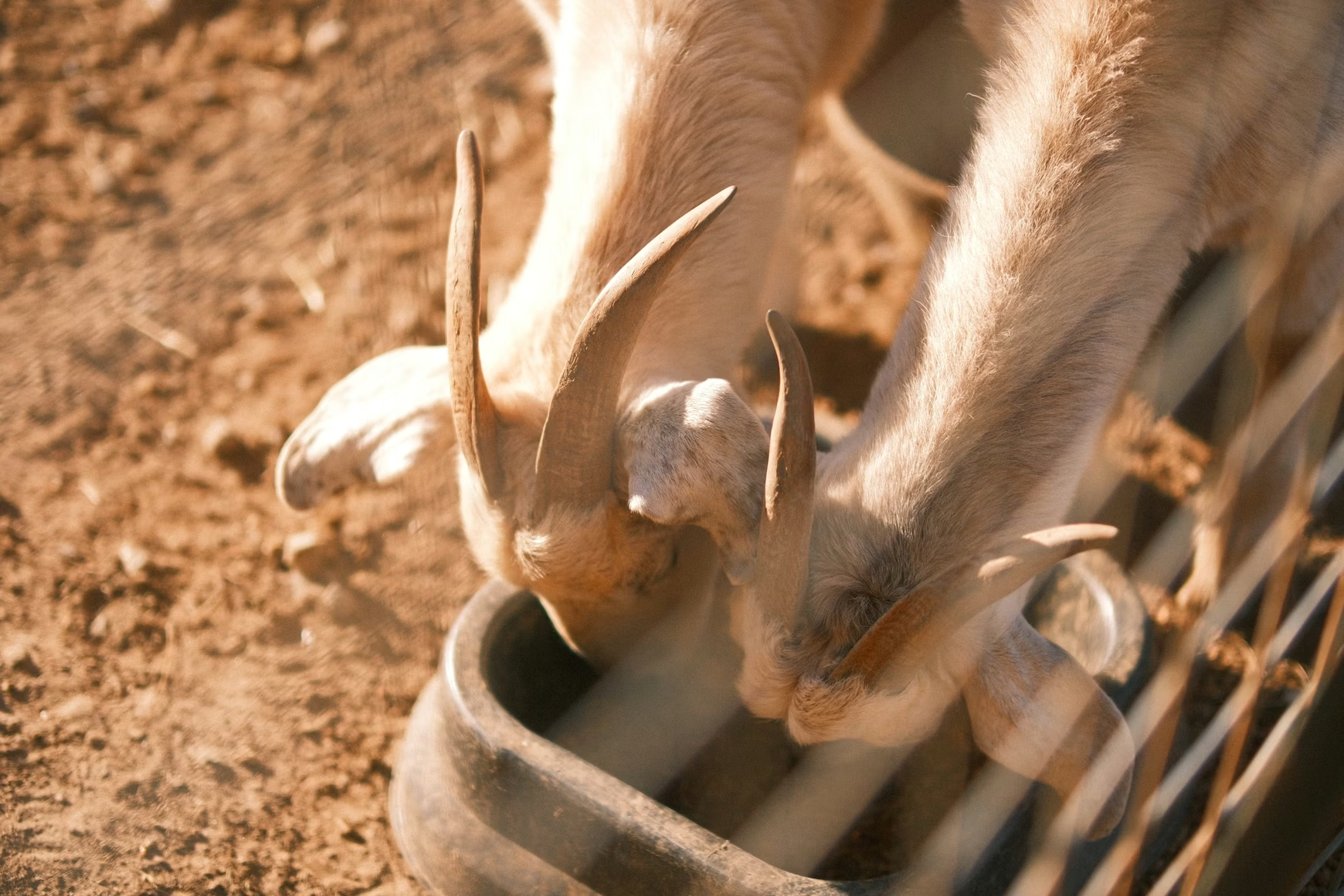

Most people know humic acid as something for plants and soil. But in the last 15–20 years, thousands of farmers, feed mills, and even big veterinary universities have started putting small amounts of humic acid into animal feed – for cows, pigs, chickens, goats, sheep, fish, and even pets.
Why? Because humic acid does some surprisingly useful things inside the animal’s stomach and intestines, and the results show up in healthier animals and lower vet bills.
What is the humic acid used in animal feed?
It is the same natural black-brown substance that comes from ancient leonardite deposits (very old oxidized coal layers full of decomposed plants). The product for animals is finely ground into powder or made into liquid, purified so there are no heavy metals, and then mixed into feed at very low rates – usually 0.1 % to 1 % of the total ration (that means 1–10 kg per ton of feed).
What does it actually do inside the animal?
- Binds toxins and bad stuff in the gut Mold toxins (aflatoxin, zearalenone, DON, T-2, ochratoxin…) are the biggest hidden problem in grain and silage all over the world. Humic acid acts like a sponge – it grabs these mycotoxins in the stomach and intestines so the animal cannot absorb them, and they pass out with the manure. Result: fewer liver problems, better growth, less abortions and weak babies.
- Reduces ammonia smell in barns and manure When humic acid reaches the hindgut, it helps beneficial bacteria use excess nitrogen. Less ammonia gas is released → barns smell better, animals breathe cleaner air, and neighbors complain less.
- Controls loose stools and diarrhea (especially in young animals) Piglets, calves, chicks, and lambs often get runny manure after weaning or during stress. Humic acid firms up the stool without stopping digestion – many farmers say it works better than many expensive clay binders and with zero withdrawal time.
- Improves feed conversion (animals grow faster on the same amount of feed) Trials and farm records show 3–8 % better feed efficiency in broilers, 4–10 % in pigs, and 5–12 % in dairy cows (more milk from the same feed).
- Supports the immune system Healthier gut = stronger immunity. Farmers report fewer outbreaks of E. coli, Salmonella, coccidiosis, and respiratory problems when humic acid is fed continuously.
- Helps during heat stress and transport Animals eat less when it’s hot or after long truck rides. Adding humic acid keeps the gut working properly and reduces weight loss.
- Makes minerals more available Just like in plants, humic acid helps animals absorb iron, zinc, copper, manganese, and selenium better. This is very useful when using cheaper mineral sources.
Real-life examples from farms around the world
- Pig farms in Vietnam and China: adding 2–4 kg humic acid per ton of feed reduced piglet diarrhea by 60–80 % and cut antibiotic use dramatically.
- Dairy farms in India and Brazil: 50–100 g per cow per day increased milk yield by 1.5–3 liters and reduced mastitis cases.
- Broiler chicken farms in Thailand and Indonesia: 1–2 kg per ton shortened growing period by 2–4 days and lowered mortality from 6 % to 2–3 %.
- Fish and shrimp ponds in Ecuador and Vietnam: liquid humic acid in water or feed reduced vibrio bacteria and improved survival from 50 % to 85 % in many cases.
- Goat and sheep farmers in the Middle East: less bloating and better weight gain on poor-quality roughage.
How to add it to feed (super easy)
- Powder form → just mix into the complete feed at the mill (0.5–2 kg per ton is the most common rate).
- Liquid form → spray onto pellets or pour into drinking water during stressful periods.
- For small farms or backyard → buy a 1 kg or 5 kg bag and mix 1 teaspoon per 10 kg of feed (or follow the label).
Is it safe?
Yes – 100 % safe.
- Approved in EU, USA, China, India, Brazil, and most countries for all animal species with no withdrawal time.
- No residues in meat, milk, or eggs are zero.
- Even if you accidentally add 5–10 times too much, animals just pass it out – no toxicity.
Does it cost a lot?
No. High-quality feed-grade humic acid costs roughly US$1.5–3 per kg when bought in 25 kg bags. At 2 kg per ton of feed, that’s only $3–6 extra per ton – usually paid back many times over by better growth and lower vet costs.
When humic acid works best
- Farms that have moldy grain or silage
- High-density barns with strong ammonia smell
- Young animals (piglets, calves, chicks) during weaning
- Hot and humid climates
- Organic or antibiotic-free production systems
When you might not notice much difference
- Animals already on perfect feed with zero mold toxins
- Very clean, low-stress environments
- Extremely short feeding periods (less than 2–3 weeks)
Limitations of Humic Acid in Animal Feed
Humic acid can do a lot of good in livestock feed, but it is not perfect and definitely not a cure-all. Here are the real limitations and situations where you might waste money or even see negative effects.
1. Humic Acid Does NOT Replace Antibiotics or Medicines
If animals are already sick with serious bacterial infection, coccidiosis outbreak, or heavy parasite load, humic acid will do almost nothing. It is preventive and supportive, not a treatment.
2. Results Are Very Inconsistent with Poor-Quality Products
The market is flooded with cheap “humic acid” that is actually just ground-up low-grade lignite or shale with <15–20 % real humic substances and sometimes high heavy metals (lead, arsenic). Using bad product = zero results or even slightly worse performance.
3. Overdosing Can Cause Problems
- More than 1.5–2 % in dry feed (15–20 kg/ton can make pellets too dark and slightly bitter → pigs and chickens eat 3–8 % less.
- Very high doses (50 g/kg feed) have caused temporary loose, black manure and reduced palatability in some trials.
4. Almost No Effect When Mycotoxin Levels Are Already Very Low
If your grain is clean and you store it perfectly, the toxin-binding benefit disappears. Many modern commercial mills in Europe or the USA see little or no improvement because their raw materials are already safe.
5. Limited or No Benefit in Very Short Feeding Periods
- Broilers slaughtered at 28–35 days: sometimes the difference is too small to measure.
- Finishing beef cattle last 30–45 days: hard to see economic return.
6. Can Interfere with Certain Medications and Vaccines
Humic acid is a strong binder. In rare cases it has slightly reduced absorption of some oral antibiotics (tetracycline, tylosin) or certain coccidiostats when fed at the exact same time. Most farmers avoid problems by separating by a few hours or using normal low doses.
7. Black Manure and Barn Floors
Manure turns very dark (almost black). This is harmless, but:
- Makes it harder to visually judge gut health in pigs and poultry.
- Can permanently stain concrete slats and wooden floors in barns.
8. Higher Cost in Some Countries
In places where import taxes are high or no local leonardite source exists (parts of Africa, small islands), price can reach $8–12/kg → return on investment becomes questionable.
9. Regulatory Grey Zones in a Few Countries
Still not officially approved for animal feed in a handful of nations (e.g., Japan, South Korea, New Zealand at the time of writing). You can use it as “soil amendment” or “fertilizer” but not legally claim feed benefits.
10. Scientific Evidence Is Still Patchy
While thousands of farm trials look great, many university studies show only small or statistically insignificant effects, especially in controlled environments with perfect hygiene.
Quick Table – When It’s Usually NOT Worth the Money
| Situation | Expected Benefit | Worth Buying? |
|---|---|---|
| Perfectly clean grain, low density barn | Very low | No |
| Animals already on top-tier feed + ionophores | Marginal | Probably not |
| Very short grow-out (≤30 days) | Hard to recover cost | Rarely |
| Using cheap, low-grade product | Zero or negative | Never |
| Severe disease outbreak | Almost none | No |
| Organic/antibiotic-free with toxin issues | High | Yes |
Bottom Line from Farmers Who Have Used It for Years
Humic acid shines when you have real day-to-day problems: moldy feed, smelly barns, weaning diarrhea, heat stress, or you want to reduce antibiotics. In perfect, high-tech systems it often becomes an unnecessary expense.
Start small, use only high-quality feed-grade product (≥65 % humic acid, low heavy metals), keep records, and decide with your own eyes and wallet.
It’s a helpful tool — not magic powder.
Stay realistic and you won’t be disappointed.
Final farmer-to-farmer advice
If your animals sometimes have soft manure, slow growth, or you fight mycotoxins every rainy season, try adding humic acid for one full batch or one month. Keep records of weight gain, feed used, and health problems.
Most farmers who try humic acid once keep using it forever because the animals simply look happier and the barn smells better.
It’s not magic, it’s not expensive, and it’s completely natural. Just another old trick that modern farms are bringing back – and it works.
Give it a try on a small group first. Your animals will probably thank you with better growth and fewer sick days.

Leave a Reply