
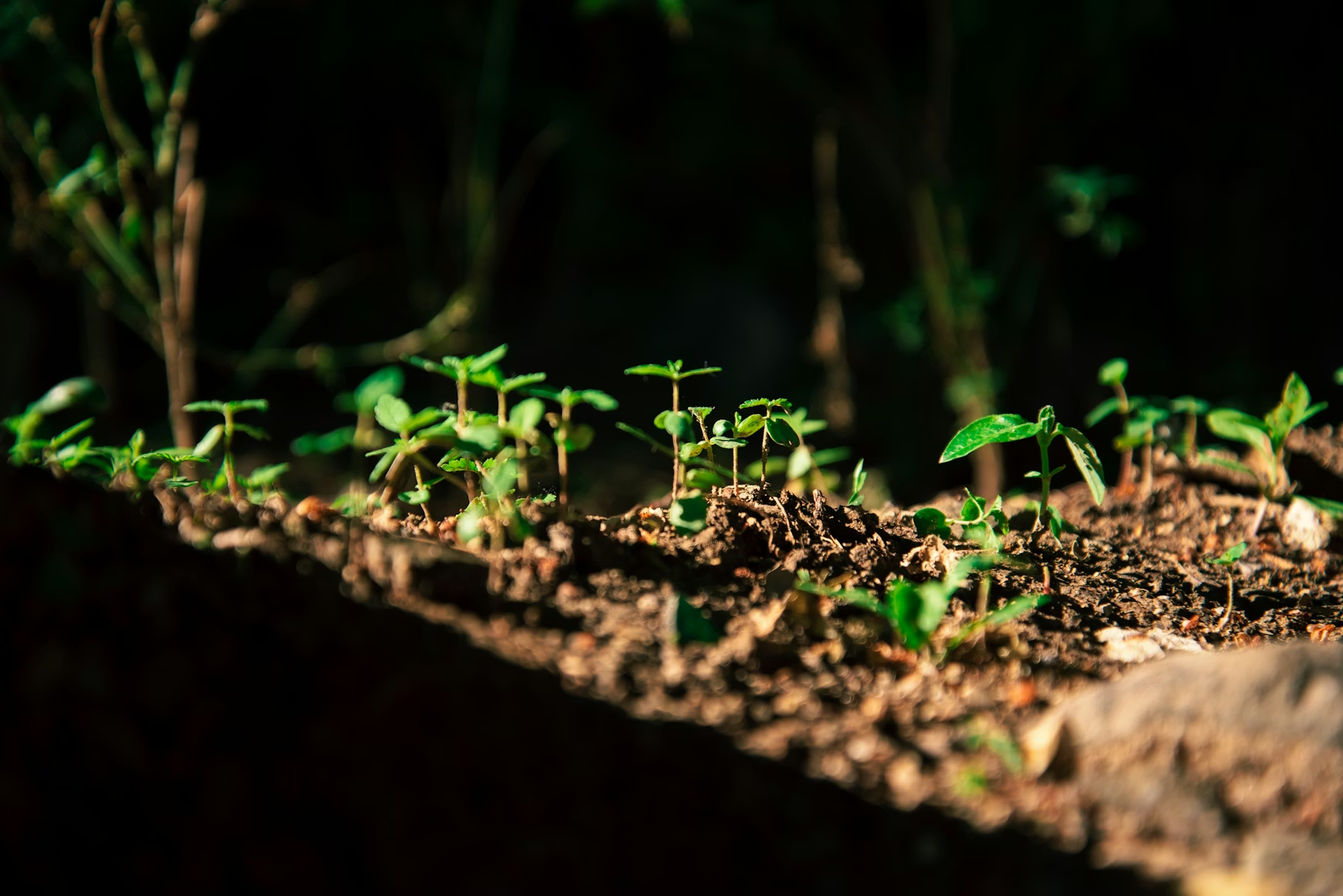

I’ve been around farms and gardens long enough to know one truth: the day you stop feeding your soil is the day your soil stops feeding you.
For the past 15 years I’ve watched fields go from hard, grey, lifeless dirt to dark, crumbly, sweet-smelling earth that grows better crops with less fertilizer, less water, and fewer problems. The single biggest difference in almost every one of those turn-around stories? Humic acid.
Not some new chemical. Not an expensive gadget. Just an ancient, natural substance that’s been under our feet the whole time.
What Humic Acid Actually Is
When leaves, roots, and old plants rot for hundreds or thousands of years, nature turns them into a rich, black material called humus. Humic acid is the most active, useful part of that humus — the part that can loosen soil, hold water, feed microbes, and make nutrients available to plants.
It’s dark brown or black, smells like healthy forest floor, and feels slightly sticky between your fingers when wet. Farmers sometimes call it “black gold” — and once you use it for a few seasons, you’ll understand why.
The 7 Things Humic Acid Does That Nothing Else Does Quite as Well
- Turns concrete-hard dirt into soft, crumbly soil It sticks clay particles together into little clumps and keeps sandy soil from falling apart. Roots grow deeper, air gets in, water soaks down instead of running off.
- Acts like a water tank in the ground One handful of good humic acid can hold many times its weight in water. In drought years that can be the difference between a crop survives or dies.
- Stops fertilizer from disappearing Rain and irrigation wash expensive nutrients out of the root zone. Humic acid grabs potassium, calcium, magnesium, and nitrogen and holds them like a slow-release capsule.
- Fixes the “yellow plant” problem In high-pH or calcareous soils, plants can’t get iron even when it’s there — they turn pale and weak. Humic acid wraps the iron in a package the roots can actually use. You’ll see plants green up in days or weeks.
- Feeds the invisible workforce Your soil is full of billions of microbes that do 90 % of the real work. Humic acid is their favourite food. Feed them and they’ll unlock nutrients, fight diseases, and build soil structure for you 24/7.
- Slowly rebuilds the carbon your soil has lost Most farmland has lost 30–70 % of the organic carbon it once had. Humic acid is stable carbon — it can stay in the soil for decades or centuries, quietly making everything work better.
- Buffers extremes Too acidic? Humic acid helps neutralise it. Too alkaline or salty? Humic acid reduces sodium damage and keeps roots happy.
Real Results I’ve Seen
- Corn farmer in the Midwest: cut nitrogen use by 25–35 %, same or higher yields after three years of 100 kg/ha humic acid every spring.
- Tomato grower in Turkey: stopped iron chlorosis problems completely, fruit size went up one grade, fertilizer bill dropped 40 %.
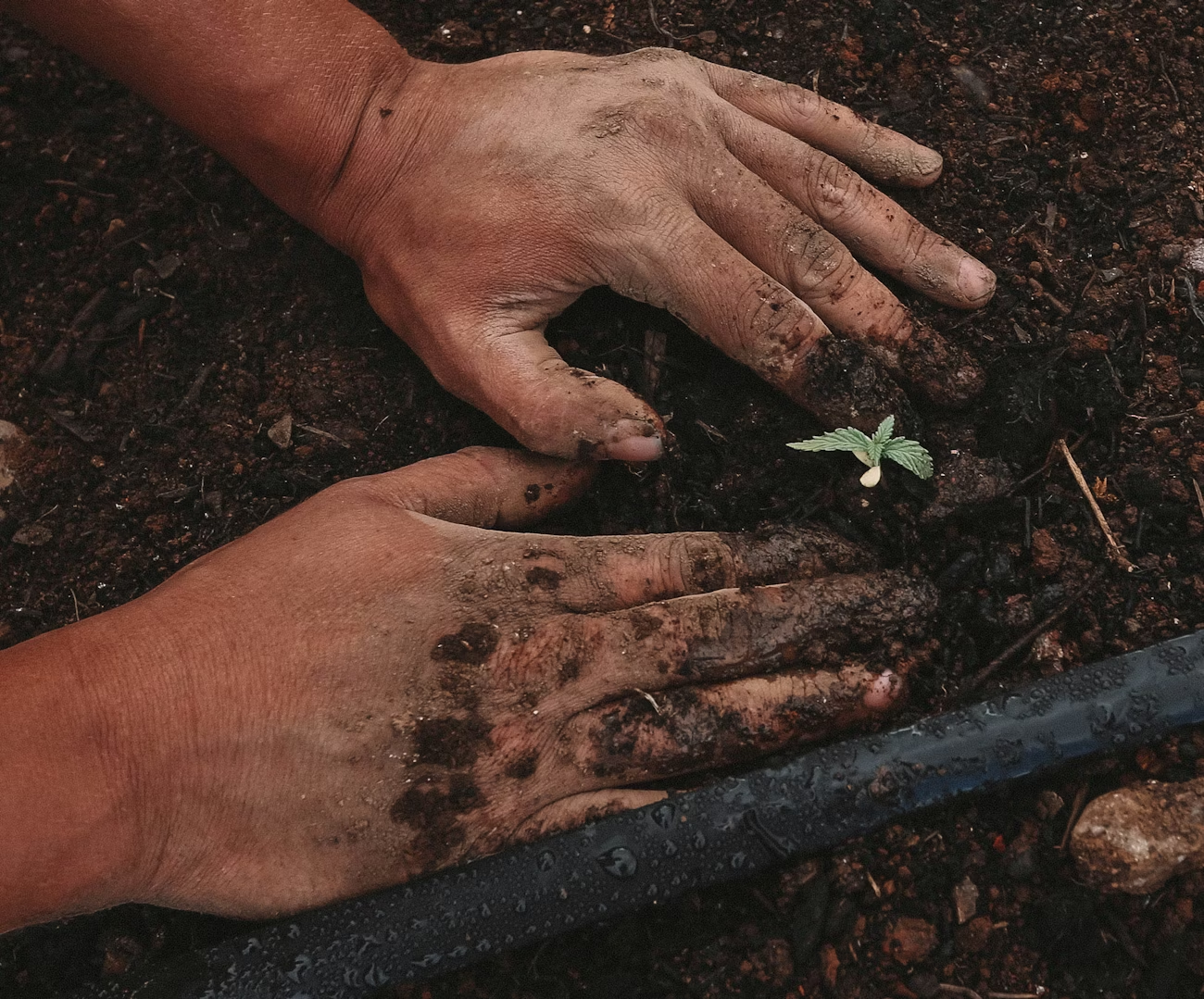
- Home gardener with heavy clay: after two years of spreading 3 kg per 100 m² twice a year, the soil is now so loose you can dig with your hands.
- Rice farmer in Southeast Asia: mixed humic granules with lime — root rot almost disappeared, yield up 12–18 %.
- Golf course superintendent: water use down 30 %, turf colour deeper, mowing clippings increased (proof the grass is actually growing better).
How to Use Humic Acid — Simple Schedules That Work
You don’t need a PhD to get this right.
For big fields Year 1–2: 100–200 kg pure humic acid per hectare (split into 2–3 applications) Year 3 onward: 50–100 kg per hectare every year as maintenance
For gardens and lawns 2–5 kg per 100 square metres, once in spring and once in autumn. Rake or water it in.
For pots, raised beds, seedlings Mix 1–2 tablespoons of powder per 10 litres of potting mix, or water with a weak liquid solution (1 teaspoon per litre) every 3–4 weeks.
Forms that are easiest
- Granules or pellets → spread like fertilizer
- Powder mix into compost or top-dress
- Liquid perfect for drip irrigation or foliar spray
Where to Get Good Stuff
- Look for products that say at least 50–60 % humic acid (from leonardite is usually best).
- Cheap products with only 5–15 % are mostly filler — you’ll waste money and see almost no results.
One Important Warning
Humic acid is not a miracle in a bag. It won’t fix terrible management overnight. But if you’re already doing the basics right — rotating crops, reducing tillage when possible, leaving residues, managing water — humic acid is the multiplier that makes everything work 20–50 % better, year after year.
Limitations and Pitfalls of Humic Acid
I love humic acid. I use it on every hectare and every garden I manage. But if I only told you the good stuff, I’d be doing you a disservice. Like any tool, it has limits, downsides, and situations where it can even backfire. Here are the straight facts.
1. It Is NOT a Fertilizer
Humic acid contains almost no N-P-K (usually less than 1 %). If your soil is truly deficient in nitrogen, phosphorus, or potassium, adding humic acid alone will do almost nothing for yield in the short term. You still need to supply the basic nutrients — humic just helps plants use them better.
2. Results Are Slow and Cumulative
You will see some greening and seedling vigour in weeks, but the big benefits (softer soil, lower fertilizer needs, higher yields) usually take 2–5 years of consistent use to become obvious. If you want a quick fix for this season only, humic acid is not the answer.
3. Very Poor Quality Products Are Everywhere
Many cheap liquids and powders contain only 3–15 % real humic acid — the rest is water, salt, or lignite dust. You can literally pour money on the ground and see almost zero long-term change. Always check the guaranteed analysis and ask for a lab certificate (look for ≥50–60 % humic acid from leonardite).
4. Over-Application Can Cause Problems
Too much at once (especially liquid forms high in potassium humate) can:
- Temporarily raise soil pH too high in already alkaline soils
- Tie up certain micronutrients if the product is poorly balanced
- Cause salt burn on seedlings or sensitive crops Stick to recommended rates. More is not better.
5. Doesn’t Work Well in Certain Soils/Situations
- Extremely saline or sodic soils → humic acid helps a little, but you still need gypsum or other reclamation first.
- Waterlogged, anaerobic soils → humic substances can slow drainage further until aeration improves.
- Very high organic-matter soils (e.g., peat or muck soils already >15–20 % OM) → you’ll see almost no response because they’re already saturated with natural humic substances.
6. Compatibility Issues with Some Chemicals
High concentrations of humic acid can tie up certain herbicides (glyphosate, 2,4-D) or certain copper fungicides and reduce their effectiveness. If you tank-mix, always do a jar test first.
7. Cost Can Add Up on Large Areas
Good-quality humic acid costs roughly US$3–6 per kg of pure substance. At 100 kg/ha per year that’s $300–600/ha. For low-value crops or tight margins, many farmers decide it’s not economical in the first 2–3 years (even though it usually pays for itself by year 4–5).
8. No Miracle Against Severe Soil Problems
- Severe compaction from years of heavy machinery → humic acid helps long-term, but you still need subsoiling or cover crops.
- Serious disease pressure → humic acid supports plant resistance a bit, but won’t replace proper fungicides or rotation.
- Heavy metal contamination → humic acid can bind some metals, but it’s not a reliable cleanup tool.
9. Measuring the Benefit Is Tricky
Soil tests don’t directly measure “humic acid content,” so you have to track indirect signs:
- Soil organic matter % (slow increase)
- Aggregation/water infiltration (field feel)
- Fertilizer savings and yield over years Some people give up too early because they don’t see numbers jump on a standard soil test.
My Rule of Thumb
Humic acid is amazing when:
- Your soil organic matter is below 3–4 %
- You already practice decent management (rotation, residue retention, sensible tillage)
- You plan to farm or garden the same land for 5+ years
It’s usually a waste of money or disappointing when:
- You’re renting land for only 1–2 seasons
- The soil is already black, fluffy, and >6 % organic matter
- You expect it to replace fertilizer completely
Bottom Line
Humic acid is one of the best long-term investments you can make in soil health — but only if you go in with realistic expectations, buy quality material, apply it consistently, and combine it with good overall management.
Humic acid won’t turn desert sand into Iowa topsoil overnight, and it won’t fix every problem by itself. But used wisely, it’s still one of the cheapest, safest, and most effective tools we have to make tired land productive again — and keep good land from ever getting tired.
Know the limits, respect them, and you’ll get all the benefits without the disappointment.
My Personal Bottom Line
After watching soils come back to life on thousands of hectares and in countless backyards, I’m convinced of this:
If you only add one new thing to your soil program, make it humic acid. It costs pennies per square metre, starts helping immediately, and the benefits compound for decades.
Your great-grandchildren’s crops will still be thanking you.
Give your soil some humic acid this season. You’ll feel the difference the first time you push a shovel in and it slides through like butter instead of fighting you every inch.
Happy farming, happy gardening, and here’s to soil that keeps getting better instead of wearing out.
— Someone who has watched dirt turn back into real soil, one handful of humic acid at a time.

Leave a Reply