
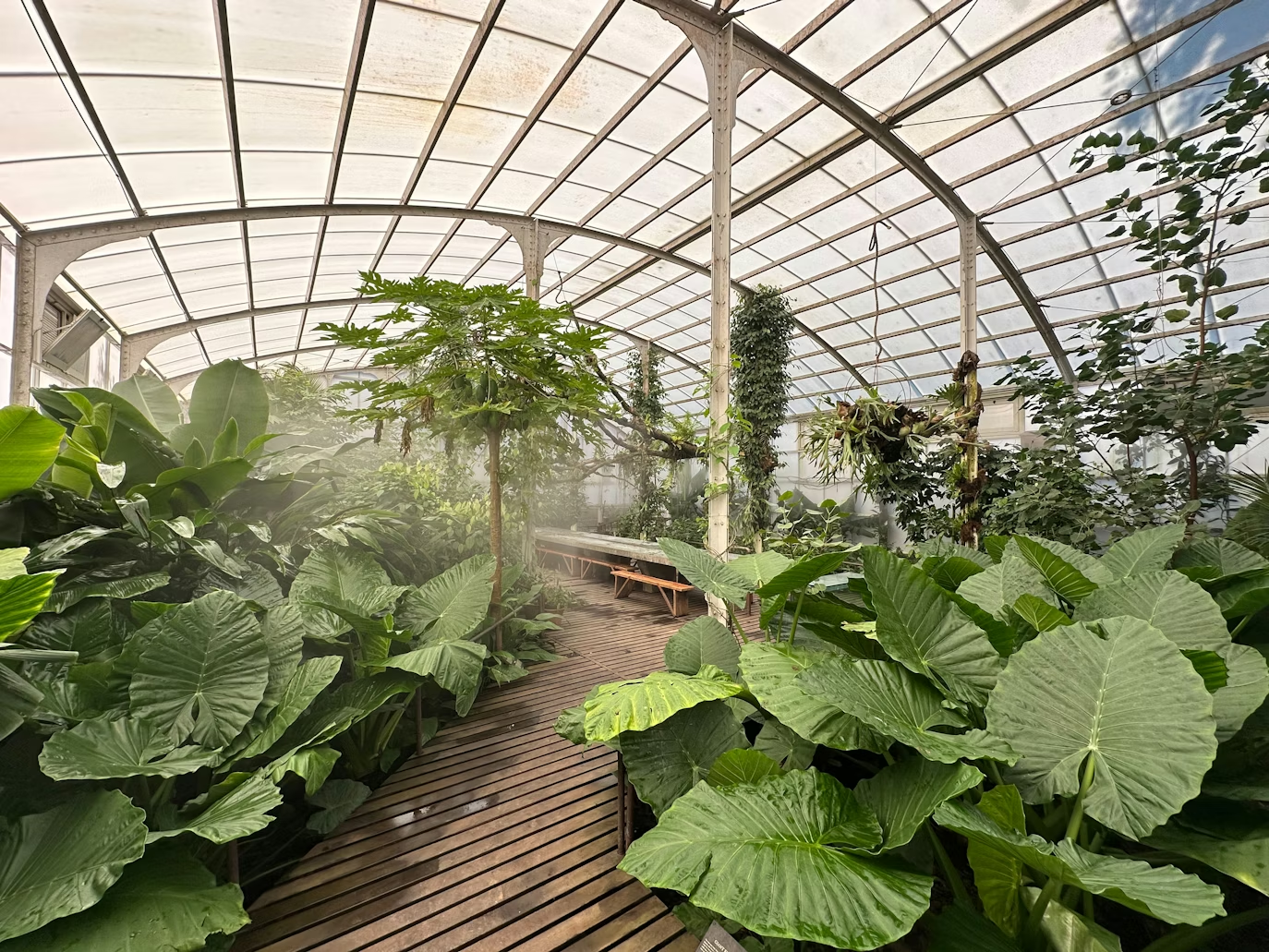

Humic acid (HA), one of the main fractions of humic substances produced through the long-term decomposition of plant and animal materials, continues to play an important role in modern horticulture. It is extracted primarily from leonardite (an oxidized form of lignite), as well as from peat and other natural deposits. In horticultural settings—such as greenhouses, nurseries, container production, hydroponics, and ornamental plant cultivation—Humic Acid functions as a soil conditioner, root stimulant, and nutrient enhancer. Its use supports higher crop quality, better plant establishment, and reduced environmental impact compared to many synthetic alternatives.
Chemical and Physical Properties of Humic Acid in Horticultural Contexts
Humic acid is defined by several key characteristics that influence its performance in growing media:
- Molecular weight: Generally 10,000–100,000 daltons, contributing to its polymeric nature and stability in substrates
- Color and appearance: Dark brown to black in dry form; forms deep-colored solutions when dissolved
- Solubility profile: Insoluble in acid but highly soluble in alkaline conditions; commercial products are often supplied as potassium or sodium humates for ease of use
- Cation exchange capacity: 400–800 cmol/kg, allowing temporary nutrient storage and release
- Functional groups: Rich in carboxyl (-COOH), phenolic (-OH), and quinone structures, which drive reactivity with nutrients and plant roots
- Oxygen content: Typically 30–35%, supporting chelation and microbial activity
High-quality horticultural-grade Humic Acid products usually contain 65–90% humic acid on a dry basis, with minimal contaminants.
Detailed Mechanisms of Action in Horticultural Systems
Humic Acid exerts multiple effects on substrates, roots, and plant physiology:
| Mechanism | Detailed Explanation | Primary Horticultural Benefits |
|---|---|---|
| Nutrient Chelation and Mobilization | Forms stable but reversible complexes with micronutrients (Fe, Zn, Mn, Cu) | Prevents deficiencies in soilless media; improves color and vigor |
| Root System Development | Stimulates auxin-like activity and cell division in root tips | Increased lateral roots and fine hairs; faster transplant establishment |
| Substrate Physical Improvement | Promotes aggregation, increases water-holding capacity, and enhances aeration | Better drainage and root oxygenation in potting mixes |
| Stress Tolerance Enhancement | Upregulates antioxidant enzymes and proline accumulation | Improved resistance to salinity, drought, heat, or cold stress |
| Microbial Community Support | Supplies carbon and energy to beneficial bacteria and fungi | Enhanced disease suppression and nutrient cycling in organic media |
| Hormonal and Enzymatic Modulation | Influences gibberellin, cytokinin pathways, and enzyme activity | Earlier flowering, larger blooms, and higher essential oil content |
| pH Buffering | Mild buffering effect in growing media | Stabilizes nutrient availability in fluctuating conditions |
These mechanisms are particularly valuable in intensive systems where substrates have low native organic matter.
Expanded Performance Data Across Horticultural Crops
| Crop/Category | Key Observed Responses | Typical Improvements (Meta-Data Range) | Recommended Application Strategy |
|---|---|---|---|
| Greenhouse Tomatoes | Larger fruit size, reduced blossom-end rot, higher soluble solids | Yield +12–28%; Ca uptake +15–30% | Fertigation + occasional foliar |
| Cucumbers and Peppers | Increased fruit set, better uniformity, extended harvest | Yield +10–22%; stress tolerance ↑ | Substrate incorporation + drip |
| Leafy Greens (Lettuce, Arugula) | Faster cycle time, darker green color, higher nitrate reduction | Biomass +8–20%; shelf life ↑ | Seed priming + weekly fertigation |
| Cut Flowers (Roses, Gerbera, Chrysanthemum) | Longer stems, more blooms per plant, extended vase life | Flower count +15–35%; vase life +2–5 days | Soil drench + foliar sprays |
| Potted Ornamentals (Poinsettia, Cyclamen) | Compact growth, intense coloration, robust root ball | Root mass +20–40%; quality ↑ | Potting mix amendment |
| Herbs (Basil, Mint, Rosemary) | Higher essential oil yield, stronger aroma, improved branching | Oil content +10–25% | Combined soil and foliar |
| Nursery Stock and Propagation | Higher survival rates post-transplant, uniform growth | Establishment +15–30% | Root dip + growing media blend |
Recent trials emphasize dose-dependent responses, with optimal benefits at moderate rates.
Humic Acid versus Fulvic Acid: Roles in Horticulture
| Aspect | Humic Acid (HA) | Fulvic Acid (FA) | Practical Implication in Horticulture |
|---|---|---|---|
| Molecular Size | Larger polymers | Small molecules | HA for substrate conditioning; FA for rapid uptake |
| Solubility | pH-dependent | Fully soluble | FA preferred in low-pH or hydroponic systems |
| Primary Effects | Long-term structure and buffering | Quick physiological response | Use HA basal, FA corrective/foliar |
| Root Impact | Overall biomass increase | Fine root proliferation | Blends optimal for transplants |
| Foliar Efficacy | Limited unless micronized | Excellent penetration | FA dominant for leaf applications |
| Cost per Application | Lower for bulk amendment | Higher due to lower natural abundance | HA economical for large volumes |
Industry practice increasingly favors 70–80% HA + 20–30% FA blends for balanced programs.
Limitations and Practical Challenges
| Limitation | Explanation | Management Strategies |
|---|---|---|
| Product Quality Variability | HA content and activity differ widely between sources | Require detailed COA; select established suppliers |
| pH and Compatibility Issues | Precipitation in acidic or hard-water solutions | Use soluble salts; test tank mixes |
| Gradual Response Time | Full benefits often require 2–4 weeks | Combine with faster-acting biostimulants |
| Risk of Over-Application | Excessive rates can tie up nutrients temporarily | Follow evidence-based rates; monitor leaf tissue |
| Economic Considerations | Premium products costly in high-volume greenhouse operations | Reserve for high-value crops or stress periods |
| Limited Effect in Inert Media | Minimal benefit in pure hydroponics without root zone contact | Use FA or specialized formulations |
| Regulatory and Labeling Variations | Standards differ by region; some products overstate content | Choose third-party verified items |
Comprehensive Guidelines for Selection and Application
- Source and quality priority: Select leonardite-derived products with verified high HA content and low heavy metals.
- Essential COA parameters: HA ≥65% (ISO 19822 method); carboxyl groups >3 meq/g; pH 8–11 for soluble forms.
- Product form selection
| Horticultural Task | Recommended Form | Typical Rate |
|---|---|---|
| Substrate/Potting Mix Amendment | Dry powder or granular | 1–5 kg per m³ of media |
| Fertigation/Drip Irrigation | Clear liquid potassium humate | 1–5 L/ha per application; 10–30 L/ha total season |
| Foliar Application | Micronized or fully soluble liquid | 0.5–2 L/ha (0.1–0.5% solution); repeat every 10–14 days |
| Seed/Root Dip Treatment | Soluble powder in solution | 1–3 g/L dip; 0.2–0.5% coating |
| Hydroponic/Soilless Supplementation | Low-dose liquid or blend with FA | 20–100 ppm continuous; higher periodic shocks |
- Application best practices: Adjust rates based on crop stage; integrate with balanced fertility programs; monitor substrate pH and EC regularly.
- Synergistic combinations: Pair with seaweed extracts, amino acids, or mycorrhizal inoculants for enhanced results.
- Performance monitoring: Track root development, leaf chlorophyll (SPAD readings), yield parameters, and quality metrics (e.g., Brix, vase life).
Pricing Overview (2025 Market Data)
| Product Category | Typical Purity/Content | Form | Approximate Price (USD per kg active substance) |
|---|---|---|---|
| Standard Leonardite-Based | 70–85% HA | Dry powder/granular | 0.50–1.20 |
| Soluble Potassium Humate | 12–20% active HA | Liquid | 2.00–4.50 |
| High-Purity or Micronized | ≥85–90% HA | Powder/liquid | 5.00–12.00 |
| Blended HA + FA Products | 60–80% total humics | Various | 6.00–15.00 |
- Prices reflect bulk quantities; smaller packaging adds 20–50% premium.
- Market expansion supports stable supply for horticultural users.
Emerging Trends and Future Outlook
Recent developments include water-soluble granular formulations, nanoparticle-enhanced HA, and waste-derived humic products for sustainability. Integration with precision agriculture tools (e.g., sensor-guided application) is gaining traction in high-tech greenhouses.
Conclusion
Humic acid remains a cornerstone biostimulant in horticulture, delivering measurable improvements in root health, nutrient efficiency, stress tolerance, and overall crop performance across vegetables, flowers, herbs, and ornamentals. Its complementary relationship with fulvic acid allows tailored programs for diverse production systems. While challenges related to variability and application timing exist, these are readily managed through informed product selection and evidence-based protocols. As horticultural producers seek sustainable, high-quality outputs, humic acid continues to offer reliable, cost-effective support in modern controlled-environment agriculture as of 2025.


Leave a Reply