

What It Really Is
Humic acid comes from decayed plant material—think old leaves, roots, manure, whatever’s been rotting in the ground for hundreds or thousands of years. It’s basically the black stuff that makes topsoil dark. When you buy it in a bag, it’s usually a powder or liquid concentrate extracted from leonardite (a soft coal-like material) or lignite.
It’s not a fertilizer. It doesn’t have a big N-P-K number. But it makes everything else you apply work way better.
How Humic Acid Actually Helps Plants Eat Better
- It grabs nutrients and won’t let them go Humic acid is loaded with negative charges. It sticks to positive ions like iron, zinc, manganese, copper, calcium, magnesium. It wraps them up in a water-soluble package so the roots can grab them easily. Without it, those nutrients turn into useless lumps in high-pH soils.
- It makes roots grow longer and hairier Put humic acid near a root and the plant starts growing more side roots and tiny root hairs. More root hairs = more surface area to drink up water and nutrients. Simple as that.
- It stops phosphorus from turning into concrete In most soils, phosphate fertilizer locks up fast—especially in clay or limestone ground. Humic acid keeps it loose and available for months instead of days.
- It helps nitrogen stick around When you put urea or ammonium on, a lot of it turns into gas or washes away. Humic acid holds onto it longer and lets plants take it up slowly.
- It wakes up the soil bugs The little microbes that break down organic matter love humic acid. Feed them that and they’ll start working harder, releasing more nutrients from the soil itself.
Real-World Numbers That Actually Matter
- Corn growers in the Midwest have seen 10–20 bushels more per acre just by adding 5–10 pounds of humic acid per acre.
- In vegetables (potatoes, tomatoes, onions), you can cut phosphorus fertilizer by 20–30% and still get the same yield.
- In high-pH soils (calcareous, alkaline), iron deficiency (yellow leaves) disappears with one foliar shot of humic acid plus a little iron.
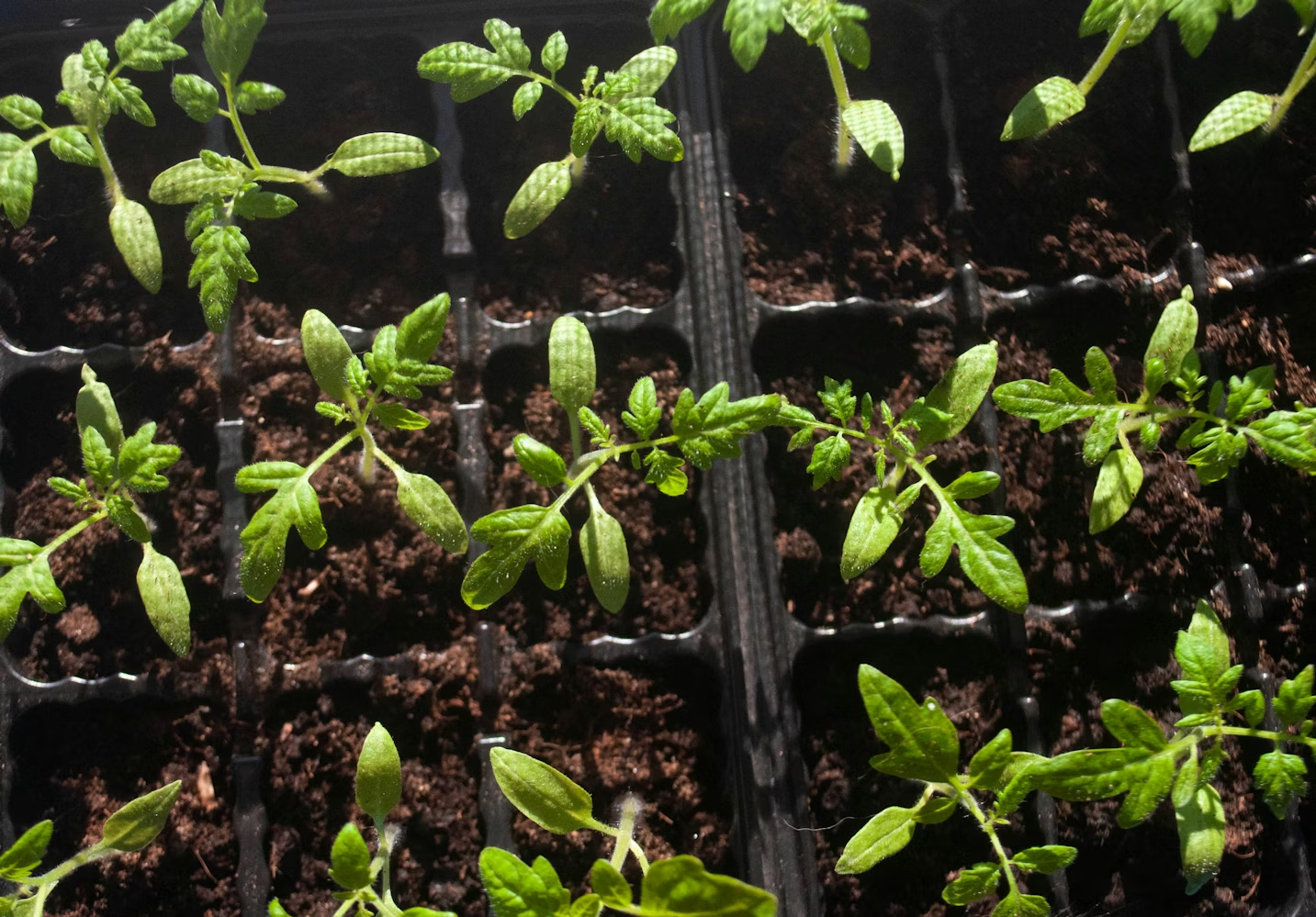
- Seedlings treated with humic acid at planting come up faster, stronger, and survive better.
How Much to Use (Don’t Overdo It)
You don’t need a ton. Humic acid is strong stuff.
- Dry powder or granular: 5–15 lbs per acre (broadcast or in-furrow).
- Liquid humic (12–15% humic acid): 1–3 quarts per acre in starter fertilizer or drip.
- Foliar: ½–1 pint per acre mixed with your spray tank.
- Seed treatment: ½–2 ounces per 100 lbs of seed.
Most guys find 8–10 lbs per acre of a good dry product gives the best bang for the buck.
Where to Get It and What to Look For
- Look for “humic acid” or “humic substances” with at least 60–70% humic acid content. Cheaper stuff is often only 30–40% and full of ash.
- Avoid anything labeled “humate” that’s mostly fulvic or just “organic matter.”
Why It’s Still the Best Low-Tech Trick in 2025
You can buy all the fancy chelates, biostimulants, and microbial inoculants you want. They’re expensive and sometimes they work. But humic acid is dirt cheap, works every time, and has been working for farmers since they first started putting manure on fields.
I’ve got friends who switched to humic acid and cut their total fertilizer bill by 25% while getting better yields. That’s real money.
So next time you’re loading up the sprayer or the planter, throw in a little humic acid. Your plants will thank you, your wallet will thank you, and your soil will thank you.
It’s not rocket science. It’s just good old-fashioned dirt magic. And it still works better than almost anything else out there.
The full list of what humic acid actually does for your fields, your plants, and your bottom line
1. Makes Fertilizer Work 2–3x Better
- Holds onto nitrogen, phosphorus, potassium, and micronutrients so they don’t wash away or get locked up.
- Cuts fertilizer waste by 20–40% in most soils.
- Lets you use less total fertilizer and still get the same (or better) yield.
2. Bigger, Deeper, Hungrier Roots
- Increases root mass and root hair length by 20–60%.
- Plants pull more water and nutrients from a larger volume of soil.
- Better drought tolerance—crops stay green longer when it gets dry.
3. Fixes Iron, Zinc, and Manganese Deficiencies
- In high-pH soils (calcareous, alkaline, limestone), iron and zinc lock up fast. Humic acid keeps them available.
- Yellow leaves (chlorosis) disappear in days after one foliar or soil application.
- No need for expensive synthetic chelates like EDDHA or EDTA.
4. Stops Phosphorus from Turning into Rock
- In clay, high-pH, or high-calcium soils, phosphate fertilizer turns into useless junk in weeks.
- Humic acid keeps 30–50% more phosphorus available for months.
5. Reduces Nitrogen Leaching and Volatilization
- Holds ammonium and urea longer in the root zone.
- Less nitrogen lost to groundwater or as ammonia gas.
- Cleaner water and lower environmental footprint.
6. Makes Plants More Drought and Heat Tolerant
- Better root systems + improved water-holding capacity in the soil.
- Crops survive dry spells better and recover faster after stress.
7. Speeds Up Seed Germination and Early Growth
- Seedlings come up faster and stronger.
- Treated seeds often show 10–20% better stand establishment.
- Less replanting, less thinning.
8. Wakes Up the Soil Microbes
- Feeds beneficial bacteria and fungi.
- More microbial activity = faster breakdown of organic matter and release of locked-up nutrients.
- Healthier soil over time.
9. Improves Soil Structure
- Helps clay soils loosen up and sandy soils hold more water.
- Less compaction, better water infiltration, and less crusting.
10. Makes Crops More Resistant to Disease and Stress
- Stronger root systems and better nutrition = healthier plants.
- Studies show lower incidence of root rot, Fusarium, and Pythium.
- Plants recover faster from hail, wind, or herbicide injury.
11. Works Great with Cover Crops and No-Till
- Helps break down residue faster.
- Increases nutrient cycling from cover crop biomass.
- Makes no-till systems more forgiving and profitable.
12. Improves Fruit Quality and Shelf Life
- Better calcium uptake = firmer tomatoes, apples, peppers.
- Higher sugar content and better color in many crops.
- Longer shelf life for fresh-market produce.
13. Dirt-Cheap and Pays for Itself Fast
- At 8–10 lbs/acre of good dry humic acid, you’re spending $15–$30 per acre.
- Most farmers see 5–15% yield increase the first year.
- Plus reduced fertilizer bills and better crop quality.
- Many guys get their money back 3–5 times over in the first season.
Bottom Line
Humic acid isn’t some new gimmick. It’s just concentrated, natural soil stuff that’s been working since the first farmer spread manure. But when you put humic acid on purpose in the right amounts, it does a ridiculous amount of good things at once:
- Better nutrient uptake
- Stronger roots
- Less fertilizer waste
- Healthier plants
- Higher yields
- Better quality
- Cheaper inputs
- Healthier soil long-term
If you’re not using humic acid yet, you’re basically farming with one hand tied behind your back. Throw some on this year and watch what happens. It’s the easiest, cheapest way to make every dollar you spend on fertilizer and water actually show up in the bin.

Leave a Reply