
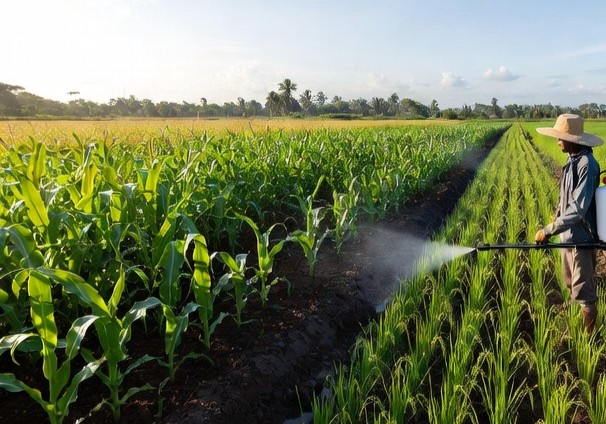

Potassium fulvate derived from leonardite serves as a widely utilized organic amendment in agricultural operations, especially in areas with intensive farming, saline soils, or nutrient-deficient conditions. Leonardite, an oxidized lignite deposit formed through natural weathering of ancient plant material, provides a rich source of humic substances, including substantial fulvic acid fractions. This raw material, often containing 50–85% humic matter, yields potassium fulvate products with consistent bioactivity when properly extracted and processed.
Source Material and Extraction Details
Leonardite deposits, typically found in sedimentary layers exposed to air and microbial activity over long periods, differ from standard lignite by their higher oxidation state and elevated humic content. The material appears dark brown to black, porous, and relatively low in ash compared to coal. Commercial sources prioritize young leonardite with low mineral impurities to achieve higher fulvic yields.
Extraction begins with mechanical preparation of the leonardite—crushing or grinding—followed by alkaline treatment using potassium hydroxide solutions. The mixture, heated to moderate temperatures (70–90°C in many processes), solubilizes humic and fulvic fractions. Separation techniques, such as filtration or selective precipitation, isolate the fulvic-rich portion, which remains soluble even at low pH. The extract is then adjusted with additional potassium, purified to remove excess minerals or insolubles, concentrated, and dried into flakes, powder, or liquid concentrates. Anti-flocculation steps during processing ensure stability in hard water or irrigation systems.
Resulting products commonly display:
- Black to dark brown shiny flakes or powder.
- Near-complete water solubility (98–100%).
- Fulvic acid content of 15–70% (dry basis) in premium grades.
- Total humic substances around 50–80%.
- Potassium oxide (K₂O) levels of 8–17%.
- Alkaline pH in solution (9.0–11.0).
- Abundant functional groups for nutrient binding.
Heavy metal concentrations remain within regulatory limits for agricultural use.
Mechanisms in Soil and Plant Systems
The low molecular weight of fulvic acid (often 300–5000 daltons) combined with high densities of carboxyl, phenolic, and carbonyl groups enables effective chelation of cations. This reduces phosphorus fixation by iron, aluminum, or calcium, enhances trace element availability (iron, zinc, manganese, copper), and promotes potassium release from soil minerals via ion exchange. Nitrogen retention improves through partial inhibition of urease, limiting volatilization.
In the root zone, the material supplies readily available carbon, supporting beneficial bacteria and fungi while increasing enzyme activities related to nutrient cycling. Root systems develop more extensively, with greater lateral branching and hair formation. Photosynthesis benefits from improved chlorophyll levels and stomatal regulation. Under stress, osmotic solutes accumulate, antioxidant enzymes activate, and membrane integrity is maintained.
Practical Benefits Observed
In maize on sandy, low-fertility soils, combinations with standard fertilizers have increased nutrient uptake, photosynthetic rates, biomass, and grain yield. Comparable effects appear in rice, barley, potato, tomato, and ginseng, with rises in available soil nutrients, better root vigor, and enhanced produce quality (higher sugars, vitamins, marketable traits). Fertilizer efficiency often improves, permitting modest reductions in synthetic inputs while sustaining output. Soil aggregation, water retention, aeration, and salinity buffering progress gradually with repeated use.
Limitations and Constraints
Despite advantages, several practical limitations exist.
- Product variability: Quality depends on leonardite deposit age, oxidation extent, and extraction consistency. Lower-grade sources may contain more humic acid, fewer functional groups, or trace impurities, leading to inconsistent field performance compared to premium selections.
- Compatibility issues: Precipitation risks arise when mixed with high-phosphate fertilizers, calcium nitrate, or solutions rich in magnesium, iron, or zinc, particularly at pH above 7.5 or in concentrated forms. Jar testing is required before tank mixing.
- Dosage sensitivity: Excessive application can cause nutrient imbalances or favor vegetative growth over fruiting/flowering in sensitive crops. Insufficient rates yield limited results in high-clay, high-pH, or severely compacted soils.
- Economic factors: Costs exceed those of basic potash or standard humates. Returns prove most favorable in high-value crops, stressed environments, or long-term soil programs; in already fertile or low-margin systems, the benefit-to-cost ratio may be marginal.
- Limited persistence: Fulvic fractions mineralize relatively quickly due to small size and high solubility, providing shorter-term effects than larger humic molecules. Substantial, enduring soil organic matter buildup requires complementary amendments like compost or cover crops.
- Environmental and regulatory aspects: While generally safe, heavy metal compliance must be verified per local standards. In organic certification, source and processing documentation is essential.
Conclusion
Potassium fulvate from leonardite functions as a reliable supplementary tool in nutrient management strategies, offering rapid nutrient mobilization, improved uptake efficiency, and support for crop resilience under challenging conditions. Its strengths lie in chelation capacity, solubility, and compatibility with modern irrigation and foliar systems, contributing to better resource use and soil health over time.
For consistent outcomes, priority should go to verified, high-fulvic-grade products from reputable suppliers, combined with site-specific trials, precise application rates, and integration into balanced fertility programs. When employed thoughtfully alongside conventional practices, potassium fulvate supports sustainable intensification, particularly in marginal or intensively managed soils common in tropical and subtropical farming regions.

Leave a Reply