
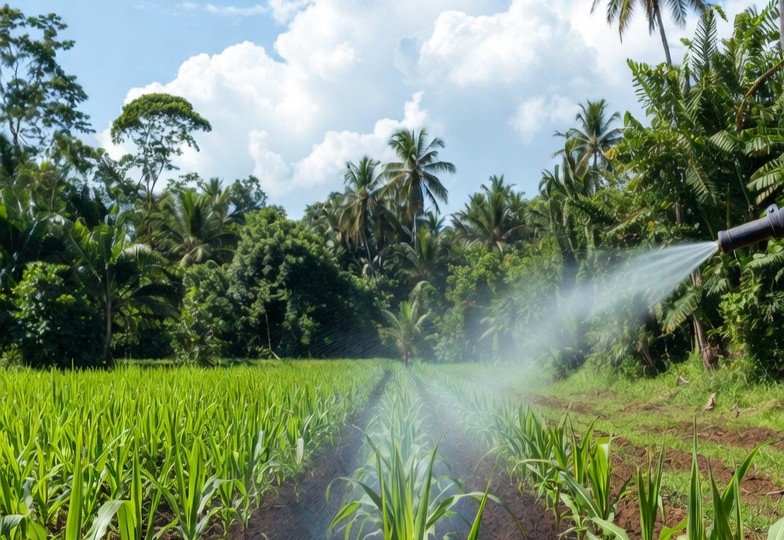

Organic potassium fulvate serves as a naturally derived, water-soluble organic fertilizer and soil conditioner commonly employed in certified organic farming systems. Potassium fulvate consists of the potassium salt of fulvic acid, extracted primarily from mineral sources such as leonardite or lignite through alkaline processes that comply with organic standards.
Source Material and Production
The primary raw material is leonardite, an oxidized form of lignite characterized by high humic substance content (typically 50–85%) and a significant fulvic acid proportion. Leonardite forms naturally from ancient plant residues exposed to weathering and microbial activity over extended periods, resulting in a porous, dark material rich in organic acids. Selection focuses on young, low-ash deposits to optimize fulvic yield and minimize impurities.
Extraction involves mechanical preparation of the leonardite, followed by treatment with approved alkaline agents (such as potassium hydroxide) under controlled conditions. The process solubilizes humic and fulvic fractions, with selective isolation of the fulvic component through techniques like filtration or controlled pH adjustment. The fulvic-rich extract is purified, concentrated, and dried into forms such as shiny black flakes or fine powder. Anti-flocculation processing enhances stability in hard water, supporting use in drip irrigation without precipitation risks.
Typical specifications for organic-grade potassium fulvate include:
- Appearance: Black to dark brown shiny flakes or powder.
- Solubility: 98–100% in water across wide pH ranges.
- Fulvic acid content (dry basis): 15–70% in higher grades.
- Total humic substances: 50–80%.
- Potassium oxide (K₂O): 8–17%.
- pH (1% solution): 9.0–11.0.
- Compliance: Heavy metals below regulatory thresholds (e.g., Hg <2 mg/kg, As <15 mg/kg, Cd <3 mg/kg, Pb <50 mg/kg).
Products meeting organic certification requirements avoid prohibited synthetic additives and utilize permitted extractants.
Mechanisms of Action
The low molecular weight of fulvic acid (several hundred to a few thousand daltons) combined with abundant carboxyl, phenolic hydroxyl, and carbonyl groups enables strong chelation of nutrients. Phosphorus becomes more available by reducing fixation with iron, aluminum, or calcium. Trace elements (iron, zinc, manganese, copper) form stable complexes, improving uptake. Potassium from the compound and soil reserves gains accessibility through ion exchange.
In the soil, potassium fulvate provides labile organic carbon, stimulating beneficial microbial activity and enzyme functions involved in nutrient cycling. Root development increases, with enhanced lateral branching and hair formation. Photosynthetic processes improve via higher chlorophyll content and better stomatal regulation. Under environmental stresses, it aids osmotic balance through proline and sugar accumulation, activates antioxidant enzymes, and supports membrane stability.
Benefits in Organic Crop Production
Field observations and controlled studies have consistently demonstrated that organic potassium fulvate delivers significant improvements across a wide range of crops when incorporated into certified organic farming systems. Its primary contributions include enhanced nutrient use efficiency, improved soil physical and biological properties, strengthened plant physiological responses, and overall support for the sustainability of the production system.
Nutrient uptake efficiency is markedly improved through the chelating action of fulvic acid fractions. Phosphorus, which is frequently limited in organic soils due to fixation by iron, aluminum, or calcium, becomes more accessible as potassium fulvate forms stable complexes that prevent immobilization. Likewise, micronutrients such as iron, zinc, manganese, and copper exhibit enhanced bioavailability, while nitrogen losses from volatilization or leaching are reduced owing to moderated urease activity. Potassium supplied by the product, together with mobilized soil reserves through ion exchange, supports balanced cation nutrition. In practice, these mechanisms often allow a reduction in external nutrient inputs—typically by 10–20% or more—while maintaining or slightly increasing yields, fully aligning with organic principles of minimizing dependence on synthetic inputs.
Soil structure is noticeably enhanced by promoting the formation of stable aggregates. Potassium fulvate facilitates the creation of water-resistant granules by bridging soil particles, thereby increasing porosity, aeration, and water-holding capacity. In sandy or compacted soils, this results in improved infiltration and reduced crusting; in heavy clay soils, potassium fulvate enhances tilth and drainage. Soil organic matter content increases gradually as potassium fulvate provides a readily decomposable carbon source, supporting microbial breakdown of plant residues and contributing to long-term fertility. Cation exchange capacity rises modestly with repeated applications, aiding the retention of essential bases in organic systems where base saturation may fluctuate.
Tolerance to environmental stress is strengthened through multiple mechanisms. Osmotic adjustment is reinforced by the accumulation of compatible solutes such as proline and soluble sugars. Antioxidant enzyme systems (superoxide dismutase, peroxidase, catalase) function more effectively, mitigating oxidative stress from reactive oxygen species. Ionic balance improves due to reduced sodium uptake and enhanced potassium-sodium selectivity. Water-use efficiency increases as a result of expanded root exploration and better soil moisture retention, which is particularly valuable in regions with irregular rainfall or limited irrigation.
Crop-specific responses show consistent positive trends. In vegetables such as tomato and potato, application of organic potassium fulvate correlates with increased biomass, improved fruit set, and elevated quality parameters—including higher soluble solids, sugars, vitamin C content, and marketable yield fractions. In fruit crops such as citrus, longan, and pomegranate, potassium fulvate supports better flower retention, reduced fruit drop, and improved peel color, flavor, and shelf-life characteristics. In cereals including rice, maize, and barley, plants exhibit stronger tillering or nodal rooting, higher grain-filling rates, and improved test weight or milling quality. High-value crops often record superior sensory and nutritional profiles, facilitating stronger positioning in premium organic markets.
The microbial community shifts toward beneficial populations. Potassium fulvate serves as a high-quality carbon substrate, promoting the proliferation of groups such as Bacillus and certain Proteobacteria, while increasing enzyme activities associated with nutrient cycling (e.g., catalase, sucrase, urease). Positive inter-kingdom interactions between bacteria and fungi are reinforced, contributing to pathogen suppression in intensive or continuous cropping systems. In systems analogous to tobacco or ginseng production, disease incidence decreases due to elevated organic matter, more complex microbial networks, and reduced pathogenic dominance.
Limitations and Practical Considerations
Several constraints warrant attention in organic systems.
- Source and Quality Variation: Leonardite quality varies by deposit; older or higher-ash sources may yield lower fulvic content or more impurities, affecting consistency. Biochemical alternatives (from plant fermentation) sometimes differ in performance from mineral-derived products.
- Compatibility Requirements: Precipitation can occur with high-phosphate or calcium/magnesium-rich inputs in concentrated mixes. Jar testing remains essential before combining with other organic or permitted fertilizers.
- Dosage Precision: High bioactivity demands accurate rates; excess may promote vegetative growth over reproductive phases in fruiting crops, while insufficient amounts limit effects in compacted or high-pH soils.
- Economic Aspects: Costs exceed basic organic amendments; benefits justify investment primarily in responsive crops, stressed conditions, or certified organic operations seeking efficiency gains.
- Persistence Profile: Fulvic fractions break down relatively quickly compared to larger humic molecules, offering shorter-term activity. Long-term soil organic matter enhancement requires complementary inputs like compost or cover crops.
- Certification Specifics: Approval depends on extractant compliance and absence of prohibited substances; verification through recognized lists or certifier review ensures suitability.
Conclusion
Organic potassium fulvate represents a practical, naturally sourced option for enhancing nutrient dynamics, crop resilience, and soil fertility within certified organic frameworks. Its chelation properties, solubility, and compatibility with foliar, fertigation, and soil applications make it a valuable component in balanced fertility programs. When sourced from verified suppliers with clear analytical data and applied according to crop and soil needs, potassium fulvate contributes to productive, sustainable agriculture while supporting environmental objectives. Field trials under local conditions, combined with adherence to organic standards, facilitate optimal integration and consistent performance.



Leave a Reply