
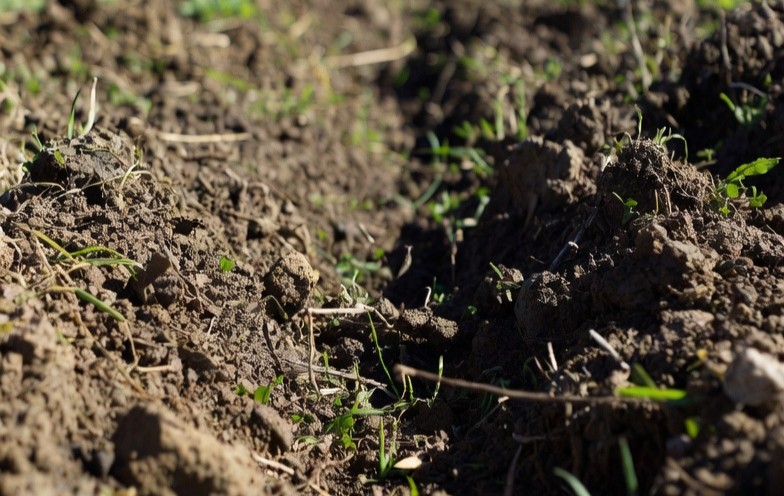

Granular humate occupies a stable niche within the broader category of soil conditioners and biostimulants. Derived predominantly from naturally oxidized lignite (leonardite) or similar humic-rich deposits, the granular form provides humic substances in a slow-release matrix that suits baseline soil improvement programs across diverse agricultural regions. Unlike soluble or liquid concentrates, granular products are designed for incorporation into soil profiles where they weather gradually under natural moisture, temperature, and microbial cycles.
Global production centers on deposits with high humic substance content and low undesirable impurities. The leading sources include:
- United States — particularly North Dakota and New Mexico, where leonardite seams yield consistent, high-humic material (often 70–85% humic substances). American-origin granular humate is widely regarded as a benchmark for quality due to rigorous processing and low ash levels.
- China — major producer of both raw leonardite and finished granular products, with significant output from Inner Mongolia, Xinjiang, and Shanxi provinces. Volumes are large and prices competitive, though quality varies considerably between suppliers.
- Canada — Alberta and Saskatchewan contribute high-grade leonardite-based granules, frequently marketed toward premium organic and export channels.
- Turkey — deposits in the Thrace and Central Anatolia regions supply granular humate for European and Middle Eastern markets.
- Ukraine (pre-conflict volumes still influence legacy stocks) and smaller contributions from Spain, India, Iran, and parts of Central Asia round out the supply base.
Annual global trade in granular humate and related humic products is estimated in the range of several hundred thousand metric tons, with steady growth driven by demand for sustainable soil management in both conventional and organic systems.
Composition and International Quality Variations
Commercial granular humate typically contains:
- Total humic substances: 60–90% (most commonly reported as humic acid equivalent).
- Moisture: 10–20%.
- Ash: <15–20% in premium grades.
- Particle size: 1–5 mm granules or pellets for uniform spreading and incorporation.
Quality differences across origins often relate to:
- Humic-to-fulvic ratio (higher humic in North American material; more balanced or fulvic-leaning in some Asian sources).
- Heavy metal content (strictly controlled in North American and EU-compliant products).
- Granule hardness and dust levels (affecting handling and application ease).
Buyers in export-oriented markets frequently request certificates of analysis specifying total humic substances (via standardized methods such as ISO or CDFA), pH, and absence of pathogens or contaminants.
Primary Soil-Structure Benefits
Granular humate contributes meaningfully to the physical properties of soil over extended periods. Its humic substances promote the aggregation of soil particles into stable crumbs or granules, which enhances porosity and reduces compaction. In heavy clay soils, this process facilitates better root penetration and decreases surface crusting after rainfall or irrigation. In lighter, sandy textures, granular humate improves water-holding capacity by increasing the soil’s ability to retain moisture without excessive drainage.
These structural improvements lead to more even water infiltration, reduced runoff during heavy precipitation, and lower susceptibility to erosion. Over multiple seasons, fields treated consistently often exhibit improved tilth—soil that is easier to work, less prone to clod formation during tillage, and more resistant to machinery-induced compaction.
Nutrient Availability and Efficiency Enhancements
One of the most consistent advantages lies in improved nutrient dynamics. The humic and fulvic fractions in granular humate act as natural chelating agents, forming stable complexes with cations such as iron, zinc, manganese, copper, and calcium. This binding prevents premature fixation or leaching, particularly in soils with high pH, high iron content, or significant rainfall.
Phosphorus availability frequently increases, as humic substances reduce binding to iron or aluminum oxides in acidic conditions or calcium in calcareous soils. Cation exchange capacity rises gradually—often by 10–30% in responsive soils—allowing greater retention of applied fertilizers and native nutrients. As a result, fertilizer programs tend to perform more predictably, with potential for modest reductions in input rates while maintaining equivalent or superior crop performance.
Root System Development and Plant Vigor
Granular humate supports extensive root growth through direct and indirect mechanisms. Early-released fulvic components stimulate root tip elongation and lateral branching, while longer-term humic activity creates a favorable environment for root exploration. Treated plants commonly develop denser fibrous root systems with greater total length and surface area, improving anchorage, water uptake, and access to subsurface nutrients.
Physiological responses include elevated chlorophyll content, higher net photosynthetic rates, and more efficient water-use efficiency. These changes contribute to increased biomass accumulation, stronger stems, and better overall plant vigor, particularly under moderate stress conditions.
Microbial and Biological Stimulation
The additional carbon substrate provided by granular humate serves as an energy source for beneficial soil microorganisms, including bacteria, fungi, and actinomycetes. This stimulation increases microbial biomass and diversity, enhancing nutrient cycling, organic matter mineralization, and suppression of certain root pathogens through competitive exclusion.
Earthworm activity often increases noticeably in treated fields, further aiding aggregation and aeration. These biological enhancements create a more resilient soil ecosystem capable of sustaining productivity with reduced external interventions.
Stress Tolerance and Resilience
Applications of granular humate correlate with improved plant tolerance to environmental stresses. Drought periods are better endured due to enhanced soil moisture retention and deeper root systems. Salinity effects may be moderated through improved ion exclusion and osmotic adjustment. Transplant shock, temperature fluctuations, and certain pesticide or herbicide residues show reduced impact, allowing crops to maintain function during adverse conditions.
Yield and Quality Outcomes
Field observations across various crops indicate gradual improvements in yield stability and marketable quality. Increases typically range from 5–20% over baseline in nutrient-limited, compacted, or degraded soils, with greater relative gains in challenging environments. Produce often exhibits uniform size, better color, and extended shelf life, attributable to optimized nutrient balance and reduced physiological stress.
These yield benefits accumulate over 2–5 years of consistent use rather than appearing dramatically in a single season, aligning with the slow-release nature of the granular form.
Environmental and Economic Considerations
From a sustainability perspective, granular humate supports reduced reliance on synthetic inputs by optimizing nutrient use efficiency and minimizing losses to leaching or runoff. Granular humate contributes to long-term soil organic carbon buildup, aiding carbon sequestration and soil health restoration. Economically, the investment yields returns through stabilized yields, potential fertilizer savings, and lower remedial costs in degraded fields.
Application Patterns in Major Agricultural Regions
Granular humate adapts to varied cropping systems worldwide, with application rates and timing adjusted to local soil types, rainfall regimes, and crop nutrient demands.
- North America (USA, Canada) Common in corn–soybean rotations, potato production, and high-value vegetable systems in the Midwest and Pacific Northwest. Typical rates: 200–600 lb/acre (225–675 kg/ha) broadcast and incorporated pre-plant or banded at planting. Emphasis on long-term organic matter buildup in conventionally tilled fields.
- Europe (Spain, Italy, Poland, Germany) Widely used in olive, citrus, vineyard, and greenhouse vegetable production. Rates often 300–800 kg/ha annually, with preference for high-humic, low-ash material to meet EU organic standards. Integration into minimum-tillage systems is increasing.
- Latin America (Mexico, Chile, Argentina, Brazil) Employed in avocado, table grape, blueberry, and sugarcane systems. Rates range 400–1000 kg/ha in degraded or saline soils, often combined with gypsum or lime amendments.
- Middle East and North Africa Applied in date palm, citrus, and protected vegetable cultivation under drip irrigation. Rates 500–1200 kg/ha to counter low organic matter and high salinity, with placement near root zones.
- Asia (China, India, Vietnam, Indonesia) Growing adoption in rice–upland rotations, fruit orchards (durian, mango, coffee), and intensive vegetable production. Rates typically 300–800 kg/ha, often one main annual application timed before the wet season.
In all regions, the product functions primarily as a structural conditioner rather than a direct nutrient source, with benefits accumulating over 2–5 years of consistent use.
Observed Long-Term Field Outcomes Across Continents
Consistent multi-season application yields patterns that transcend regional differences:
- Incremental improvement in soil aggregate stability and water infiltration.
- Reduced surface crusting and better seedbed preparation.
- Enhanced nutrient retention, particularly phosphorus and potassium in leaching-prone soils.
- Gradual increase in earthworm activity and microbial biomass.
- Modest but repeatable yield stabilization (commonly 5–20% over baseline in nutrient-limited or compacted fields).
- Improved resilience to drought or irregular rainfall through better soil moisture dynamics.
These effects develop quietly and persist even if application frequency is reduced after the initial rebuilding phase.
Global Sourcing and Logistics Considerations
For buyers outside major producing countries, procurement channels include:
- Direct import from US or Canadian producers (often through distributors specializing in biostimulants).
- Bulk purchases from Chinese manufacturers via platforms such as Alibaba or through regional agents.
- European traders handling Turkish, Spanish, or blended-origin material.
- Local blending operations in importing countries that combine imported leonardite with potassium or other carriers.
Freight costs, container availability, and customs classifications (typically under HS code 3101 or 3824) influence final landed pricing. Premium North American material commands higher prices but offers greater consistency for high-value or certified-organic production.
Concluding Perspective
Granular humate represents a low-intervention, long-horizon tool within global soil fertility management. Its value lies not in rapid transformation but in steady, cumulative contributions to soil structure, nutrient efficiency, and crop resilience across widely varying environments. For operations seeking durable improvements in land productivity—whether in intensive tropical systems, temperate broadacre farming, or perennial orchards—granular humate provides a reliable, evidence-supported option when integrated thoughtfully into existing programs.
In summary, granular humate offers a reliable, cumulative set of benefits centered on soil structure restoration, nutrient optimization, root enhancement, microbial support, and stress resilience. When incorporated thoughtfully into soil management programs—supported by soil testing and appropriate rates—granular humate provides a foundation for sustained productivity and environmental stewardship across a wide range of cropping systems.


Leave a Reply