
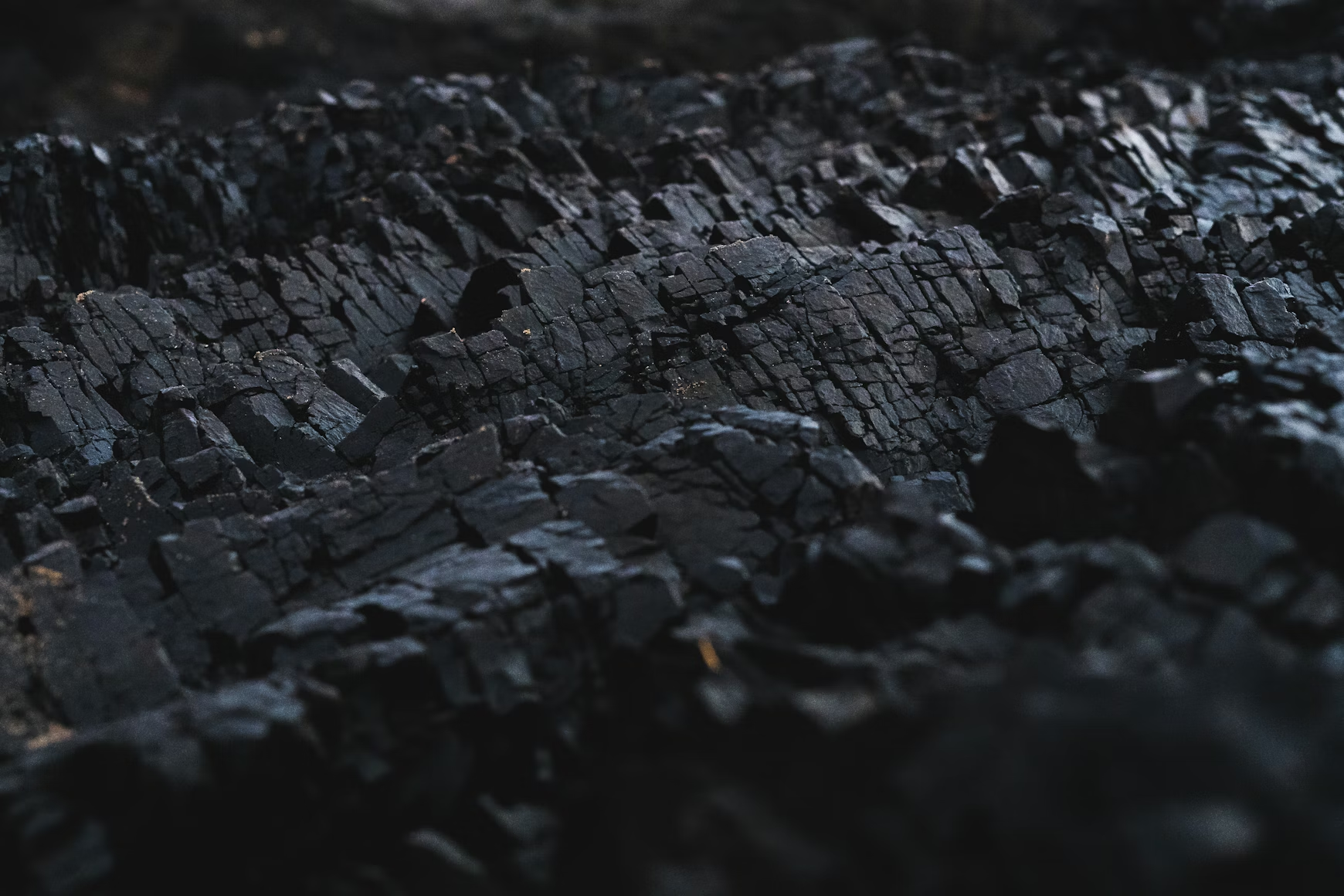

Organic humates comprise complex, naturally occurring substances rich in humic acid, fulvic acid, and humin. These arise from the protracted microbial and geochemical decomposition of organic matter, predominantly plant residues, across extended periods ranging from centuries to millions of years. In agricultural, horticultural, environmental remediation, and soil management contexts, organic humates serve as valuable amendments. They enhance soil cation exchange capacity, improve nutrient chelation and availability, stimulate beneficial microbial populations, stabilize soil aggregates, and augment water retention.
Sources of organic humates are divided into geological deposits, which supply concentrated and stable humic substances from ancient sedimentary strata, and biological or surface-derived materials, which generate humates via contemporary decomposition in active ecosystems. Geological sources typically dominate commercial supply due to their elevated humic content and uniformity, while biological sources align well with regenerative and low-input agricultural approaches.
Geological Sources
The most prominent commercial sources stem from prehistoric sedimentary accumulations, where plant material experienced partial coalification followed by surface oxidation, yielding high levels of extractable humic and fulvic acids.
- Leonardite stands as the primary and most extensively utilized source. Formed as a weathered, oxidized derivative of lignite near the surface, leonardite results from prolonged oxygen exposure and environmental processes that transform the parent material into a soft, dark, humic-rich substance. High-quality deposits often contain 60–90% humic acid (dry-weight basis), accompanied by fulvic acid and minor humin components. The oxidation enhances solubility under alkaline conditions, supporting efficient extraction for agricultural formulations. Principal deposits are located in the United States, particularly northwestern North Dakota, with additional occurrences in New Mexico, Utah, Wyoming, Texas, and other western states. Comparable materials appear in Canada (Alberta), Greece, Turkey, Australia, and Germany, often linked to lignite operations. Extraction generally involves surface mining, with careful selection to limit contaminants such as clay and ash.
- Oxidized lignite and lignite-derived humates provide related alternatives. While unaltered lignite exhibits lower humic concentrations, natural or managed oxidation increases these levels, approaching those of leonardite.
- Carbonaceous shales and associated humate-bearing formations deliver consistent humic profiles, frequently suitable for organic certification.
Geological humates offer notable stability, reliable composition, and high potency, rendering them suitable for extensive soil conditioning, fertigation, and remediation efforts.
Biological and Recent Organic Sources
Humic substances also form through natural decomposition in extant ecosystems and managed organic systems. These sources generally present lower humic and fulvic acid concentrations than ancient deposits but contribute substantially to soil organic matter cycling and sustainable fertility maintenance.
- Soil humus constitutes the stable, dark component of soil organic matter, accumulated via microbial transformation of plant litter, roots, and residues over time. In well-managed or undisturbed soils, it functions as a persistent humic reservoir.
- Compost and mature organic amendments produce humates during aerobic decomposition of crop residues, manures, green wastes, or similar feedstocks. Humic content varies with material composition, carbon-to-nitrogen ratio, aeration, and maturation period.
- Vermicompost frequently exhibits enhanced humic levels owing to intensified microbial and enzymatic processes in earthworm systems.
- Peat deposits, developed in anaerobic wetlands over millennia, contain appreciable humic substances, particularly in sphagnum-based forms.
- Other surface accumulations, such as certain aquatic sediments and wetland soils, harbor humic compounds formed through gradual humification.
Biological sources integrate effectively into organic, permaculture, and regenerative systems, where repeated applications of compost, cover cropping, and minimal tillage progressively build soil humus.
Benefits of Organic Humates
Application of organic humates confers multiple agronomic advantages, supported by extensive field observations and research.
- Enhanced nutrient availability and uptake: Humic and fulvic acids chelate nutrients, reducing fixation and leaching while improving solubility and plant assimilation, particularly for micronutrients such as iron, zinc, and manganese.
- Improved soil structure and physical properties: Humates promote aggregation, reduce compaction, increase porosity, and elevate water-holding capacity, thereby mitigating drought stress and erosion.
- Stimulation of microbial activity: They serve as a carbon and energy source for beneficial soil microorganisms, fostering populations that enhance nutrient cycling, disease suppression, and organic matter decomposition.
- Promotion of root development and plant vigor: Humates encourage greater root mass, deeper penetration, and improved stress tolerance (e.g., to salinity, drought, or temperature extremes), often leading to faster germination and higher biomass production.
- Increased crop yield and quality: Consistent application correlates with elevated yields, improved produce quality (e.g., size, color, nutritional content), and greater fertilizer efficiency, potentially reducing input requirements.
- Support for sustainable practices: By augmenting soil organic matter, humates contribute to long-term fertility, carbon sequestration, and reduced environmental impact from nutrient runoff.
Limitations of Organic Humates
Despite their advantages, organic humates exhibit certain constraints that warrant consideration in application planning.
- Variable efficacy depending on source and quality: Humic content, solubility, and impurity levels differ markedly among sources (e.g., leonardite versus compost), with lower-grade materials delivering diminished or inconsistent results.
- Potential for over-application effects: Excessive rates may temporarily overwhelm soil systems, disrupt microbial balance, or interfere with nutrient dynamics, though optimal dosages generally mitigate this risk.
- Compatibility issues: Humates may interact adversely with certain synthetic fertilizers, pesticides, or high-pH/ammonium-based products, potentially causing precipitation or reduced efficacy when tank-mixed.
- Slower or less immediate response in some conditions: In severely degraded or high-clay soils, benefits may require repeated applications and time to manifest fully, unlike rapid-acting synthetic amendments.
- Economic and logistical considerations: Geological sources involve mining and processing costs, while biological sources demand larger volumes and longer maturation periods to achieve comparable humic levels.
- Regulatory and certification variability: Not all humate products qualify uniformly for organic certification, depending on extraction methods, heavy metal content, or origin.
Practical Considerations in Selection and Utilization
Choice of humate source should align with specific objectives, soil conditions, crop requirements, regulatory standards, and cost-effectiveness. Geological products such as leonardite-derived humates provide rapid, high-potency responses suited to intensive systems, whereas biological sources support gradual, ecosystem-based improvements.
Key evaluation criteria include total humic substance content, humic-to-fulvic ratio, ash and contaminant levels, pH-dependent solubility, and standardized analytical verification.
In conclusion, organic humates originate chiefly from ancient geological formations—principally leonardite and oxidized lignite—complemented by biological processes in soils, composts, peats, and related matrices. Their diverse origins enable adaptable use across conventional, transitional, and regenerative agriculture, fostering improved soil functionality, plant performance, and overall ecosystem sustainability when applied judiciously.




Leave a Reply