
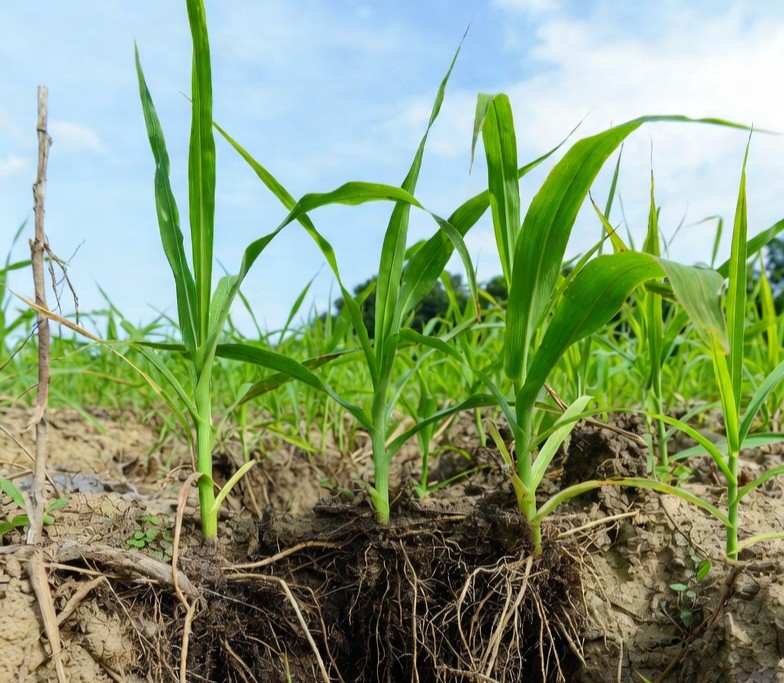

Humic Substances and Root Growth: A Practical Guide to Using Humates in the Field
If you work with crops in tropical or subtropical climates—rice paddies, vegetable fields, fruit orchards, or even coffee and pepper plantations—you’ve probably noticed that root development often sets the ceiling for everything else: nutrient uptake, drought tolerance, disease resistance, and final yield. Fertilizer, irrigation, and pest control matter, but a weak or shallow root system undermines them all.
Humates (humic acid, fulvic acid, and their potassium or sodium salts) have become one of the few inputs that reliably and measurably improve root architecture across a wide range of crops. This article walks through why humates stimulate root growth, what the science actually shows, how the effect plays out under real field conditions, practical ways to apply them, what to watch out for, and how results typically compare across different soil types and crops common in Southeast Asia.
What Exactly Are We Talking About When We Say “Humate”?
Commercial humates usually come from leonardite (oxidized lignite), young coal deposits, or sometimes composted plant residues. The two most common products growers use are:
- Potassium humate — highly water-soluble, pH neutral to slightly alkaline, low sodium risk
- Sodium humate — cheaper, still effective, but carries more sodium (problematic in already sodic or saline soils)
Both contain a mix of humic acid (larger molecules, darker color, soil-conditioning effects) and fulvic acid (smaller molecules, better foliar uptake and faster root stimulation). Most liquid products sold for agriculture list total humic substances at 6–18%, with fulvic acid often making up 30–70% of that fraction.
The root-promoting effect is strongest when the product has a decent fulvic acid content and is applied early—ideally at germination/seedling stage or during the first 30–45 days of growth.
How Humates Actually Change Root Growth
The stimulation is not magic; humates happens through several overlapping mechanisms that researchers have documented over the past twenty years.
- Auxin-like and hormone-modulating activity Humic and fulvic molecules can bind to root cell receptors or increase endogenous auxin (IAA) synthesis/transport. This triggers more lateral root primordia to emerge and elongates existing roots. In some trials the response mimics a low-to-moderate dose of synthetic auxin (IAA or IBA).
- Reactive oxygen species (ROS) as signaling molecules Shortly after humate contact, root tips produce a controlled burst of hydrogen peroxide and superoxide. These ROS act as secondary messengers—opening calcium channels, activating mitogen-activated protein kinases (MAPKs), and turning on genes for cell wall loosening and expansion. The net result is faster elongation and more branching without oxidative damage (because antioxidant enzyme activity rises in parallel).
- Proton extrusion and membrane energization Humates strongly activate H⁺-ATPase pumps in the plasma membrane. More protons are pumped into the apoplast → the cell wall acidifies → expansin proteins become active → cells expand more easily. The same proton gradient also powers better uptake of nitrate, phosphate, potassium, and micronutrients.
- Nitric oxide (NO) pathway activation Increased NO production in root tissues appears to be a key intermediate step. NO regulates cell division in the root apical meristem and promotes adventitious and lateral root formation. Several studies have shown that blocking NO synthesis with inhibitors largely cancels out the root growth response to humates.
- Improved rhizosphere conditions Humates chelate iron, zinc, manganese, and copper, keeping them plant-available even in calcareous or high-pH soils. They also stimulate beneficial microbes (especially plant-growth-promoting rhizobacteria and mycorrhizae), which in turn produce additional growth regulators and improve phosphorus solubilization.
What Growers Actually See in the Field
Typical observations after consistent humate use:
- Rice (direct-seeded or transplanted): 20–50% increase in total root length and root dry weight at 30–45 days after sowing; noticeably deeper roots (often 10–20 cm deeper in the profile); better stand establishment in flooded or compacted fields.
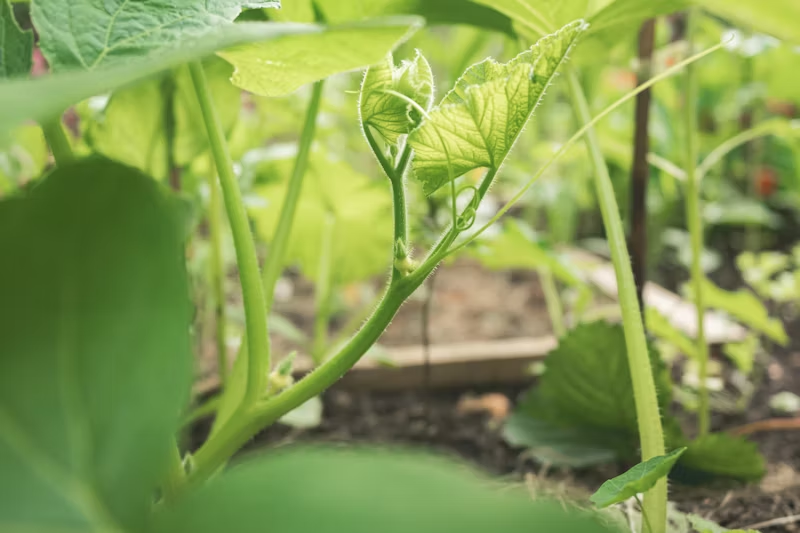
- Vegetable crops (cucumber, chili, tomato, leafy greens): denser root hairs, more fibrous laterals, quicker recovery after transplant shock, and visibly larger root balls when pulled at harvest.
- Perennial crops (coffee, pepper, dragon fruit): stronger feeder roots in the top 30 cm, reduced die-back during dry spells, and better nutrient response to follow-up NPK applications.
- Maize and sugarcane: increased brace/root support in lodging-prone varieties and better early-season vigor on sandy or low-organic-matter soils.
In many Mekong Delta rice–vegetable rotations, farmers report that humate-treated plots need less frequent top-dressing of potassium and ammonium because roots are exploring a larger soil volume.
Application Methods That Work Best for Root Stimulation
Timing and placement matter more than most people realize.
- Seed/seedling treatment — Soak seeds 4–12 hours in 0.1–0.5% solution or dip seedling roots before transplanting. This gives the strongest early boost to primary and seminal roots.
- In-furrow or banded at planting — 200–500 g/ha of soluble powder or equivalent liquid rate applied directly in the seed row or transplant hole. Roots grow directly into the treated zone.
- Early-season soil drench — 1–3 L/ha of 5–12% liquid humate diluted in irrigation water at 10–30 days after emergence. Repeat once or twice if growth is slow.
- Foliar + root combo — Foliar sprays (0.5–1 L/ha) at 3–4 leaf stage can trigger systemic signals that increase root branching even when soil application is limited.
Most consistent results come from products that clearly state fulvic acid content ≥4–6% and are applied at moderate rates. Very high rates (above ~1 kg/ha active humic substances per application) sometimes reduce root elongation due to excessive hormone-like activity.
Soil Type and Climate Interactions
- Sandy or low-CEC soils (common in coastal provinces): humates shine here. They increase effective CEC slightly and dramatically improve nutrient retention in the root zone.
- Heavy clay or compacted soils (Mekong alluvium, some upland red soils): humates improve aggregation and water infiltration over time, allowing roots to penetrate deeper.
- Acid sulfate or saline-influenced soils: fulvic-rich products help reduce aluminum toxicity and sodium stress, supporting healthier root tips.
- Volcanic or andic soils (Central Highlands): response is still positive but less dramatic because baseline root growth is already good.
Realistic Expectations and Limitations
Humates are not a substitute for poor soil preparation, inadequate drainage, or severe nutrient deficiency. They amplify what the system can already support. In severely degraded soils (pH <4.5, very high exchangeable Al), humates help but do not fully overcome the stress without liming or gypsum first.
Also, source matters. Some cheap “humate” products sold in local markets contain mostly coal dust or very low active humic/fulvic content—results are disappointing. Stick to suppliers who provide lab certificates showing ≥50–60% total humic substances and reasonable fulvic acid levels.
Long-Term Value
When used year after year in rotation systems, humates contribute to gradual soil organic matter buildup (especially when combined with crop residues and cover crops). The root system becomes more extensive and resilient, which reduces the need for high fertilizer doses and improves overall input efficiency—a meaningful advantage in an era of rising input costs.
In summary, humates remain one of the most dependable biostimulants for root growth stimulation available to tropical growers. The effect is real, repeatable, and backed by both lab data and thousands of hectares of farmer experience. Used intelligently—right timing, reasonable rates, good-quality product—they deliver measurable improvements in root depth, branching, and early vigor that pay dividends throughout the crop cycle.
If you are trialing humates this season or have noticed differences between products or application methods, those field notes are always valuable. Patterns that emerge from real farms often refine our understanding faster than controlled trials alone.s, my suggestion is simple: get the CEC measured properly (preferably both the buffered and effective versions), track it over years, and treat it as a baseline trait rather than something you can change overnight. Small, consistent improvements in organic matter and pH management will compound over time, and the soil will start working with you instead of against you.



Leave a Reply