

Humate, especially potassium humate, has become a regular part of many farmers’ routines when the main goal is pushing for higher crop yields. Humate comes from natural sources like leonardite deposits, processed into forms that deliver humic acid and fulvic acid along with some potassium. Farmers do not treat it as a standalone fertilizer that supplies massive NPK doses; rather, they use it to make existing soil nutrients work better and to help plants grow stronger under normal or tough conditions.
Over the years, practical use in fields—particularly in rice-growing areas of Asia, vegetable plots, and fruit orchards—shows that adding humate often leads to measurable extra production. The increases are not always dramatic in one season, but they tend to build up and become reliable when applied consistently.
How Humate Supports Higher Yields Step by Step
The way humate helps yields come down to several connected improvements in the soil and inside the plant itself.
First, humate makes nutrients stay available longer. Humic and fulvic acids wrap around elements like iron, zinc, phosphorus, and potassium so they do not get tied up in the soil or washed away during heavy rains.
Second, roots grow bigger and deeper. Treated plants develop more fine roots and longer main roots, sometimes 20-30% more root mass in comparisons. Deeper roots pull water and nutrients from lower layers, which helps during dry spells or when surface soil dries out fast.
Third, leaves stay greener and work more efficiently. Chlorophyll levels go up, photosynthesis improves, and plants produce more carbohydrates to fill grains, fruits, or tubers. This shows up as heavier panicles in rice, plumper kernels in maize, or larger tomatoes and durians.
Fourth, plants handle stress better. In salty patches, during heat waves, or after too much rain, humate-treated crops wilt less and recover quicker. Less stress means the plant keeps growing instead of shutting down, protecting potential yield.
Fifth, soil biology picks up. Beneficial microbes multiply because humate gives them a steady carbon food source. More active microbes break down organic matter faster, release tied-up nutrients, and sometimes crowd out certain disease organisms.
All these pieces together allow the crop to convert sunlight, water, and soil resources into harvestable product more effectively.
Typical Yield Results from Fields and Trials
Real results vary by crop, starting soil quality, weather, and how humate is used, but patterns emerge from farmer experiences and recorded trials.
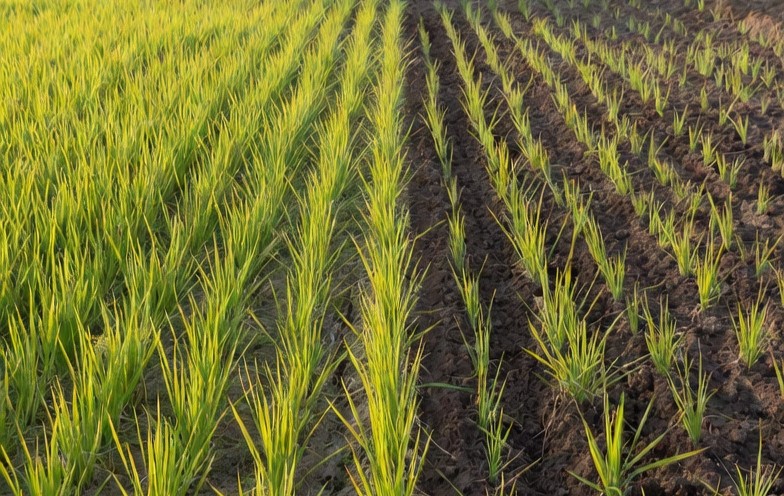
In rice paddies—especially alluvial or slightly saline soils—adding potassium humate (around 20-50 kg/ha) with standard fertilizer often pushes yields toward 6.5-7 tons per hectare in winter-spring seasons, compared to 5.5-6 tons without it. Grain filling improves, with fuller heads and less empty grains.
For maize and wheat, increases of 15-25% appear in many cases. Farmers note stronger stalks, higher kernel weight, and better drought survival, which protects yield when rain is uneven.
Soybean under water stress or salt shows 15-30% better pod set and seed weight when humate combines with inoculants or normal practices.
Vegetables like tomatoes, peppers, and leafy greens frequently give 10-25% more marketable product—larger fruits, more uniform size, and longer post-harvest life.
Fruit trees, including citrus, longan, and durian, report 15-30% higher salable output in some seasons, with better fruit set and sizing during heavy bearing years.
Many farmers cut back on chemical fertilizer by 10-30% and still match or beat previous yields. This happens because humate keeps nutrients working longer in the root zone.
How Farmers Actually Apply It for Yield
Application stays simple and fits into existing work.
Granular or powder humate gets spread at 200-600 kg per hectare before planting and worked lightly into the soil. This sets up the field for the whole season.
For quicker effects, soluble potassium humate goes through drip lines or as a soil drench—typically 5-20 liters per hectare diluted, repeated every 15-30 days during growth.
Foliar sprays (0.5-2% solution) hit at key times: early vegetative growth, flowering, or fruit sizing. These give fast uptake when plants need a boost most.
Seed treatment with low rates helps seedlings start strong, which carries through to final harvest.
In poorer soils, some start with higher first-year doses to rebuild structure, then drop to maintenance levels annually.
What Affects the Outcome
The biggest jumps come in low-organic-matter soils, compacted ground, or areas with nutrient lock-up problems. In already rich, well-managed fields, gains may stay smaller—5-10% or mainly quality improvements.
Product quality matters. Good humate has at least 60% humic substances, low ash, and consistent potassium content. Weak or diluted versions give smaller results.
Weather plays a role too. In drought or flood years, humate’s stress protection shows more clearly.
Final Notes from Field Use
Humate does not replace balanced fertilization, good varieties, timely planting, or pest control. Humate works best alongside those basics. Most farmers who stick with it for 2-4 seasons see the soil feel looser, darken in color, hold water better, and support higher yields with less effort over time.
For anyone testing humate, starting on a small plot and comparing side-by-side with the usual practice gives the clearest picture of what it can do on your own land. Local extension staff or neighboring farmers using humate can share exact rates and timing suited to the area. Over the long run, humate proves itself as a steady way to lift production while keeping soil in better shape for future crops.

Leave a Reply