
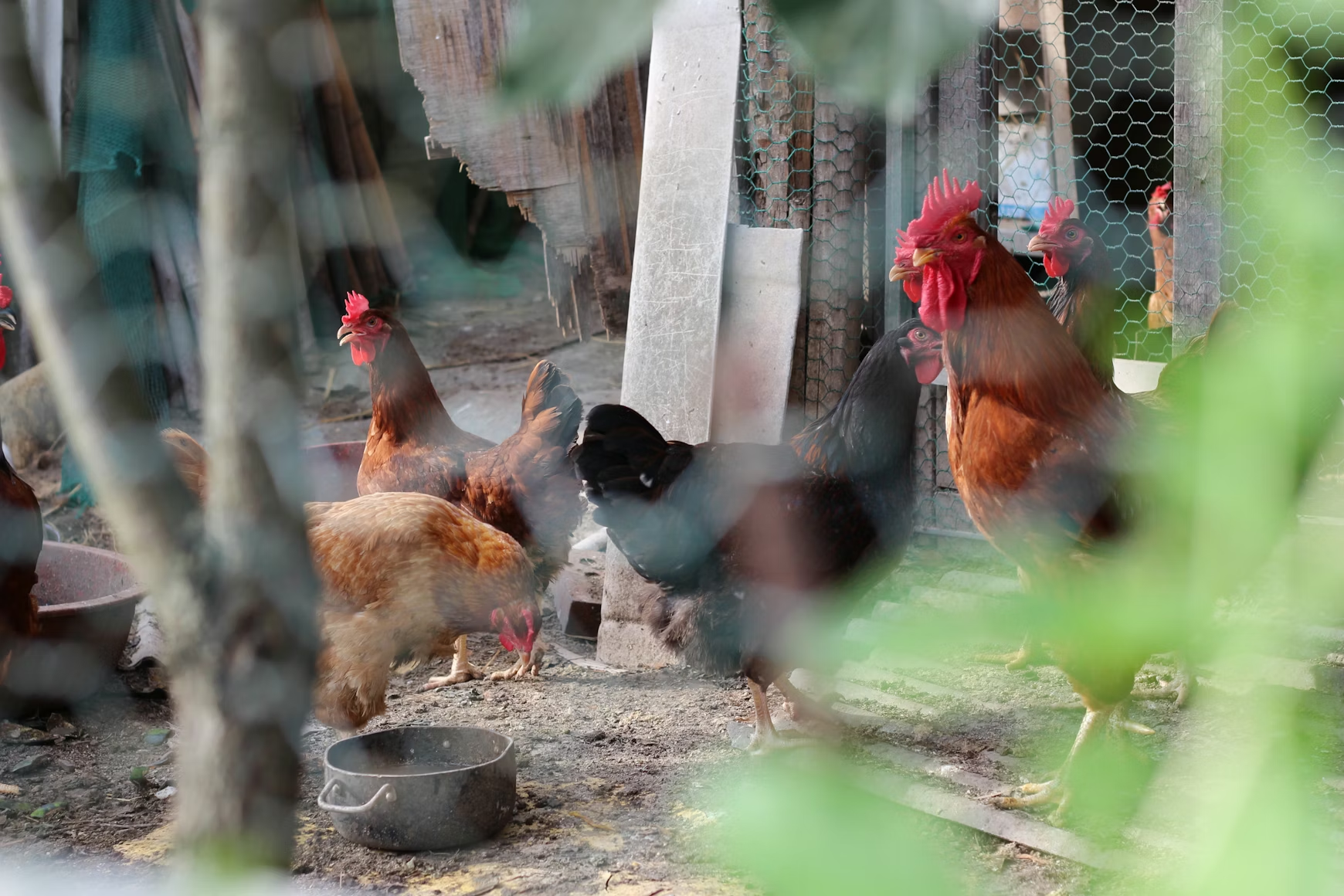

Main Ways Humate Is Used in Poultry
Humate is most often added directly to feed or drinking water, allowing it to exert effects throughout the digestive system and beyond. Less commonly, certain formulations are applied to litter to help control conditions in the housing environment.
In feed, sodium humate mixes evenly into the daily ration for broilers or layers. When provided through water, it dissolves readily and reaches birds consistently, especially useful during periods of stress or high density. Research consistently shows that these methods lead to measurable improvements when dosages align with the birds’ age, production phase, and overall diet.
The application of humate, particularly sodium humate and related humic substances, offers several well-documented benefits in poultry farming. These natural compounds, sourced from organic deposits such as leonardite or sapropel, serve primarily as dietary additives incorporated into feed or drinking water. Their inclusion supports multiple aspects of bird performance, health, and farm efficiency, making them a practical option for producers aiming to enhance outcomes while reducing reliance on synthetic inputs.
Growth Performance in Broilers
Sodium humate supplementation consistently improves key growth metrics in broiler chickens. Studies indicate increases in body weight gain, final body weight, and overall live performance. For instance, additions at levels of 0.3–0.75 g/kg feed or equivalent concentrations often result in higher body weights compared to unsupplemented controls. Feed conversion ratio (FCR) also improves, reflecting more efficient conversion of feed into body mass—values as low as 1.50 have been observed in some combined protocols, versus higher ratios in controls. This efficiency stems from enhanced nutrient utilization, where humate promotes better feed intake without proportional increases in consumption, leading to cost savings on feed over the production cycle.
These gains become particularly evident under challenging conditions, such as heat stress, where humate helps maintain viability and supports continued growth when environmental factors otherwise suppress performance.
Egg Production and Quality in Layers
In laying hens, humate contributes to elevated egg output and quality parameters. Supplementation correlates with higher egg production rates, increased egg mass, and improved feed intake during peak periods. Eggshell strength and thickness often increase, reducing breakage losses and enhancing market value. Some trials report earlier attainment of peak laying and extended high-production phases, alongside survival rates nearing 99–100% in treated flocks. These effects support more consistent yields and better economic returns for layer operations.
Intestinal Health and Nutrient Absorption
Humate exerts positive effects on gut structure and function. It promotes elongation of villi in the small intestine (particularly the jejunum), which expands the absorptive surface area and facilitates greater uptake of nutrients such as proteins, fats, and minerals. Crypt depth may decrease, indicating healthier mucosal architecture. These morphological changes align with improved digestibility of crude protein, fat, and organic matter.
Additionally, humate modulates the intestinal microbiota by favoring beneficial bacteria (e.g., lactic acid producers) while suppressing pathogens. This shift toward a balanced microbiome strengthens the gut barrier, reduces permeability to toxins, and limits dysbiosis-related issues. Short-chain fatty acid profiles, including higher butyric acid levels in some cases, further support epithelial health and energy supply to intestinal cells.
Immune Function and Antioxidant Capacity
Humate enhances both humoral and cellular immunity. Serum immunoglobulin levels (IgA, IgM) rise, contributing to stronger defense against infections. Antioxidant activity increases, as evidenced by elevated enzyme levels that combat oxidative stress. These improvements bolster overall resilience, particularly during periods of environmental or nutritional challenge, and help maintain flock health with fewer interventions.
Ammonia Reduction and Environmental Benefits
By binding ammonia in the digestive tract and excreta, humate lowers volatilization from manure and litter. This results in reduced airborne ammonia concentrations in housing, better air quality, decreased odor, and less respiratory stress for birds and workers. Lower crude protein content in droppings has been noted in some studies, suggesting more complete nitrogen utilization and reduced environmental nitrogen load from poultry operations.
Mycotoxin Mitigation
Humate demonstrates strong binding affinity for mycotoxins such as aflatoxin B1. It sequesters these contaminants in the gut, reducing their absorption and associated toxicity. This protective mechanism helps counteract negative impacts on liver function, growth, and immunity when feeds contain fungal contaminants, providing an added safeguard in regions prone to mycotoxin issues.
Practical Considerations for Application
Benefits depend on factors including humate quality (humic acid content ideally ≥50%), precise dosage, bird age, breed, and diet composition. Typical ranges remain 0.3–0.75% in feed for broilers and similar levels for layers, with adjustments based on observed responses. Starting at lower inclusions and monitoring performance over short cycles allows optimization.
In summary, humate delivers tangible advantages across growth efficiency, reproductive output, gut integrity, immune support, environmental control, and toxin protection. These outcomes position it as a reliable natural additive for sustainable poultry production, particularly in systems prioritizing health, welfare, and resource efficiency. Producers benefit from integrating it thoughtfully within existing management practices to realize consistent improvements.
Potential Constraints and Practical Integration
Results vary depending on humate source, exact dosage, bird age, diet balance, and farm environment. Some trials show limited or no growth effects at suboptimal levels, underscoring the need for precise application. Humate does not replace core management practices—adequate ventilation, biosecurity, balanced nutrition, and litter handling remain essential.
In summary, humate provides a practical, natural option for poultry producers seeking to improve performance, health, and sustainability. Its consistent inclusion, guided by trial observations and quality assurance, supports efficient operations while aligning with trends toward reduced antibiotic use and better environmental stewardship. Farmers considering this approach benefit from consulting local extension services or conducting controlled comparisons on their own farms to refine application for specific conditions.



Leave a Reply