

Humate refers to a class of natural organic compounds derived from the long-term decomposition of plant and animal matter over geological timescales. These materials, often extracted from ancient deposits such as leonardite, lignite, peat, or humic shale, consist primarily of humic substances. Humic substances encompass three main fractions: humic acid, fulvic acid, and humin, which differ in molecular size, solubility, and function.
In practical terms, humate is frequently used to denote the concentrated, extractable forms of these humic substances—particularly the salts (e.g., potassium humate or sodium humate) of humic and fulvic acids. It appears as a dark, carbon-rich powder, granule, or liquid and serves as a soil amendment rather than a direct fertilizer.
Expanded Benefits for Turfgrass
Humate influences soil and plant health through several interconnected mechanisms. It increases the soil’s cation exchange capacity, enabling better retention of essential nutrients such as nitrogen, phosphorus, potassium, iron, and micronutrients that might otherwise leach away during heavy tropical rains. By chelating these elements, humate makes them more readily available to turf roots, often leading to more efficient fertilizer use and potentially allowing reduced nitrogen rates without compromising color or density.
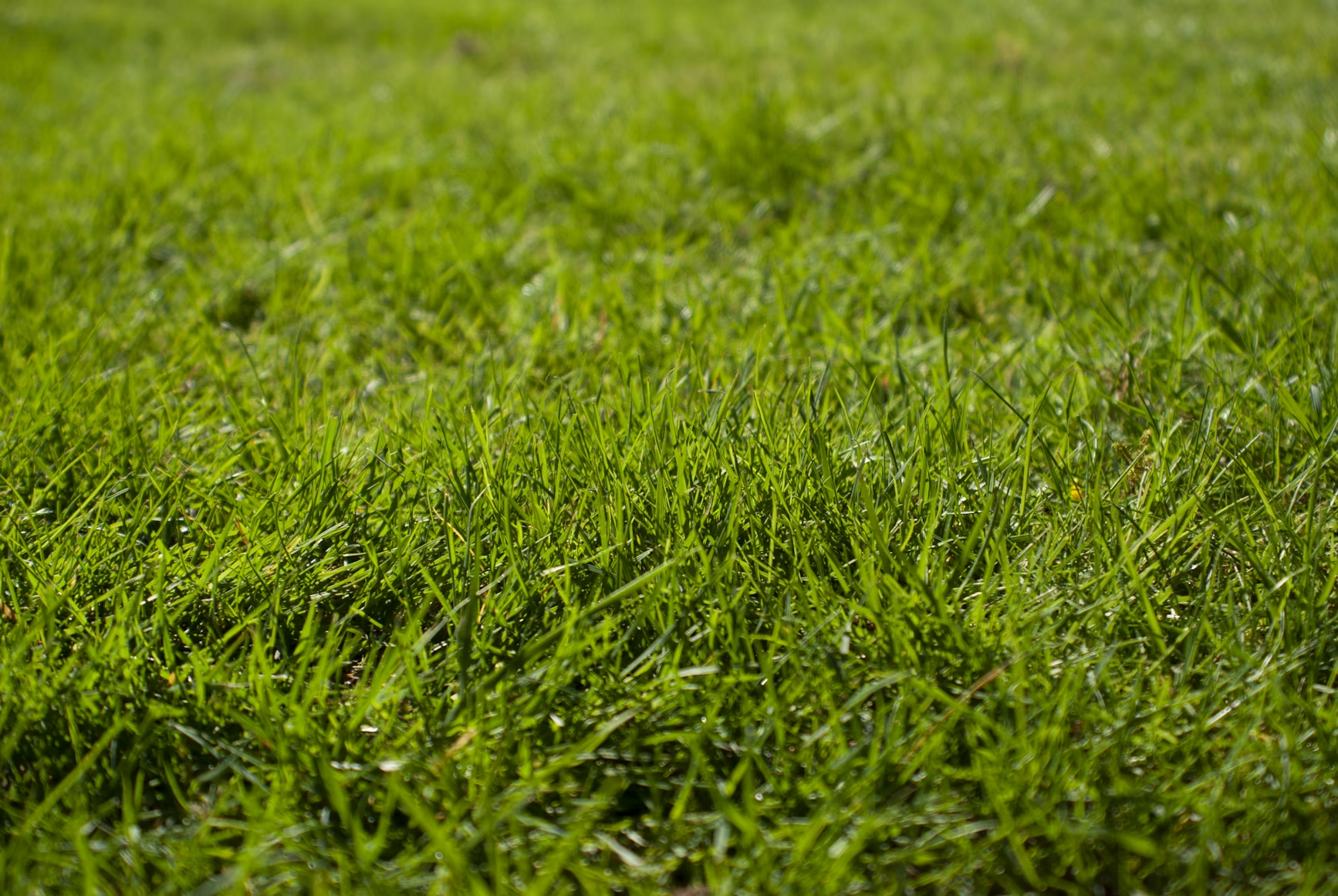
In hot, humid environments typical of Southeast Asia, humate supports deeper root systems in warm-season grasses such as Bermuda (Cynodon dactylon), Zoysia, or St. Augustine. Stronger roots improve drought tolerance during dry spells and enhance recovery from heat stress, foot traffic, or pest pressure. Humate also stimulates beneficial soil microbes, which contribute to organic matter breakdown, improved soil structure, and greater water infiltration—critical factors in compacted or sandy soils common in urban Vietnamese settings. Over time, consistent use can lead to darker green color, reduced thatch accumulation, and better overall turf quality, with some observations noting improved stress recovery and slightly lower irrigation needs.
Research and field experience indicate these effects are most pronounced in soils with low organic content (below 2–3%) or high sand percentages, conditions frequently encountered in tropical turf areas. While humate does not dramatically alter soil organic matter at typical rates, its biological stimulation often produces noticeable improvements in root mass and plant vigor.
Detailed Application Methods
Humate products come in granular, micronized powder, or liquid concentrate forms, each suited to different equipment and situations.
- Granular Humate — This form is straightforward for most users. Use a broadcast spreader for even coverage across larger areas or a drop spreader for precision near edges or obstacles. Calibrate the spreader according to the product’s recommended setting to avoid streaks. After spreading, irrigate lightly but thoroughly (approximately 5–10 mm of water) to move the granules into the soil profile and activate their effects. This step prevents material from being picked up by mowers and ensures contact with roots.
- Liquid Humate — Dilute the concentrate in water following label directions—commonly 1–2 tablespoons per gallon or equivalent rates—and apply using a pump sprayer, backpack sprayer, or hose-end applicator. For soil drench applications, ensure uniform coverage; for foliar use, apply during cooler parts of the day to minimize evaporation. Water in afterward if targeting soil benefits. Liquid forms penetrate quickly and suit frequent, lower-rate applications.
In practice, many turf managers combine humate with standard fertilizer applications for convenience and synergy, applying both during the same pass when conditions allow.
Timing and Frequency Recommendations
Apply humate during periods of active turf growth when soil temperatures exceed approximately 15–18°C and roots are responsive.
- Spring (February–April) — An initial application supports recovery from dry periods and kickstarts root activity as rains increase.
- Mid-Season (May–August) — Follow-up applications every 4–6 weeks maintain benefits during intense growth and stress periods.
- Fall (September–November) — A final application prepares turf for any drier transitions and promotes root reserves.
For most home lawns or general turf, 2–4 applications per year suffice. Professional sites like golf courses may use monthly applications during peak season. Start conservatively and observe turf response—adjust based on soil tests or visual cues such as color retention or rooting depth.
Application Rates – Practical Guidelines
Rates depend on product concentration (often 50–80% humic substances), soil needs, and turf type. Always prioritize the manufacturer’s label.
- Granular Forms (Maintenance) — 4–10 lbs per 1,000 square feet (20–50 kg per 1,000 m²), with 5 lbs per 1,000 square feet common for routine use. Higher rates (10–20 lbs) suit low-organic soils, new installations, or post-aerification.
- Professional or Intensive Use — Fairways/roughs: up to 220 lbs per acre (≈5 lbs per 1,000 square feet) during growth periods; greens/tees: 5 lbs per 1,000 square feet monthly.
- Liquid Forms — Typically 3–6 ounces per 1,000 square feet (or 1–2 gallons per acre diluted), applied every 4–6 weeks.
In sandy tropical soils, initial higher rates help establish benefits faster, followed by maintenance doses. Over-application poses low risk given humate‘s natural profile, though uniform distribution remains essential.
Step-by-Step Practical Application Process
- Prepare the Area — Mow the turf to normal height and remove clippings if heavy. Conduct soil testing if possible to confirm needs.
- Calibrate Equipment — Test spreader or sprayer output on a small measured area.
- Apply Product — Work in overlapping passes for coverage. Divide the area into sections if needed for accuracy.
- Water In — Irrigate promptly (within hours) to incorporate the humate. Aim for sufficient moisture without runoff.
- Monitor Response — Observe changes over 2–4 weeks, noting color, density, or recovery from stress. Reapply as planned.
Common Pitfalls and How to Avoid Them
Several errors can reduce effectiveness:
- Skipping watering after application — Humate requires moisture to activate and reach roots.
- Applying during extreme heat or dormancy — Benefits diminish when turf is stressed or inactive.
- Ignoring soil tests — Without baseline data, applications may address non-issues.
- Uneven spreading — Leads to patchy results; calibrate carefully.
- Expecting immediate miracles — Humate works gradually through soil improvement.
Final Recommendations
Humate offers a versatile, evidence-based tool for turf managers worldwide, complementing standard practices such as balanced fertilization, aeration, mowing, and irrigation. Its adoption supports environmentally responsible management by promoting soil vitality, resource efficiency, and reduced chemical dependency—priorities shared across continents.
Select products with verified humic substance content (e.g., 50–80%) from reputable sources, and tailor applications based on soil tests, turf species, and site-specific stresses. In diverse global contexts, from U.S. golf courses to European landscapes and Australian sports fields, consistent integration yields progressive improvements in turf resilience and quality.


Leave a Reply