
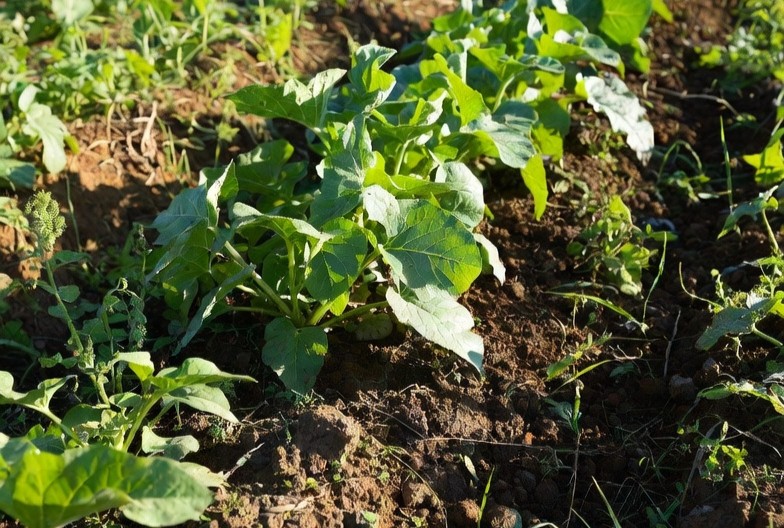

What is Humate?
Humate refers to concentrated, commercially processed forms of humic substances—naturally occurring, complex organic macromolecules derived primarily from the partial decomposition of ancient plant and animal residues. These materials are extracted from specific geological deposits, most commonly leonardite (oxidized lignite), certain low-grade coals, peat, or sapropelic sediments, and are refined into soluble powders, granules, or liquid concentrates for agricultural, environmental, and occasionally health-related applications.
Origin and Formation
Humic substances, of which humate is a practical derivative, form over geological timescales through the microbial and chemical transformation of organic matter under anaerobic or semi-anaerobic conditions. The process begins with fresh plant residues (lignin, cellulose, proteins) and progresses through stages of humification, yielding three operationally defined fractions:
- Humic acid: The fraction soluble in alkaline solutions (pH > 7) but insoluble in acidic conditions (pH < 2). It possesses higher molecular weight (typically 50,000–300,000 Da) and a higher content of aromatic structures.
- Fulvic acid: The fraction soluble at both acidic and alkaline pH values. It has lower molecular weight (typically 1,000–10,000 Da), greater oxygen content, and higher solubility and mobility.
- Humin: The insoluble residue that remains tightly bound to the mineral matrix even after exhaustive extraction.
Commercial humate products usually contain predominantly humic and fulvic acids in varying ratios, with the exact composition depending on the source material and extraction method (commonly alkaline extraction with KOH or NaOH, followed by acidification and precipitation steps).
1. Enhancement of Soil Physical Properties Across Soil Textures
In temperate regions, humate applications on loamy and clay-loam soils have consistently reduced surface crusting and improved aggregate stability, allowing earlier spring fieldwork and lower energy requirements for tillage.
In semi-arid zones (Australia, parts of the Great Plains, Middle East), sandy and sandy-loam soils treated with humate show increased cohesion, reduced wind erosion, and better resistance to sealing after irrigation or rainfall events.
In tropical and subtropical environments (Southeast Asia, Sub-Saharan Africa, northern South America), highly weathered soils with low aggregate stability benefit from humate-induced bridging of clay particles, leading to decreased compaction under mechanised or animal traction systems and improved infiltration rates during intense wet-season rains.
Across these settings, the formation of water-stable aggregates in the macro- and meso-pore range (0.25–4 mm) is a recurrent outcome, typically increasing mean weight diameter by 15–40 % within 1–2 seasons of regular application.
2. Improvement in Soil Water Relations and Drought Resilience
Global trials indicate that humate-treated soils retain 10–25 % more plant-available water in the root zone compared with untreated controls, particularly under deficit irrigation or rainfed conditions.
- In Mediterranean climates (Spain, California, Chile), olive, grape, and citrus orchards demonstrate extended periods of adequate soil moisture during summer dry spells, often reducing supplemental irrigation volume by one or two applications per season.
- In continental dryland cropping systems (Canada, Ukraine, Kazakhstan), wheat and barley fields exhibit delayed onset of moisture stress, contributing to higher grain fill and test weight.
- In monsoon-dependent regions (India, Vietnam, West Africa), rice and maize systems show better buffering against intermittent dry periods within the growing season, with observable differences in leaf rolling and canopy temperature.
The combined effects of improved pore distribution and hydrophilic functional groups on humate molecules account for these outcomes, with greatest relative benefit observed on coarse-textured soils or those with declining organic matter content.
3. Optimisation of Nutrient Use Efficiency on a Global Scale
Humate’s cation exchange and chelation capacity consistently reduces nutrient losses and increases fertiliser recovery across fertiliser regimes and soil pH levels.
- In high-input systems (Midwest USA, Northern Europe, East China), nitrogen use efficiency improves by 15–30 %, allowing growers to maintain yields while lowering total N application rates.
- In phosphorus-fixing soils (Brazilian Cerrado, parts of India and Africa), humate applications increase available P levels and reduce the requirement for high-analysis P fertilisers.
- In potassium-limited tropical soils (Indonesia, Central America), better K retention translates to improved fruit quality in banana, pineapple, and oil palm plantations.
Micronutrient responses are similarly widespread: zinc and iron deficiencies in calcareous soils (Middle East, Northwest India) and manganese availability in high-pH volcanic ash soils (Japan, parts of Indonesia) show measurable correction with humate use, often reducing the frequency of foliar micronutrient sprays.
4. Consistent Stimulation of Root System Development
Root sampling from trials conducted in the United States, Australia, Brazil, China, and Europe reveals increases in total root length (20–60 %), lateral root density, and fine root proportion in humate-treated plots.
These differences are associated with:
- Enhanced localised resource availability (moisture, nutrients, oxygen).
- Promotion of lateral branching through auxin-like activity in fulvic fractions.
- Reduced impedance to root penetration due to improved soil structure.
The practical result is faster crop establishment, stronger early vigour, and—in grain crops—higher tiller or panicle numbers surviving to maturity.
5. Elevation of Soil Biological Activity Worldwide
Microbial biomass carbon, basal respiration, and activities of enzymes such as dehydrogenase, phosphatase, and β-glucosidase increase following humate application in studies from North and South America, Europe, Asia, and Africa.
The magnitude varies (typically 20–70 % elevation in the first season), but the direction is consistent. In no-till and conservation agriculture systems (Argentina, Paraguay, Australia), humate supports faster residue decomposition and nutrient cycling without additional nitrogen inputs. In paddy rice systems (China, Vietnam, India), accelerated straw breakdown reduces the anaerobic lag period and associated methane emissions.
6. Amelioration of Abiotic Stresses in Diverse Environments
Humate applications provide partial mitigation against salinity (coastal China, Egypt, Australia), sodicity (Indo-Gangetic Plain), acidity (Brazil, Indonesia), and heavy metal contamination (Eastern Europe, parts of China).
Observed outcomes include:
- Reduced sodium adsorption and improved calcium displacement in sodic soils.
- Enhanced osmotic adjustment and ion exclusion in saline conditions.
- Lower aluminium toxicity symptoms in strongly acidic tropical soils.
- Decreased uptake of cadmium and lead in polluted industrial peri-urban zones.
While not a substitute for drainage, gypsum, or liming, humate frequently improves crop tolerance and yield stability under moderate stress levels.
Global Application Patterns and Realistic Expectations
Typical effective rates range from 2–12 kg/ha of high-purity humate per crop cycle, applied as soil incorporation, fertigation, or foliar sprays. Benefits accumulate over 1–3 seasons and are most pronounced on soils with:
- Organic matter content below 2 %.
- CEC below 12 cmol(+) kg⁻¹.
- Evidence of nutrient stratification, poor structure, or inefficient fertiliser response.
In high-fertility, high-organic-matter soils (e.g., Midwest mollisols, European chernozems), incremental gains are smaller and require longer observation periods.
Concluding Perspective
Humate does not supplant sound agronomic practices—balanced fertilisation, appropriate crop rotation, residue management, and water control remain foundational. However, its ability to simultaneously address physical, chemical, and biological limitations in soil makes it a broadly applicable amendment across temperate, arid, tropical, and subtropical production systems.
For growers evaluating humate in a specific context—whether rainfed cereals in the Canadian Prairies, irrigated cotton in Uzbekistan, coffee in Colombia, or rice in the Mekong Delta—initiating small-scale, replicated strip trials with baseline and follow-up soil analyses provides the most reliable local evidence of benefit.




Leave a Reply