
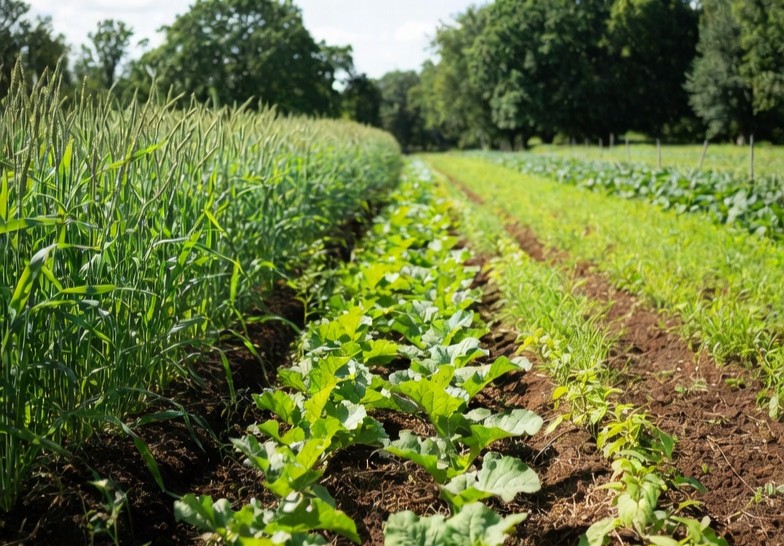

The best humate for soil amendment depends on several practical factors: the source material, humic substance concentration, form (granular, powder, or liquid), solubility, and how it fits the specific soil type, crop, and farming system. In most cases, high-quality potassium humate derived from premium leonardite deposits stands out as the top choice for reliable, long-term soil improvement. These products deliver consistent results in nutrient retention, root development, microbial stimulation, and overall soil health without introducing unnecessary risks like excess sodium or contaminants. Many growers choose this type because it dissolves easily, delivers strong humic substances without adding problems like extra sodium, and gives noticeable improvements in soil holding power, root growth, and fertilizer savings. Lower-grade products or those from poorly oxidized lignite often fall short in comparison, even if the label lists similar percentages.
What Makes One Humate Better Than Another in Practice
The starting material matters more than most people realize. Leonardite from certain North American deposits—particularly those in North Dakota—tends to test higher in humic acid right from the raw stage, frequently 60–80% total humic substances before processing. When manufacturers extract and convert it to potassium humate, the final product regularly reaches 70–85% humic acid, sometimes pushing 90% in the best grades, with fulvic acid contributing another 5–15%. These numbers come from standardized lab methods, and the material usually has low ash (under 15–20%) and minimal heavy metals.
In contrast, a lot of humate sold at lower prices comes from less-oxidized lignite or mixed sources in Asia or elsewhere. Raw material here might only contain 30–50% humic substances, so even after processing, the potassium humate often ends up at 50–65% humic acid. The difference shows up in the field: slower changes in soil structure, less consistent nutrient retention during heavy rains, and weaker root responses compared to higher-grade material.
Solubility is another practical difference. Top potassium humate dissolves completely in water with almost no sediment, making it suitable for drip irrigation, fertigation tanks, or foliar sprays without clogging lines or nozzles. Cheaper versions sometimes leave residue that requires extra filtering or stirring, which adds labor and risk in busy seasons.
Why Potassium Humate from High-Quality Leonardite Leads the Field
Potassium humate remains the most widely recommended and used form for soil amendment worldwide, including in tropical regions like Vietnam. The potassium neutralization process makes the humic acid highly water-soluble, allowing easy application through fertigation, foliar sprays, or direct soil mixing. It also supplies a modest amount of potassium (typically 8–12% K₂O), which supports plant growth without overloading the system.
The key advantage comes from the source: leonardite with high natural humic content. Deposits from North Dakota (United States) consistently rank among the best due to elevated humic acid levels—often 70–85% in processed potassium humate—and low ash (under 15–20%). These sources produce cleaner, more bioactive products compared to lower-grade lignite or less-oxidized materials. Some North American humalite variants reach even higher averages (around 80–87% humic substances), with reduced heavy metals and better extraction efficiency.
In comparison, many Asian or lower-cost imports derive from lignite with humic contents starting at 40–60% in raw form, resulting in final products that test lower overall. While these can still work, the performance gap shows in slower soil structure changes and less pronounced nutrient efficiency gains.
Top Characteristics to Look For in the Best Humate
- Humic Acid Content — Aim for 65–90% in soluble potassium humate (premium grades hit 70–85% or higher). Fulvic acid should contribute 5–15% for better mobility and quick uptake.
- Solubility — Fully water-soluble flakes, powder, or liquid for uniform distribution; avoid products that leave heavy residue.
- Low Ash and Contaminants — Ash below 20%; heavy metals well within regulatory limits (verified by lab certificates).
- Form Suitability — Granular for broadcast in large fields; liquid or soluble powder for drip systems and foliar use common in vegetable and fruit production.
- Certifications — OMRI-listed or equivalent for organic systems; third-party testing using standardized methods (e.g., HPTA or ISO).
Products meeting these criteria deliver measurable improvements: 15–25% better fertilizer use efficiency, stronger root systems, reduced leaching in sandy or rainy conditions, and gradual increases in soil organic matter and water-holding capacity.
Practical Examples of Strong Performers
High-concentration potassium humate from North American leonardite sources often appears in professional agricultural lines. Brands emphasizing 70–85% humic acid in soluble form perform consistently in field trials for row crops, orchards, and turf. Granular options with 70%+ humic acid combined with biochar or other stabilizers suit rebuilding depleted soils, providing slow-release benefits over multiple seasons.
Some liquid concentrates at 12–24% humic substances excel in fertigation-heavy systems, offering rapid root stimulation and chlorophyll enhancement. For broad-acre or lawn use, coarse granular humates at 45–80% humic content provide cost-effective, long-lasting conditioning.
Blends incorporating fulvic-dominant fractions add quick nutrient delivery, but pure high-potency potassium humate covers the broadest needs without complexity.
Application Guidance for Maximum Results
Start with soil testing to identify deficiencies—low organic matter, compaction, high pH, or nutrient fixation respond best. Typical rates:
- Soluble potassium humate: 3–10 kg/ha per season via fertigation (split applications); 0.5–2 kg/ha foliar.
- Granular humate: 200–800 kg/ha annually for maintenance; 1–3 tons/ha initial on poor soils.
Combine with balanced fertilizers rather than replacing them entirely. Early-season use builds roots; mid-season applications sustain growth during stress periods.
Realistic Considerations and Cautions
Not every high-humic product performs identically—deposit variability and processing matter. Lower-grade sources may advertise similar percentages but deliver less due to poor bioavailability or higher insolubles. Always request recent lab reports.
In saline or sodic soils, avoid sodium humate variants. Over-application rarely harms but wastes money; modest, consistent use yields the best cumulative effects.
Small on-farm trials—treated versus untreated strips—provide the clearest proof under local conditions. Track yield, quality, input costs, and soil observations over one to two cycles.
Closing Thoughts
For most growers seeking the best humate soil amendment, potassium humate from premium leonardite sources offers the strongest combination of concentration, solubility, and proven field performance. It addresses core soil challenges—nutrient loss, poor structure, weak roots, and stress tolerance—while supporting sustainable practices and cost savings on fertilizers. Selecting verified, high-humic products and applying them thoughtfully turns this natural amendment into a reliable tool for healthier soil and more stable production season after season.

Leave a Reply