
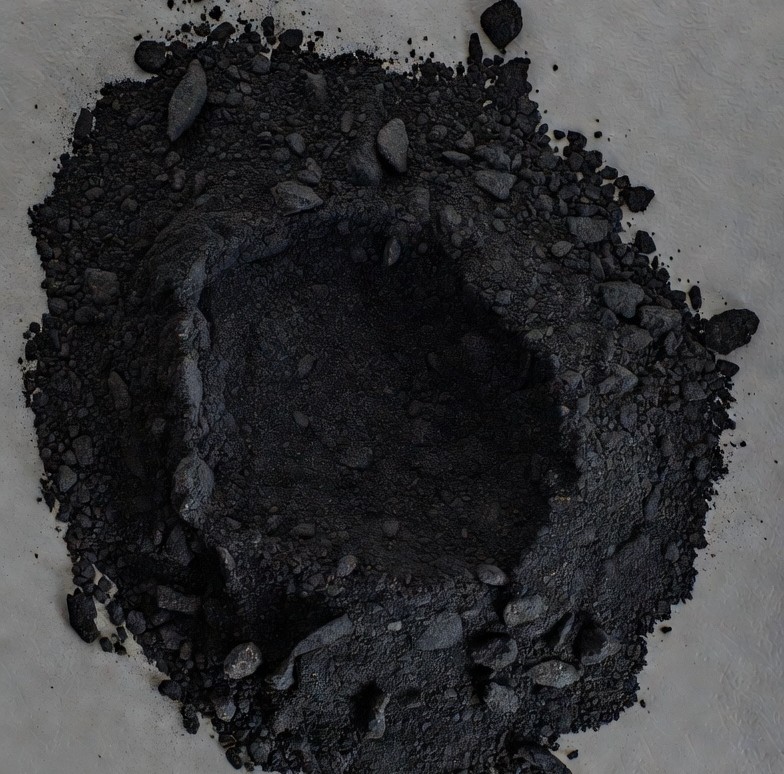

The Cation Exchange Capacity (CEC) of Humate constitutes one of the most significant properties in soil fertility management and sustainable agriculture. This parameter directly influences the ability of humate to retain, store, and release essential plant nutrients, thereby playing a central role in improving soil fertility, optimizing fertilizer efficiency, and reducing environmental losses of nutrients.
Humate, in its commercial forms—most commonly potassium humate, sodium humate, or ammonium humate—derives from the controlled alkaline extraction of naturally occurring humic-rich materials, particularly leonardite (a highly oxidized form of lignite), certain lignites, and selected peats. These source materials undergo extensive microbial and geochemical transformation over geological timescales, resulting in complex, heterogeneous organic macromolecules rich in oxygen-containing functional groups. The principal constituents of humate include humic acids (the dominant fraction in most products), fulvic acids (more soluble and reactive), and minor amounts of humin (the insoluble residue).
Precise Definition of Cation Exchange Capacity (CEC)
Cation Exchange Capacity quantifies the ability of a material to attract, retain, and exchange positively charged ions (cations) at negatively charged surface sites. These sites arise primarily from dissociated functional groups. The capacity is expressed in milliequivalents per 100 grams (meq/100 g) or centimoles of positive charge per kilogram (cmol_c/kg), with both units being equivalent. In practical terms, CEC determines how effectively a soil or amendment can store essential plant nutrients—including calcium (Ca²⁺), magnesium (Mg²⁺), potassium (K⁺), sodium (Na⁺), and ammonium (NH₄⁺)—while minimizing losses through leaching. Higher CEC values enhance nutrient availability over time, improve pH buffering, and support overall soil health.
Humate: Origin, Composition, and Structural Features
Humate refers to the soluble salts of humic substances, most commonly potassium humate, sodium humate, or ammonium humate, obtained through alkaline extraction from naturally occurring deposits such as leonardite (highly oxidized lignite), lignite, or certain peats. The principal constituents include:
- Humic acids — the dominant fraction in most commercial humates, characterized by higher molecular weight and partial solubility in alkaline conditions.
- Fulvic acids — lower molecular weight, fully soluble across a wide pH range, and exhibiting greater reactivity.
- Humin — insoluble residue with lower functional group density.
These humic substances form through prolonged microbial decomposition and geochemical oxidation of plant residues. Their complex, heterogeneous structure features abundant carboxyl (-COOH), phenolic (-OH), carbonyl, and other oxygen-containing groups. Upon dissociation, these groups generate negative charges that serve as primary binding sites for cations.
Mechanisms Responsible for the Exceptionally High CEC in Humate
The elevated CEC of humate stems from its high density of ionizable functional groups per unit mass, far exceeding that of most inorganic soil colloids. Carboxyl groups dissociate readily (pKa ≈ 4–5), while phenolic groups contribute at higher pH (pKa ≈ 8–10). This results in a large number of negatively charged sites capable of electrostatic attraction to cations. Additional contributions arise from:
- Variable charge behavior — dependent on pH, with greater deprotonation in neutral to alkaline conditions.
- Large specific surface area — enhancing exposure of charge sites.
- Chelation potential — forming stable complexes with polyvalent cations, beyond simple ion exchange.
Consequently, humate CEC routinely surpasses values for clay minerals (e.g., kaolinite: 3–15 meq/100 g; illite: 15–40 meq/100 g; montmorillonite: 80–150 meq/100 g) and typical mineral soils (commonly 5–25 meq/100 g for loams and clays).
Reported CEC Values for Humate and Related Materials
CEC values for humate exhibit considerable variation due to differences in raw material origin, extraction methodology, humic-to-fulvic acid ratio, degree of oxidation, and analytical procedure (e.g., pH of measurement, often standardized at pH 7 or 8.5). Representative ranges drawn from scientific literature, product specifications, and industry data include:
- Commercial leonardite-derived humates (primarily potassium or sodium humate): 200–500 meq/100 g, with many products clustering around 300–450 meq/100 g.
- High-quality potassium humate — frequently 250–400 meq/100 g; specialized formulations occasionally report 500–600 meq/100 g.
- Humic acid fractions (isolated): 300–600 meq/100 g.
- Fulvic acid-enriched fractions: 500–1,400 meq/100 g, reflecting their higher density of reactive carboxyl groups.
- Extreme reported values — some highly processed or fulvic-dominant products claim up to 1,900 meq/100 g, though such figures typically represent theoretical or optimized laboratory conditions rather than standard commercial materials.
In comparison, native soil organic matter generally ranges from 100–400 meq/100 g, while highly humified humus may reach 250–400 meq/100 g. Leonardite-based humates consistently demonstrate superior performance in agricultural applications owing to their elevated and stable CEC.
Key Factors Influencing CEC in Humate
Several variables govern the measured and effective CEC:
- Source material and degree of humification — Leonardite, being highly oxidized, yields humates with greater functional group density than less-altered lignite or peat.
- pH dependence — CEC increases markedly with rising pH as more carboxyl and phenolic groups deprotonate, generating additional negative charges. At acidic pH (<5–6), protonation reduces available sites, lowering effective CEC. Measurements at neutral to slightly alkaline pH (7–8) yield the highest values.
- Functional group composition — Higher proportions of carboxyl groups elevate CEC; fulvic acids, with greater carboxyl density, exhibit superior capacity compared to humic acids.
- Extraction and purification processes — Alkaline extraction exposes more charge sites, while excessive processing may alter molecular configuration.
- Presence of associated minerals — Interactions with metals or clays in the source material can modestly influence net charge.
These factors underscore the importance of product specifications and application context when utilizing humate.
Agronomic and Environmental Implications
The incorporation of humate into soil systems—via granular amendments, liquid fertigation, seed treatments, or foliar sprays—substantially augments overall CEC, particularly in low-organic-matter environments such as sandy soils (native CEC often 1–8 meq/100 g). Benefits include:
- Enhanced retention of applied fertilizers, reducing nutrient leaching and improving use efficiency.
- Gradual release of bound cations to plant roots, supporting sustained nutrition.
- Improved soil structure, aggregation, and water-holding capacity through interactions with clay and mineral particles.
- pH buffering and mitigation of aluminum toxicity in acidic soils.
- Stimulation of microbial activity and root development via indirect effects on nutrient availability.
In high-CEC soils (e.g., clay loams >25 meq/100 g), humate additions provide supplementary advantages in nutrient dynamics and stress tolerance. Long-term use contributes to sustainable fertility management by decreasing reliance on synthetic inputs and minimizing environmental nutrient losses.
Conclusion
Humate exhibits one of the highest cation exchange capacities among natural soil amendments, typically ranging from 200 to 800 meq/100 g, with many commercial products falling within 300–500 meq/100 g. This exceptional capacity arises from abundant, pH-responsive functional groups within humic and fulvic structures, enabling superior nutrient retention and release compared to conventional soil components. When integrating humate into fertility programs, selection should prioritize verified analytical data on CEC, source quality, and compatibility with soil pH and crop requirements. Such informed application maximizes benefits for soil health, crop productivity, and environmental stewardship in modern agricultural systems.




Leave a Reply