
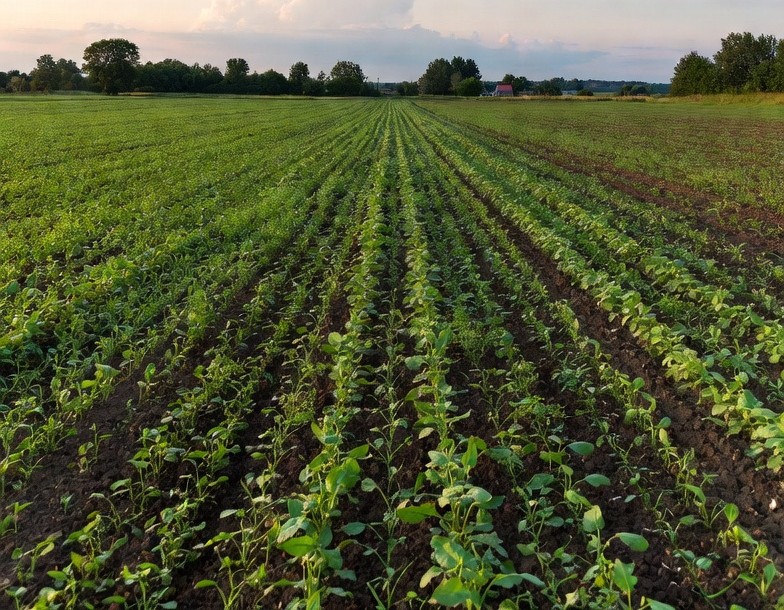

Granular humate serves as a valuable, naturally derived soil conditioner employed extensively in agricultural production, horticulture, turf management, and garden maintenance. Granular humate originates primarily from oxidized lignite deposits, most commonly leonardite—a soft, brownish coal-like material formed through the geological transformation of ancient plant residues over millions of years. Leonardite undergoes natural oxidation processes that concentrate humic substances, yielding a product rich in humic acid (typically 45–85% by weight in high-quality sources), fulvic acid (often 5–15%), and humin, along with trace minerals and organic carbon.
Manufacturers process this raw material by drying, grinding, and forming it into uniform granules (commonly 2–6 mm in size) without chemical alteration in most cases, preserving its organic integrity. Certain products achieve OMRI listing or equivalent organic certification, confirming suitability for certified organic systems. The granular format distinguishes it from finer powders or liquid extracts by offering controlled release characteristics, minimal dust during handling, and compatibility with mechanical spreading equipment.
Detailed Mechanisms of Action in Soil
Granular humate exerts its effects through multiple interconnected pathways within the soil ecosystem:
- Physical Soil Improvement — Humic substances promote flocculation of clay particles and enhance aggregate formation, leading to improved soil porosity, reduced bulk density, and better resistance to compaction. This facilitates deeper root exploration and mitigates surface crusting.
- Hydrological Enhancement — The colloidal nature of humic acids increases the soil’s water-holding capacity, particularly in coarse-textured or sandy profiles. Water molecules bind to humic functional groups, extending availability during dry periods and reducing overall irrigation demand by 10–30% in many documented cases.
- Chemical Nutrient Dynamics — By substantially raising the soil cation exchange capacity (often by 20–100% depending on initial conditions), granular humate retains positively charged nutrients (e.g., ammonium, potassium, calcium, magnesium) against leaching. It also chelates micronutrients such as iron, zinc, and manganese, converting them into plant-available forms while mitigating fixation in high-pH or calcareous soils.
- Biological Stimulation — Humic and fulvic acids serve as a carbon energy source and growth-promoting compounds for soil microbiota, including bacteria, fungi, and actinomycetes. This fosters increased microbial biomass, accelerated organic matter mineralization, enhanced nitrogen fixation in leguminous systems, and improved phosphorus solubilization.
- Plant Physiological Responses — Root systems exhibit greater mass, length, and branching due to stimulated auxin-like activity from fulvic fractions. Plants display higher chlorophyll concentrations, improved photosynthetic efficiency, and greater tolerance to abiotic stresses (drought, salinity, temperature extremes) and certain biotic pressures.
These mechanisms contribute cumulatively to observable outcomes, including elevated crop yields (frequently 5–20% in field trials), enhanced produce quality (e.g., improved sugar content, color, shelf life), and reduced dependency on synthetic inputs.
Comparative Analysis of Humate Formulations
Granular humate exhibits distinct performance characteristics relative to other common humate products:
- Versus Powdered Humic Acid — Granules produce far less airborne dust, enabling safer and more precise broadcasting with standard fertilizer spreaders. Distribution uniformity improves, particularly over large areas, whereas powders may clump or drift. Powders often dissolve more rapidly upon wetting but require careful incorporation to avoid surface loss.
- Versus Liquid Humates or Soluble Extracts — Liquids provide immediate bioavailability and suit foliar sprays, fertigation, or rapid correction of deficiencies, delivering effects within days to weeks. Granular products, by contrast, emphasize longevity—releasing humic compounds gradually over months to years—making them preferable for foundational soil building, pre-plant incorporation, or annual maintenance programs. Liquids typically carry higher per-unit costs due to water content and packaging, while granules offer greater applied humic mass per application at lower expense.
- General Considerations — Granular forms excel in dry-blend fertilizer compatibility (e.g., with urea, MAP, or potash), whereas liquids integrate seamlessly into irrigation systems. Selection depends on cropping system, equipment availability, timing constraints, and whether short-term stimulation or long-term soil remediation constitutes the primary objective.
Major Producing Countries and Regions
Production of granular humate concentrates in areas with abundant leonardite or lignite deposits, supplemented by processing capacity and export infrastructure. Key countries include:
- China — Dominates global output and exports, benefiting from extensive weathered coal and leonardite reserves (particularly in provinces such as Inner Mongolia, Xinjiang, Shanxi, and Henan). China accounts for the largest share of humate shipments internationally, supported by large-scale manufacturing facilities and cost-effective extraction technologies. It leads in both raw material sourcing and finished granular/powdered products.
- United States — A major hub for high-quality extracted humates, with significant leonardite mining in states including North Dakota, New Mexico, and Wyoming. The U.S. market for humates reaches approximately USD 210 million in 2025, with granular and powder forms comprising over half of domestic consumption. North American producers emphasize consistent quality, often targeting premium agricultural and environmental applications.
- Other Notable Contributors — Russia possesses substantial lignite-derived resources; India maintains growing production and domestic consumption tied to soil fertility programs; Canada features advanced extraction from humalite deposits; select European countries (e.g., Germany) focus on specialized, high-purity formulations.
Export data underscore China’s leading role (often exceeding 70–80% of global humate trade volumes in certain categories), followed by the United States and India. Regional consumption patterns align with agricultural intensity: Asia-Pacific exhibits the fastest uptake, while North America and Europe prioritize regulated, high-value segments.
Expanded Application Protocols and Rate Recommendations
Effective use of granular humate requires alignment with soil type, crop requirements, and existing management practices. Rates vary widely based on analytical data, but the following ranges reflect common commercial and research-based guidelines:
- Broad-acre Field Crops (cereals, soybeans, maize, cotton): 75–300 lb/acre annually; severely depleted or sandy soils may warrant 400–600 lb/acre in the initial 1–2 years to establish baseline organic matter improvements, followed by maintenance at 100–200 lb/acre.
- Orchards, Vineyards, and Perennials: 150–400 lb/acre broadcast pre-bud break or post-harvest, often banded under drip lines at 50–150 lb/acre for targeted root-zone delivery.
- Vegetable Production: 100–250 lb/acre pre-plant incorporation; side-dress or top-dress at 50–100 lb/acre during active growth for high-value crops.
- Turfgrass and Lawns: 5–15 lb per 1,000 ft² (approximately 220–650 lb/acre equivalent) applied 1–2 times per season, ideally during spring green-up or fall recovery; athletic fields or high-traffic areas benefit from quarterly light applications (3–8 lb/1,000 ft²).
- Home Gardens and Raised Beds: 10–30 lb per 1,000 ft² mixed into top 4–6 inches of soil, or 1–2 lb per cubic yard of potting media.
Application Techniques:
- Broadcast evenly using drop or rotary spreaders, followed by light incorporation (disking, tilling, or irrigation) to position granules in the active root zone.
- Blend with granular fertilizers for simultaneous nutrient and humate delivery.
- Apply during periods of adequate soil moisture to initiate solubilization; avoid extremely dry conditions that delay activation.
- Conduct soil testing (organic matter, CEC, pH, nutrient status) beforehand to refine rates and monitor progress over multiple seasons.
Over-application remains uncommon but may temporarily immobilize certain nutrients if excessive humic binding occurs; gradual increases yield the most consistent results.
Final Considerations
Granular humate constitutes a reliable, evidence-supported tool for advancing soil resilience and agricultural sustainability. Its slow-release profile supports progressive enhancement of soil functions without the volatility associated with synthetic amendments. Integration into a comprehensive fertility strategy—complemented by cover cropping, reduced tillage, and balanced nutrient management—maximizes return on investment through improved resource-use efficiency and environmental stewardship.

Leave a Reply