
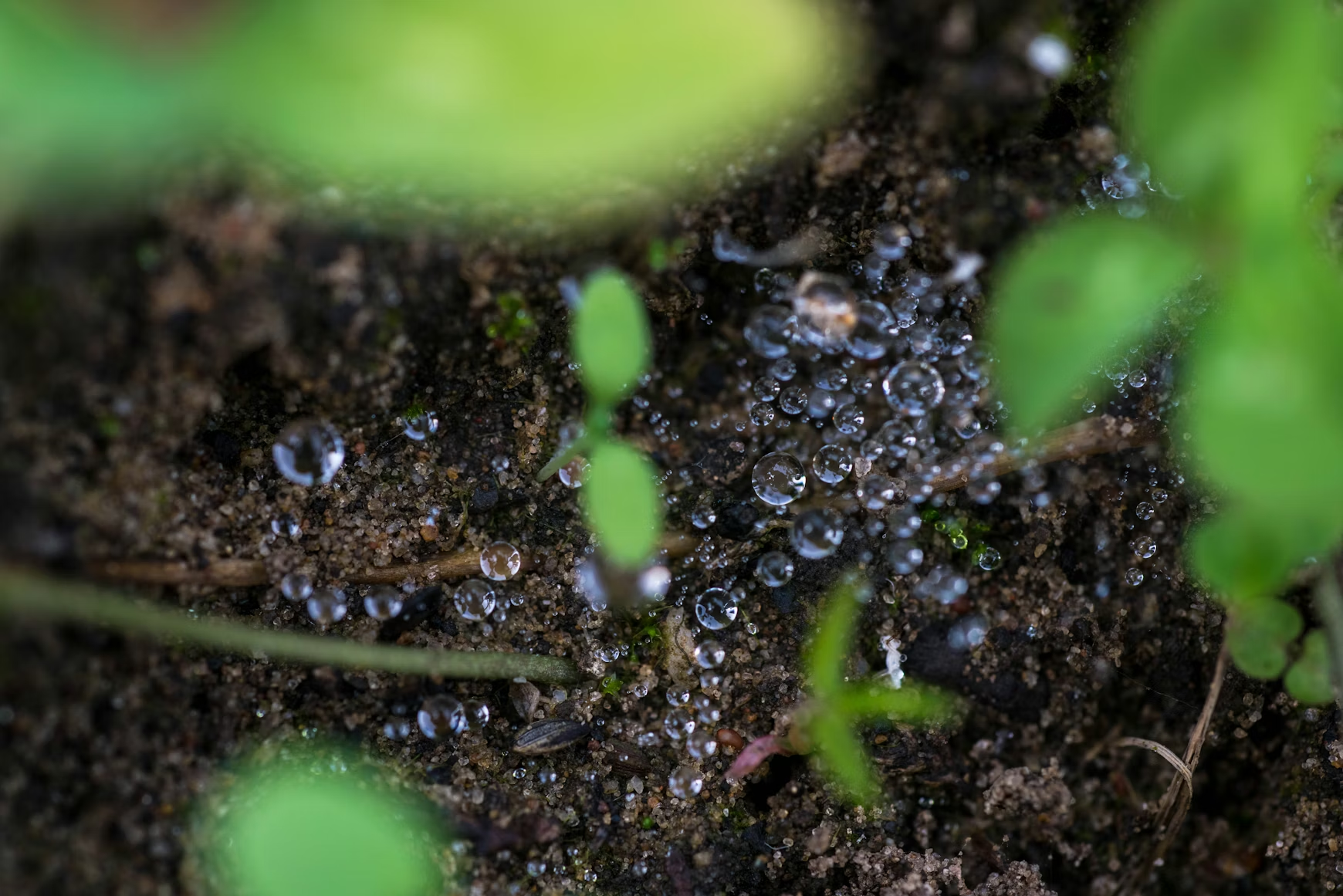

The incorporation of humate into soil systems consistently results in measurable increases in microbial activity, biomass, and functional diversity. This stimulatory effect constitutes a major contribution to the overall soil biological improvement observed with humate use and helps explain many of the documented benefits in crop performance, nutrient cycling, and soil resilience.
Humate—most commonly applied as potassium humate, sodium humate, or ammonium humate extracted from leonardite, oxidized lignite, or certain peat deposits—contains a complex mixture of humic acids, fulvic acids, and associated organic compounds that interact directly and indirectly with soil microbial communities.
Primary Pathways of Microbial Stimulation
Several distinct but overlapping mechanisms account for the observed enhancement:
- Direct Supply of Organic Carbon and Energy Substrates Humic and fulvic fractions serve as carbon and energy sources for heterotrophic microorganisms. Although humic substances are relatively resistant to rapid decomposition, their partial solubility (especially fulvic acids) and heterogeneous molecular structure provide a range of utilizable carbon compounds. This supports growth of diverse bacterial and fungal populations capable of utilizing these substrates over extended periods.
- Redox Mediation and Electron Shuttling Quinone and hydroquinone groups within humic macromolecules enable humate to function as both an electron acceptor and donor. This redox buffering capacity facilitates microbial respiration under fluctuating oxygen conditions, particularly in microsites with low oxygen availability. Species such as iron-reducing and sulfate-reducing bacteria, as well as certain fermentative organisms, derive energetic advantages from humate-mediated electron transfer, leading to increased metabolic rates and population sizes.
- Modification of the Soil Physical-Chemical Environment Humate promotes soil aggregation, increases porosity, improves water retention, and enhances aeration in compacted or heavy-textured soils. These physical changes create more hospitable microhabitats for microbial colonization. Chemically, humate buffers pH fluctuations, reduces free aluminum concentrations in acidic soils, and sequesters potentially toxic metals, thereby lowering environmental stress on microbial populations that are otherwise sensitive to extreme conditions.
- Induction of Soil Enzyme Activities Repeated measurements show elevated activities of key soil enzymes following humate application. These include:
- Dehydrogenase (indicator of overall microbial oxidative activity)
- Urease (nitrogen mineralization)
- Acid and alkaline phosphatases (phosphorus cycling)
- β-glucosidase and cellulase (carbon cycling)
- Invertase (sucrose hydrolysis) Higher enzyme levels reflect intensified microbial metabolism and accelerated turnover of organic matter and nutrients.
- Rhizosphere and Plant-Mediated Effects Humate stimulates root elongation, branching, and overall root system development. Increased root biomass and exudation of low-molecular-weight organic compounds (sugars, amino acids, organic acids) supply additional carbon to the rhizosphere microbial community. This selective enrichment often favors plant growth-promoting bacteria (e.g., Pseudomonas, Bacillus, Azospirillum) and arbuscular mycorrhizal fungi, resulting in more balanced and functionally active microbial consortia around the root zone.
Documented Changes in Microbial Communities
Field and laboratory studies reveal the following typical responses:
- Increased Microbial Biomass — Measured as microbial biomass carbon (fumigation-extraction or substrate-induced respiration methods), biomass frequently rises by 20–100% depending on soil type, humate rate, and baseline organic matter content.
- Shifts in Community Composition — Proteobacteria and Actinobacteria often increase in relative abundance, accompanied by rises in Acidobacteria, Bacteroidetes, and Chloroflexi in some systems. Nitrogen-fixing, phosphate-solubilizing, and siderophore-producing taxa commonly show positive responses.
- Functional Diversity — Community-level physiological profiling and enzyme-based assays indicate broader substrate utilization patterns and greater functional redundancy after humate application.
- Stress Mitigation — In saline, heavy-metal-contaminated, or continuously cropped soils, humate helps maintain or restore microbial populations that would otherwise decline sharply.
Practical Outcomes in Agricultural Systems
These microbial enhancements translate into several agronomically relevant consequences:
- Faster decomposition of crop residues and green manures.
- Increased rates of nitrogen mineralization, biological nitrogen fixation, and phosphorus solubilization.
- Improved nutrient availability throughout the growing season.
- Greater soil resilience against drought, salinity, and temperature extremes due to more diverse and robust microbial communities.
- Reduced need for high-rate synthetic fertilizer inputs in many production systems.
- Support for long-term soil organic matter accumulation through stimulated microbial processing of plant inputs.
The magnitude of these effects is generally greatest in soils with low native organic matter (<1–2%), coarse texture, intensive tillage history, or other constraints on microbial activity. Responses are also influenced by humate composition (higher fulvic acid content often produces quicker effects), application timing, incorporation method, and integration with complementary practices such as cover cropping or reduced tillage.
Final Remarks
Humate enhances soil microbial activity through a combination of direct carbon and energy supply, redox mediation, physical-chemical habitat improvement, enzyme induction, and rhizosphere stimulation. The result is elevated microbial biomass, altered community structure favoring beneficial functional groups, and intensified biogeochemical cycling. When selected and applied appropriately—considering source characteristics, humic/fulvic balance, application rate, and prevailing soil conditions—humate functions as a reliable natural biostimulant that strengthens soil biological processes, supports sustainable nutrient management, and contributes to long-term improvements in soil health and agricultural productivity.




Leave a Reply