
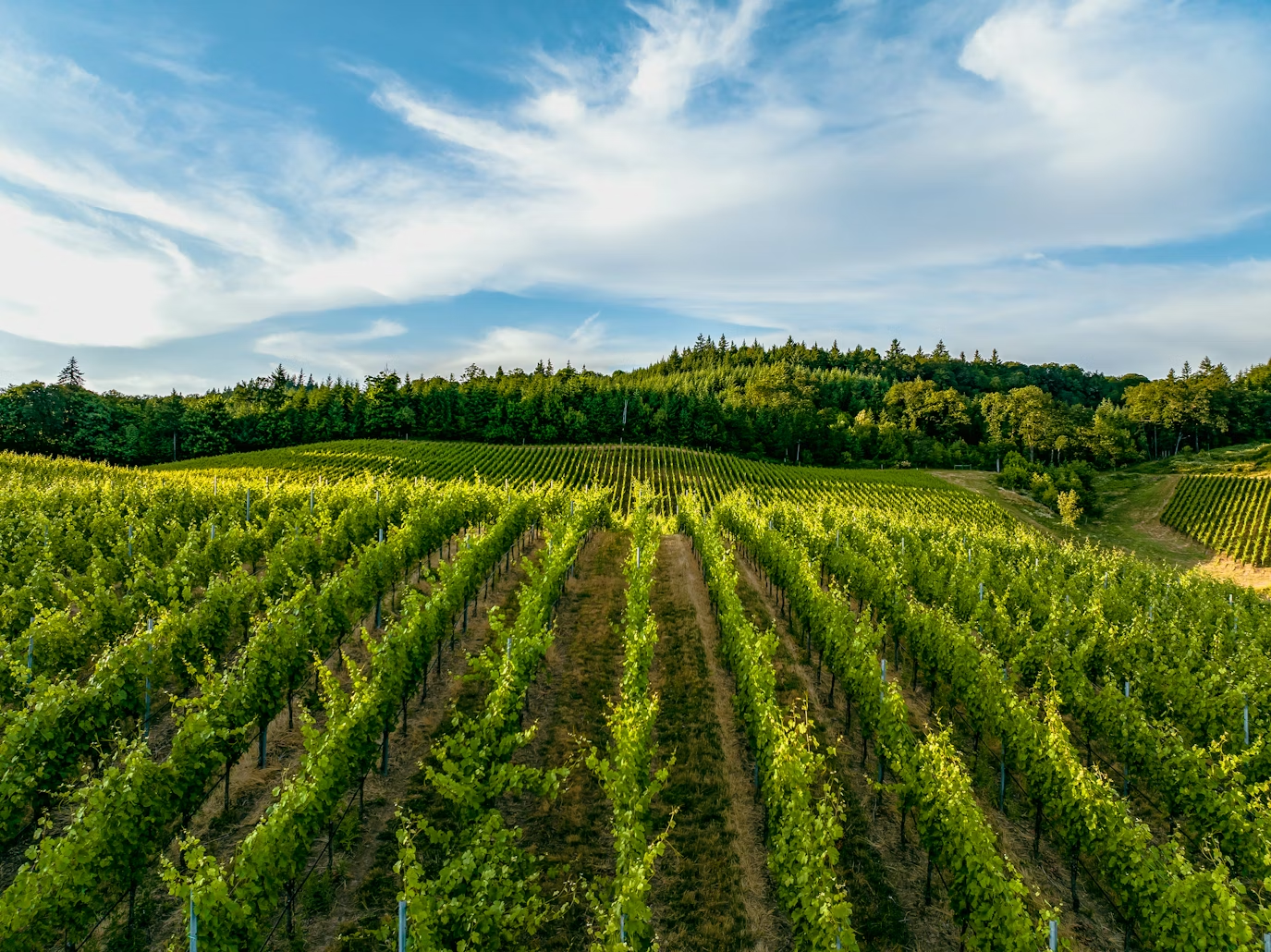

Humate fertilizers, encompassing products such as potassium humate, sodium humate, and related humic substance derivatives, maintain a significant position in the global agricultural inputs sector. These materials, extracted predominantly from leonardite, lignite, or peat deposits, serve as soil conditioners and biostimulants rather than primary nutrient sources. Their global relevance stems from the worldwide shift toward sustainable agriculture, soil health restoration, and reduced reliance on synthetic fertilizers amid environmental regulations and consumer demand for eco-friendly practices.
Additional Soil Health Benefits
- Increased Cation Exchange Capacity (CEC): Humates significantly elevate the soil’s CEC, enabling greater retention of positively charged nutrients (e.g., potassium, calcium, magnesium, ammonium). This reduces leaching losses, particularly in sandy or high-rainfall soils common and supports sustained nutrient availability over longer periods.
- Soil Detoxification and Remediation: Humic substances bind and inactivate certain soil contaminants, including residual pesticides, heavy metals (e.g., cadmium, lead), and excess salts. This process mitigates toxicity, promotes safer crop production in contaminated or saline-affected areas, and aids in the gradual restoration of degraded farmland.
- pH Buffering and Neutralization: Humates help stabilize soil pH by buffering against extremes, counteracting acidification from prolonged urea or ammonium-based fertilizer use. In acidic soils prevalent in Vietnam’s Central Highlands (e.g., coffee plantations), this maintains optimal conditions (pH 5.5–7.0) for nutrient solubility and microbial activity.
- Reduction of Soil Compaction and Erosion: By promoting aggregate stability, humates decrease surface crusting, improve infiltration rates, and minimize runoff and erosion—critical in sloping terrains or during heavy monsoon rains.
Enhanced Plant Physiological and Growth Benefits
- Stimulation of Plant Hormones and Enzyme Activity: Humates exhibit hormone-like effects, increasing endogenous levels of auxins, cytokinins, and gibberellins. This accelerates cell division, elongation, and differentiation, leading to more vigorous vegetative growth, earlier flowering, and improved fruit set.
- Boosted Photosynthesis and Chlorophyll Content: Application enhances photosynthetic rates through better chlorophyll synthesis and stomatal regulation, resulting in higher carbon assimilation, increased dry matter accumulation, and improved overall plant vigor.
- Greater Stress Tolerance: Plants treated with humates demonstrate enhanced resistance to abiotic stresses, including drought (via reduced stomatal opening and osmotic adjustment), salinity (by maintaining ion balance and lowering Na+/K+ ratios), cold, heat, and waterlogging. This is particularly valuable in Vietnam’s variable climate zones.
- Improved Disease and Pest Resistance: By strengthening plant cell walls, enhancing antioxidant systems (e.g., superoxide dismutase, peroxidase, catalase), and supporting beneficial microbial communities, humates reduce susceptibility to soil-borne pathogens and certain foliar diseases.
- Enhanced Seed Germination and Early Vigor: Fulvic acid components penetrate seed coats rapidly, promoting faster radicle emergence, uniform seedling establishment, and reduced transplant shock—benefits observed in rice, vegetables, and fruit seedlings.
Crop Quality and Economic Advantages
- Superior Produce Quality: Humates increase marketable traits such as fruit size, color intensity, sugar content (brix levels), shelf life, and nutritional value (e.g., higher vitamin C, antioxidants). In fruits like durian, coffee, or citrus, this translates to better flavor profiles and reduced premature drop.
- Yield Increases and Fertilizer Savings: Field studies and farmer reports indicate yield improvements of 10–50% depending on crop and conditions, often with concurrent reductions in synthetic fertilizer rates (15–30% or more for NPK), lowering input costs while maintaining or exceeding output.
- Support for Organic and Sustainable Certification: As naturally derived, biodegradable products with no environmental persistence, humates align with organic farming standards, carbon sequestration initiatives, and reduced chemical dependency—facilitating access to premium markets and compliance with export regulations.
Environmental and Long-Term Sustainability Benefits
- Promotion of Beneficial Soil Microbiology: Humates serve as a carbon energy source, stimulating populations of nitrogen-fixing bacteria, phosphate-solubilizing microbes, and mycorrhizal fungi, which enhance natural nutrient cycling and suppress harmful pathogens.
- Contribution to Carbon Sequestration: By increasing stable soil organic matter, humates support long-term carbon storage, aiding climate resilience and potentially qualifying for carbon credit programs.
- Reduced Environmental Impact: Lower fertilizer runoff minimizes eutrophication of waterways, while detoxification effects decrease pesticide residues in soil and produce.
These benefits are cumulative, with the most substantial improvements observed in low-organic-matter, intensively cropped, or stressed soils. Should you wish to explore benefits specific to a particular crop (e.g., rice, coffee, pepper, or durian) or require references to local trials, please provide additional details for further refinement.
Global Market Overview and Size Estimates
The humate fertilizer market exhibits steady expansion, driven by organic farming growth, regenerative agriculture initiatives, and the need for improved nutrient efficiency in degraded soils. Market valuations vary across reports due to differences in scope (e.g., pure humates versus broader humic/fulvic acid products), but consistent trends emerge for recent and projected figures.
- In 2025, the United States humate market alone stands at approximately USD 210 million, with projections to reach USD 297.4 million by 2030 at a compound annual growth rate (CAGR) of 7.2%. Powder and granular forms dominate, accounting for over 56% of revenue, while liquid formulations grow faster due to fertigation adoption.
- Broader global humate or humic acid-related markets show larger scales. For instance, the humic acid market (closely overlapping with humates) is estimated at USD 769.9 million to USD 951.6 million in 2025, with forecasts ranging to USD 2.07 billion by 2035 (CAGR around 10.4%) or higher in some analyses.
- Specific humate fertilizer segments are projected at USD 930 million to USD 1 billion in 2024–2025, with expectations of reaching USD 2 billion or more by 2032–2033 under CAGRs of 7–11% depending on the source.
- Potassium humate, the most common soluble form, was valued over USD 976 million in 2025, anticipated to exceed USD 1.38 billion by 2035 at a 3.5% CAGR.
These figures reflect agriculture as the primary application (often 70–90% of demand), followed by emerging uses in animal feed, environmental remediation, and horticulture. Growth drivers include regulatory pressures on nutrient runoff, carbon sequestration incentives, and integration with precision farming.
Major Producing Countries and Export Dynamics
Production concentrates in regions with abundant leonardite or lignite resources and established processing infrastructure.
- China ranks as the dominant producer and exporter, supplying over 40% of global potassium humate export volume in recent years. Numerous manufacturers offer high-purity products for agricultural and industrial applications, with large-scale output supporting exports to Asia, Europe, North America, and Latin America.
- United States maintains significant domestic production, particularly from leonardite deposits in states such as North Dakota, focusing on high-quality, certified organic-grade humates for regenerative agriculture.
- India emerges as a growing exporter, leveraging cost-effective processing and rising domestic demand.
- Ukraine hosts several specialized producers, contributing notably to European and regional markets.
- Other contributors include Germany, Russia, and select Latin American countries, though on a smaller scale.
China’s export leadership stems from feedstock availability, processing capacity, and competitive pricing, though quality variations exist across suppliers. Global trade value for potassium humate approached USD 500 million in recent years.
Regional Consumption Patterns
- Asia Pacific leads consumption, accounting for over 45% of market share in some segments, driven by intensive farming in countries like China, India, Vietnam, and Indonesia. Demand rises from soil degradation, salinity issues, and government promotion of organic inputs.
- North America (particularly the United States) shows strong adoption in sustainable and organic systems, supported by federal programs incentivizing soil carbon management.
- Europe emphasizes environmental compliance and precision agriculture, with Germany, France, and Italy as key users.
- Latin America (e.g., Brazil) records rapid uptake, with markets projected to grow at 11% annually in select segments due to large-scale crop production and soil improvement needs.
Consumption volumes reach millions of tons annually when including broader humic formulations, with liquid types comprising over 50% in modern irrigation systems and solids preferred for conventional base applications.
Key Trends and Future Outlook
The sector benefits from alignment with global sustainability goals, including reduced chemical inputs and enhanced soil resilience against climate variability. Innovations focus on liquid concentrates for fertigation, blended formulations with micronutrients, and verified carbon-sequestering products eligible for credits.
Challenges include feedstock quality consistency, varying humic substance concentrations across sources, and the need for farmer education on optimal integration. Nonetheless, humates complement conventional fertilizers effectively, often enabling 15–30% reductions in NPK usage while maintaining yields.
In summary, the global humate fertilizer landscape demonstrates robust, albeit moderate, expansion through 2030 and beyond, underpinned by environmental imperatives and agricultural efficiency demands. If your inquiry pertains to a specific region, crop system, or supplier comparison (e.g., for importation to Vietnam), further details would facilitate more targeted analysis.


Leave a Reply