
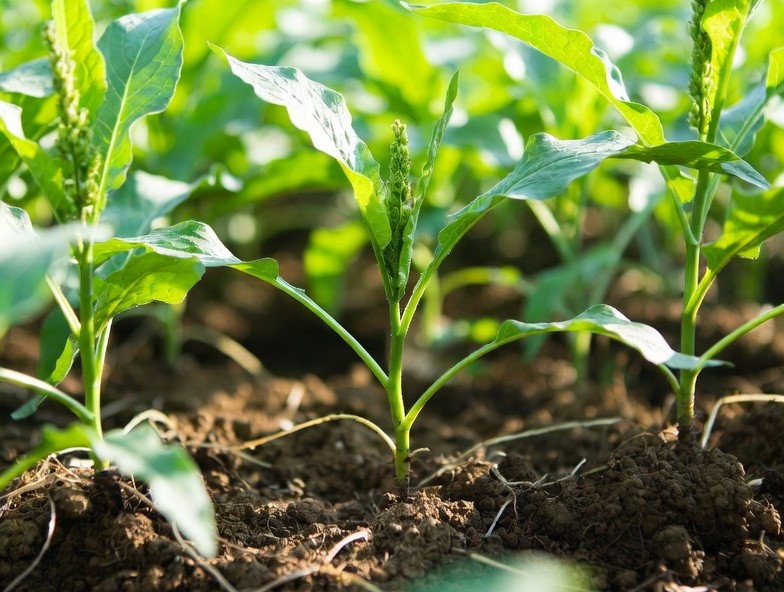

Humate refers to a class of naturally occurring organic compounds derived from the extensive decomposition of ancient plant, microbial, and animal residues over geological timescales. These materials form through a process known as humification, resulting in complex, carbon-rich substances that constitute a major component of soil organic matter. In agricultural and horticultural contexts, the term “humate” most commonly denotes the soluble salt forms of humic substances—particularly potassium humate, sodium humate, or ammonium humate—produced by reacting humic or fulvic acids with alkaline agents.
Relationship to Humic Substances
Humic substances represent the stable, dark-colored fraction of soil organic matter that resists rapid microbial breakdown. They are subdivided into three principal fractions based on solubility characteristics:
- Humic acid — Comprises larger molecular structures (typically higher molecular weight), insoluble in acidic conditions (pH < 2) but soluble in alkaline environments. It contributes primarily to long-term soil conditioning by improving structure, water retention, and cation exchange capacity.
- Fulvic acid — Consists of smaller molecules with lower molecular weight, soluble across the full pH range (acidic, neutral, and alkaline). Fulvic acid exhibits greater mobility and biological activity, enabling efficient nutrient chelation and transport into plant tissues.
- Humin — The insoluble fraction that remains bound to soil minerals, providing structural stability but limited direct extractability or solubility.
Humates arise when humic acids or fulvic acids form salts with metal cations (e.g., potassium, sodium). These salt forms enhance water solubility, facilitating practical application in liquid fertilizers, fertigation systems, foliar sprays, or soil amendments. Commercial humates are typically extracted from specific geological deposits, such as leonardite (oxidized lignite), lignite, or humalite, which contain elevated concentrations of humic substances compared to ordinary soil humus.
Mechanisms of Action in Soil and Plant Systems
Humates exert influence through multiple complementary pathways:
- Soil Structure Enhancement Humic acids promote soil aggregation by binding fine particles, thereby improving aeration, water infiltration, and root penetration. This results in increased water-holding capacity (particularly beneficial in sandy soils) and reduced compaction in clay-heavy soils.
- Nutrient Availability and Uptake Acting as natural chelating agents, humates form stable complexes with macro- and micronutrients (e.g., iron, zinc, phosphorus, potassium). This prevents nutrient fixation or leaching, especially in alkaline or saline conditions, and increases cation exchange capacity (CEC). Fulvic acids, due to their low molecular weight, enhance membrane permeability and enable efficient translocation of nutrients into plant cells.
- Stimulation of Plant Growth and Physiology Humates exhibit hormone-like activity, influencing auxin-, gibberellin-, and cytokinin-related pathways. This promotes root development (including increased root mass and fine root hairs), seed germination, photosynthesis, and overall biomass accumulation. Enhanced microbial activity in the rhizosphere further supports nutrient cycling.
- Stress Mitigation Applications under abiotic stresses—such as drought, salinity, or extreme temperatures—improve plant tolerance by boosting antioxidant systems, osmotic regulation, and water-use efficiency.
Scientific evidence from field and controlled studies consistently demonstrates yield improvements ranging from 5–25% across cereals, vegetables, and fruits, alongside better nutrient use efficiency and reduced fertilizer requirements.
Application Strategies and Rates
Effective use requires consideration of crop requirements, soil type, and product formulation. Potassium humate is widely applied in regions with intensive agriculture, including parts of Asia where rice, fruit, and vegetable production predominates.
- Soil incorporation: Granular or powdered forms are broadcast and incorporated at 100–500 kg/ha for field crops (e.g., cereals, maize) and 50–300 kg/ha for vegetables or orchards. Initial applications at higher rates (200–250 kg/ha) benefit degraded or low-organic-matter soils.
- Fertigation: Liquid potassium humate is delivered via drip or sprinkler systems at 1–5 kg/ha per irrigation cycle, enabling uniform distribution and continuous benefit.
- Foliar application: Diluted solutions (0.5–2 L/ha of concentrated product) are sprayed 2–4 times during critical growth phases—vegetative development, flowering initiation, and fruit filling. Fulvic-rich formulations are particularly effective due to rapid foliar absorption.
- Seed treatment: Low rates (0.5–1 kg per 100 kg seed) enhance germination uniformity and early vigor.
In practice, combining humates with balanced NPK fertilization optimizes results; for instance, supplemental potassium humate at 10–20 kg/ha alongside standard fertilizer regimes has shown positive responses in tuber crops and legumes.
Considerations for Practical Implementation
Results vary with source material, application timing, soil pH, and environmental factors. Preliminary soil analysis and small-plot trials assist in determining optimal rates. While consistent benefits are documented across numerous studies, some reports indicate limited or variable responses under high baseline fertility or specific conditions, underscoring the importance of context-specific management.
Humates represent a scientifically grounded option for advancing sustainable crop production. Their capacity to rehabilitate soil structure, optimize nutrient availability, and bolster plant resilience positions them as a complementary tool in integrated agronomic systems aimed at long-term productivity and environmental stewardship. Incorporating humates into agronomic practices constitutes a scientifically substantiated approach to elevating soil health, optimizing nutrient utilization efficiency, and augmenting overall plant performance. This integration aligns closely with the principles of sustainable agriculture, which prioritize long-term productivity, resource conservation, and minimal environmental impact. The multifaceted mechanisms through which humates operate—encompassing physical structural amelioration, chemical nutrient stabilization, biological stimulation of rhizosphere processes, and physiological enhancement of plant metabolism—establish them as indispensable components in addressing prevailing challenges in contemporary crop production systems.



Leave a Reply