
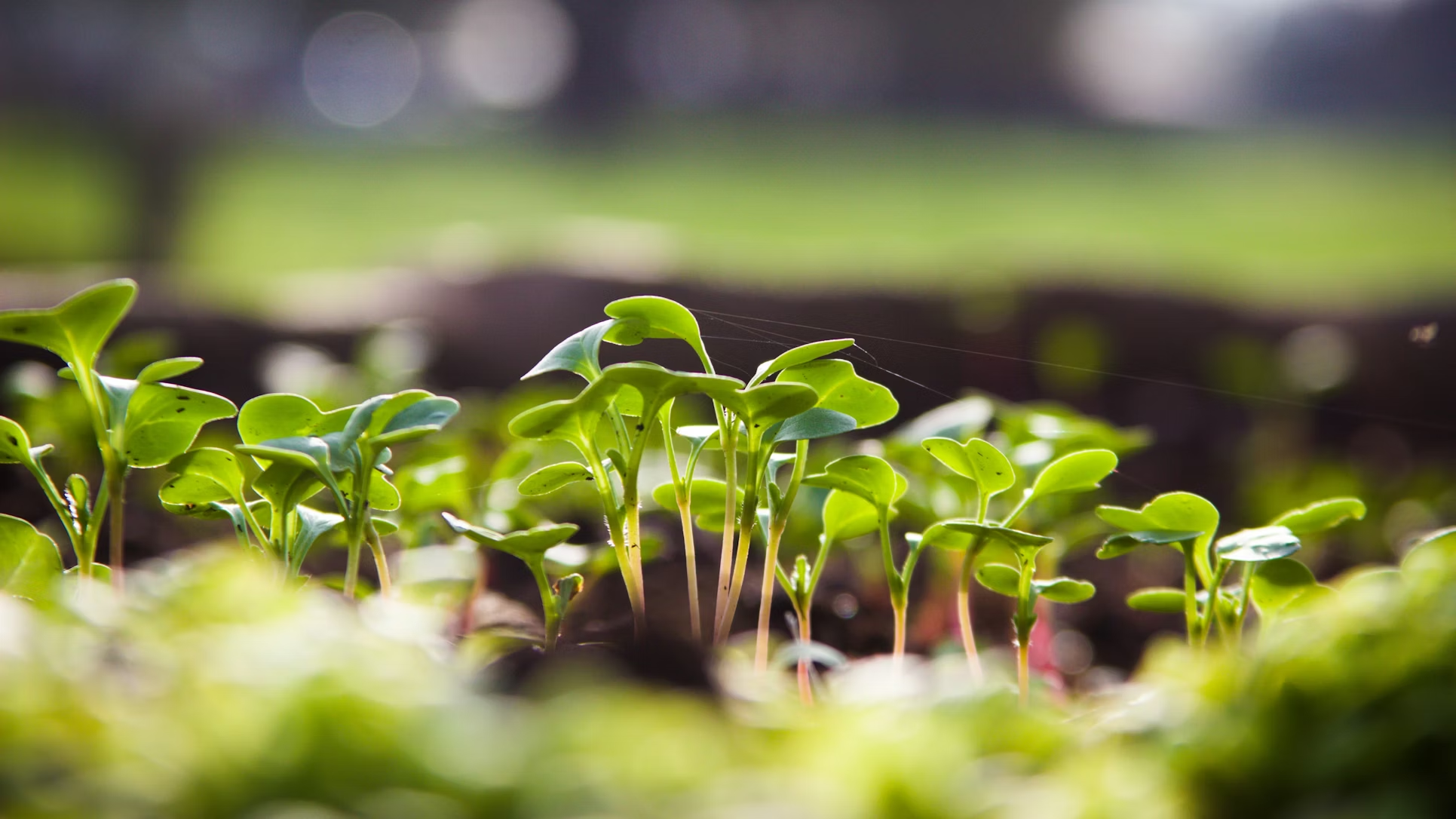

Humates serve as a valuable natural amendment for home gardens, offering gardeners a practical way to build healthier soil and support stronger plant performance without relying heavily on synthetic products. Derived from ancient deposits of decomposed plant and animal matter—most commonly leonardite or similar oxidized organic sources—humates consist primarily of humic acids, fulvic acids, and humin. In home garden settings, these substances act more as soil conditioners and mild biostimulants than as conventional fertilizers, gradually improving the growing environment for vegetables, flowers, herbs, fruit bushes, and lawns.
Basic Nature of Humates
Humates form through long-term microbial breakdown of organic material under specific geological conditions, resulting in dark, carbon-rich compounds that resist rapid decomposition. Commercial products for gardeners usually come as potassium humate (the most common soluble form), granular humic acid, or liquid concentrates. Potassium humate dissolves readily in water, carries a modest amount of potassium (typically 8–12% K₂O), and features high humic substance content (often 60–85% combined humic and fulvic acids).
The material appears as dark brown to black powder, flakes, small granules, or deep brown liquid. Its functional groups—carboxylic acids, phenols, and others—enable it to bind nutrients, improve soil particle arrangement, and interact positively with plant roots and soil organisms.
Main Improvements to Garden Soil
Garden soils in residential settings often suffer from compaction (from foot traffic or mowing), poor drainage, nutrient lock-up in clay or sandy extremes, and low organic matter after years of cultivation. Humates address these issues step by step.
- Better Soil Structure — Humic substances encourage soil particles to clump into stable aggregates. This opens up pore spaces, allowing roots to penetrate more easily, improving aeration in heavy soils and increasing water retention in light, sandy ones. Garden beds become less prone to crusting after rain or watering, and lawns resist compaction better under regular use.
- Enhanced Moisture Management — By improving aggregation and raising the soil’s ability to hold water against gravity, humates reduce the frequency of watering needed during dry spells. This proves especially helpful for container plants, raised beds, and lawns in warmer climates where evaporation occurs quickly.
- Nutrient Holding and Availability — Humates increase the soil’s cation exchange capacity, enabling it to retain positively charged nutrients (potassium, calcium, magnesium, ammonium) that would otherwise leach away with rain or irrigation. They also chelate micronutrients like iron, zinc, and manganese, keeping them in forms plants can absorb more readily rather than letting them become unavailable through pH-related fixation.
Direct Effects on Plants
Beyond soil conditioning, humates influence plant growth through several gentle mechanisms.
- Root Development — Applications stimulate longer, thicker, and more branched roots. Stronger root systems help plants access water and nutrients deeper in the profile, leading to better drought tolerance and overall stability. Seedlings and transplants establish faster, with less shock when moved to garden beds.
- Improved Nutrient Uptake — Fulvic acid fractions, being smaller molecules, move easily into root tissues and even through leaf surfaces when sprayed. This results in more efficient use of whatever fertilizers or compost gardeners apply, often allowing modest reductions in feeding rates over time.
- Vigor and Appearance — Plants frequently show darker green foliage, more even growth, and better flowering or fruiting. In vegetable patches, gardeners notice larger tomatoes, fuller bean pods, crisper lettuce, and more abundant herbs. Flowers produce brighter blooms and longer-lasting displays. Lawns develop denser turf with fewer bare patches.
- Stress Recovery — Humates help plants cope with common garden stresses: heat waves, irregular watering, transplanting, or minor salinity from tap water. By supporting antioxidant activity and maintaining cell hydration, treated plants rebound more quickly after setbacks.
Practical Ways to Apply Humates in a Home Garden
Gardeners can choose from several straightforward methods depending on garden size and available tools.
- Granular or Powder Form — Spread evenly over beds or lawns at roughly 1–2 pounds per 100 square feet (about 50–100 grams per square meter). Rake or lightly till into the top 5–10 cm of soil before planting or during early spring cleanup. Water thoroughly afterward to activate. Repeat once or twice per season if soil remains poor.
- Liquid Application (Potassium Humate) — Dissolve according to label rates—commonly 1–2 tablespoons per gallon of water for soil drench, or weaker dilutions (0.1–0.3%) for foliar sprays. Apply around plant bases every 4–6 weeks during active growth, or use as a starter solution when setting out seedlings and transplants.
- Seed Treatment — Soak seeds in a dilute solution (10–50 mg/L) for 12–24 hours before sowing to encourage quicker, more uniform germination.
- Lawn Use — Broadcast granular humate in spring and fall at 1–2 pounds per 100 square feet, followed by watering. Liquid forms work well through hose-end sprayers for even coverage.
Start with lower rates on a small test area to observe response, especially in containers or with sensitive ornamentals. Humates pair effectively with compost, worm castings, or balanced organic fertilizers for additive benefits.
Typical Results in Backyard Settings
Many home gardeners report noticeable changes within one growing season: healthier-looking plants, reduced wilting during hot periods, fewer nutrient deficiency symptoms (such as yellowing leaves), and modestly higher harvests from vegetables and berries. Lawns often appear thicker and recover faster from wear. While humates do not replace good practices—proper watering, mulching, pH management, and balanced feeding—they make those practices more effective by creating a friendlier soil environment.
Over multiple years, consistent use contributes to gradual buildup of soil organic matter, fostering earthworm activity and microbial life that further sustains garden productivity.
Humates offer gardeners a low-risk, natural tool to improve everyday growing conditions. When sourced from reputable suppliers and applied thoughtfully, they support more resilient, attractive, and productive home gardens with minimal effort.
Long-Term Garden Outcomes
Consistent use over one to several seasons typically results in observable enhancements: healthier root zones, reduced incidence of nutrient-related disorders, more resilient plants during environmental fluctuations, and incrementally higher yields or aesthetic quality. Soil organic matter accumulates gradually, supporting increased earthworm populations and microbial diversity that further sustain fertility.
Humates represent a low-risk, natural strategy for elevating home garden conditions. When sourced from verified suppliers and applied judiciously, they contribute to more sustainable, productive, and visually appealing residential growing spaces while aligning with environmentally conscious practices.
Limitation
Humic substances promote the flocculation and aggregation of soil particles through electrostatic interactions and bridging mechanisms involving their functional groups (such as carboxylic and phenolic moieties). In compacted clay or loamy soils typical of many urban gardens, this process loosens dense layers, reducing bulk density and alleviating mechanical impedance to root elongation. Aggregates form stable crumbs or granules that resist breakdown under repeated wetting-drying cycles or mechanical disturbance, leading to improved tilth and easier cultivation during bed preparation or weeding.
In heavy soils, enhanced aggregation directly increases macroporosity, facilitating oxygen diffusion to roots and soil microorganisms while preventing anaerobic conditions that can foster root rot or nutrient denitrification. For lawns subject to regular mowing and foot traffic, this structural stabilization minimizes surface compaction, preserving infiltration rates and reducing puddle formation after rainfall. In lighter, sandy soils, aggregation binds loose particles, decreasing wind or water erosion and creating a more cohesive profile that supports even plant spacing in vegetable or flower beds.
Over time, these changes reduce the need for intensive mechanical aeration or deep tillage, preserving soil biology and minimizing disruption to established root networks.




Leave a Reply