
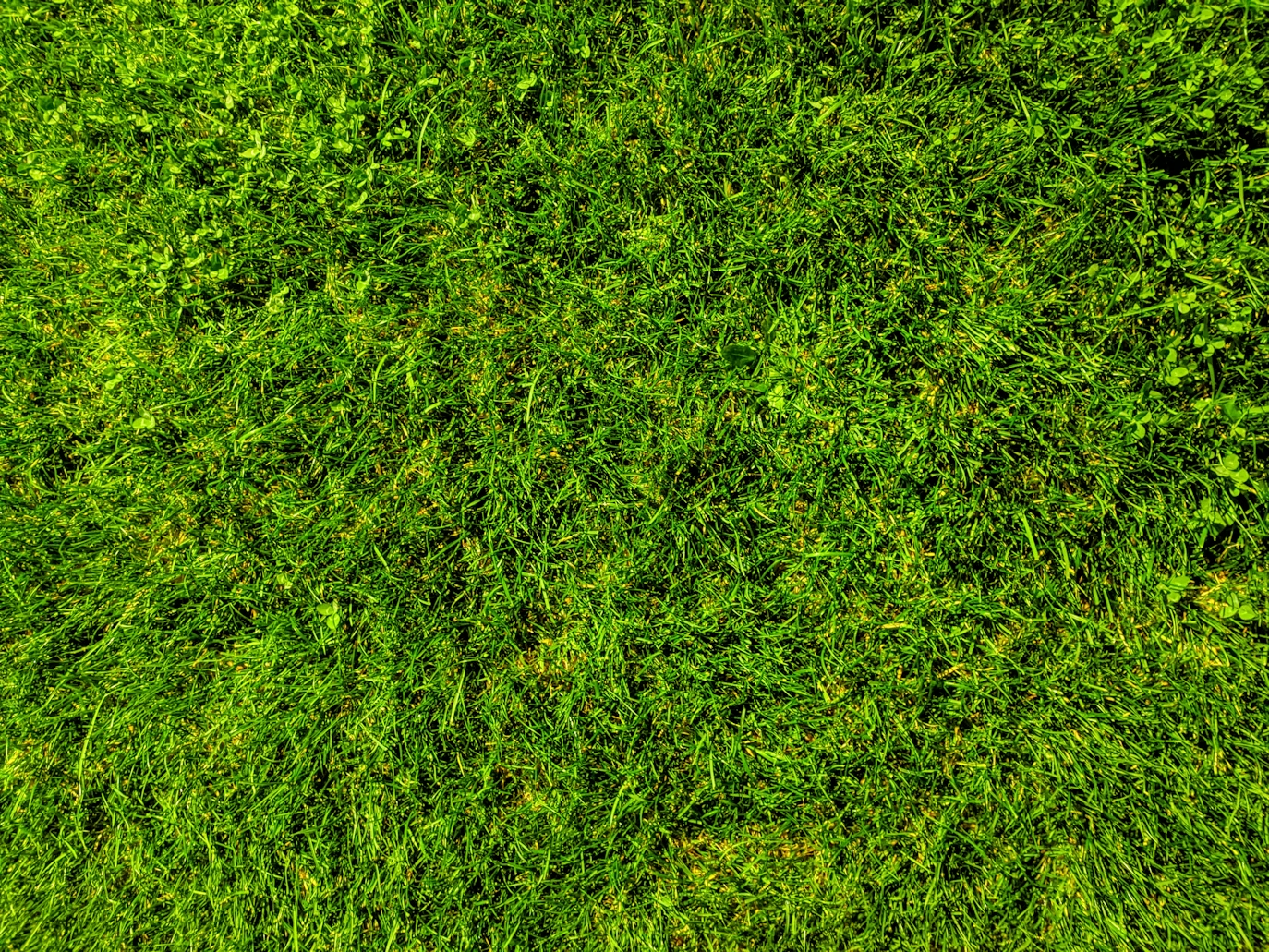

Humate represents a valuable organic soil amendment for turfgrass management, particularly when incorporated into a sustainable lawn care program. Derived primarily from leonardite or similar naturally occurring deposits rich in humic substances, humate contains significant concentrations of humic acid, fulvic acid, and humin. These components function as biostimulants and soil conditioners rather than direct fertilizers, enhancing soil structure, nutrient availability, and plant resilience without the rapid, high-input characteristics associated with synthetic alternatives.
Mechanisms of Action in Turfgrass Systems
Humic substances exert multiple beneficial effects on grass and the surrounding soil environment. They promote improved soil aggregation, which reduces compaction and enhances porosity, thereby facilitating deeper root penetration and better oxygen diffusion to root zones. This structural improvement is especially relevant in clay-heavy or heavily trafficked soils common in urban and suburban settings.
Additionally, humate exhibits strong chelating properties, binding essential macronutrients (such as nitrogen, phosphorus, and potassium) and micronutrients (including iron and zinc). This process minimizes nutrient leaching and increases their plant-available forms, thereby improving uptake efficiency even under reduced fertilizer regimes. Scientific investigations, including turf-specific studies, indicate that humic substances can stimulate root development, increase chlorophyll content, and enhance overall plant vigor, contributing to greater stress tolerance against drought, heat, and certain pathogens.
Field observations and controlled research further demonstrate that humate supports microbial activity in the rhizosphere, fostering populations of beneficial soil organisms that contribute to organic matter cycling and nutrient mineralization over extended periods.
Recommended Application Parameters
Application rates vary depending on product formulation (granular versus liquid), humic acid concentration, soil conditions, and turf species. General guidelines for established lawns include:
- Granular humate — Standard maintenance rates typically range from 1–10 pounds per 1,000 square feet per application, with many products recommending 1–2 pounds per 1,000 square feet for routine use. Higher initial rates (10–25 pounds per 1,000 square feet) may be appropriate for soils with very low organic matter content, followed by lower follow-up applications.
- Liquid humate/humic acid — Concentrated formulations often require 2–3 ounces per 1,000 square feet, or dilutions such as 1 tablespoon per gallon of water applied as a foliar or soil drench.
Frequency should remain conservative: 1–2 applications annually (commonly spring and fall) for standard programs, or light supplemental applications every 4–6 weeks during the active growing season only in cases of pronounced soil limitations. Always water thoroughly (0.5–1 inch) post-application to facilitate incorporation into the root zone.
Product-specific labels must take precedence, as humic content and solubility differ markedly across commercial offerings. Conducting a basic soil test prior to initiating a humate program provides valuable context regarding existing organic matter levels and pH, enabling more precise adjustments.
Expected Outcomes and Timeline
Visible improvements from a long and low humate regimen typically emerge gradually. Enhanced root density and nutrient efficiency may manifest as improved drought recovery, denser tillering, and more uniform color within one to two growing seasons. Soil physical changes, such as reduced surface crusting and increased infiltration rates, often require consistent use over multiple years to become pronounced.
This measured strategy prioritizes long-term soil health over short-term visual impact, resulting in turfgrass that exhibits greater inherent resilience and reduced reliance on external inputs.
Global Mechanisms and Benefits in Turfgrass
Humic substances exert broad-spectrum effects that transcend regional differences. They improve soil aggregation and porosity, which enhances water infiltration and retention—critical in both arid climates (where drought stress predominates) and high-rainfall areas (where leaching and compaction occur). By increasing cation exchange capacity, humate facilitates greater retention of macronutrients (nitrogen, phosphorus, potassium) and micronutrients (iron, zinc), reducing losses through leaching or fixation and thereby supporting reduced fertilizer inputs.
Biologically, humate stimulates beneficial soil microbial populations, accelerating organic matter decomposition and nutrient mineralization. This leads to enhanced root mass, deeper root systems, increased chlorophyll content, and improved tolerance to abiotic stresses such as heat, drought, salinity, and heavy traffic. In professional settings—golf courses, sports fields, and municipal landscapes—humate contributes to denser turf, faster recovery from wear, and more uniform aesthetic quality.
Research and field applications worldwide indicate potential reductions in nitrogen fertilizer rates by 20–30% while maintaining or improving turf quality, aligning with global sustainability goals in turf management.
In summary, integrating humate through a deliberate, restrained application protocol offers a scientifically grounded means of advancing sustainable lawn management. When employed thoughtfully, humate contributes meaningfully to both aesthetic quality and ecological function in grass-dominated landscapes. Should you require product-specific comparisons or integration guidance within an existing fertilization schedule, please provide additional details for further refinement.

Leave a Reply