
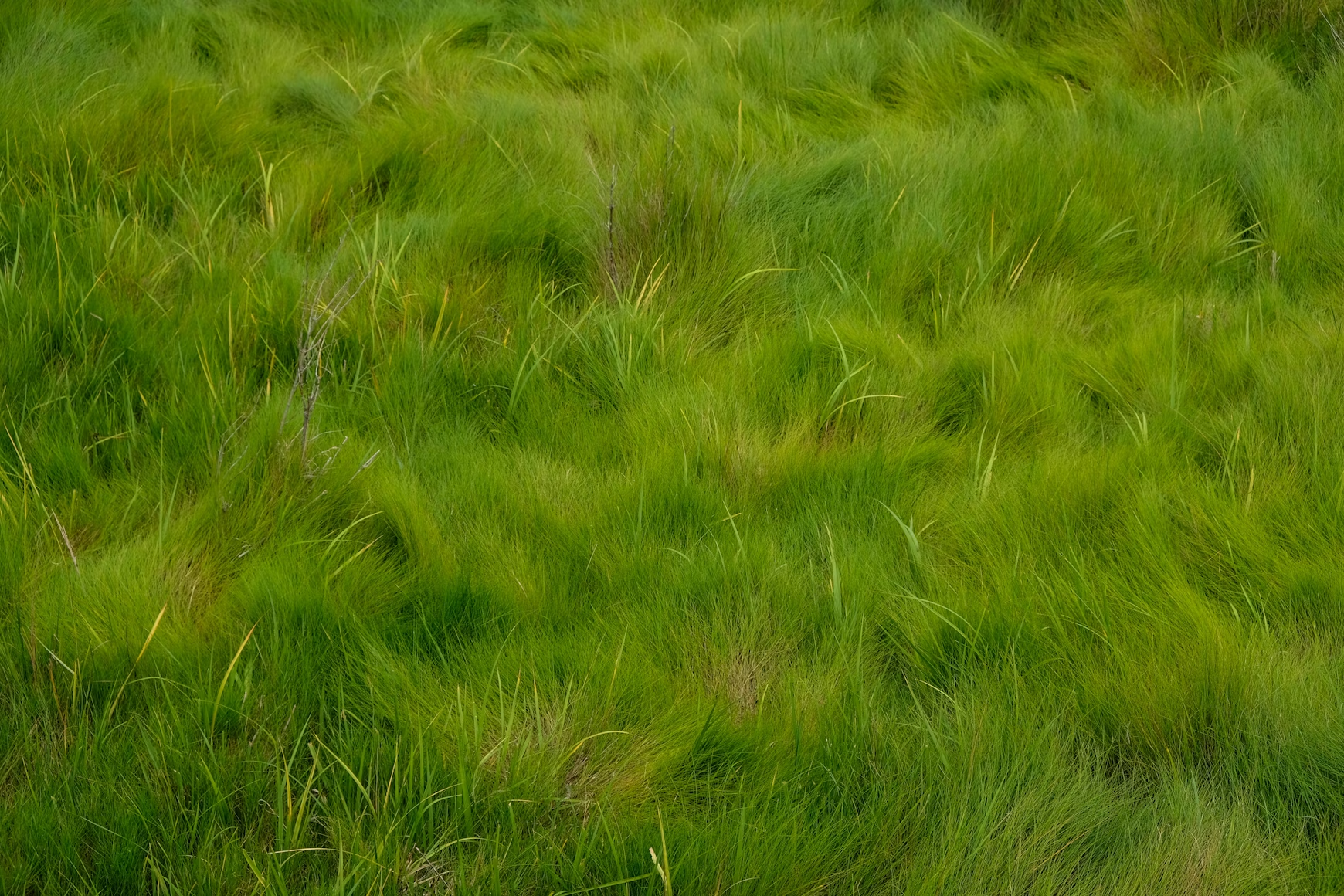

Humate, derived from the prolonged decomposition of organic materials and rich in humic and fulvic acids, functions as an effective soil conditioner rather than a primary nutrient source. Humate enhances soil physical, chemical, and biological properties, thereby improving turfgrass performance, nutrient efficiency, and environmental resilience.
Composition and Mechanisms of Action
Humate primarily comprises humic acid (high molecular weight, insoluble at low pH), fulvic acid (lower molecular weight, soluble across pH ranges), and humin (insoluble fraction). These components interact with soil and plants in several key ways:
- Chelation and Nutrient Mobilization — Humic and fulvic acids form stable complexes with cations such as iron, zinc, manganese, and phosphorus, preventing fixation or leaching and increasing bioavailability to turf roots.
- Soil Aggregation and Porosity — Humic substances promote flocculation of clay particles, improving structure in heavy soils while enhancing water retention in sandy profiles.
- Root System Stimulation — Enhanced microbial activity and hormone-like effects encourage lateral and vertical root extension, improving drought and traffic tolerance.
- Microbial Support — As a carbon-rich substrate, humate fosters populations of beneficial bacteria and fungi, accelerating organic matter cycling and thatch decomposition.
- Stress Mitigation — Increased antioxidant enzyme activity (e.g., peroxidase, catalase) helps turf withstand heat, salinity, and drought—conditions common in tropical climates.
In tropical and subtropical regions, such as those with warm-season grasses (e.g., Bermuda, Zoysia, St. Augustine), humate supports consistent growth during extended warm periods while counteracting nutrient lockup in high-rainfall, leached soils.
Quantified Benefits for Turfgrass
Research and field observations indicate the following outcomes from consistent humate use:
- Nutrient uptake efficiency may increase by 20–50%, permitting reduced synthetic fertilizer rates without quality loss.
- Water-holding capacity improves, often reducing irrigation needs by 15–30%.
- Root biomass can increase significantly, with deeper profiles observed in treated versus untreated areas.
- Turf color intensity and density enhance due to better chlorophyll production and micronutrient availability.
- Microbial biomass and potentially mineralizable carbon/nitrogen rise, supporting long-term soil fertility.
- In compacted or low-organic-matter soils, penetration resistance decreases, aiding aeration and water infiltration.
These effects are cumulative, with noticeable improvements often requiring 1–2 growing seasons of regular application.
Application Forms and Rates
Humate products vary in concentration and form; always adhere to manufacturer specifications while using the following as general references for residential lawns.
- Standard maintenance rate: 10–25 pounds per 1,000 square feet (approximately 50–120 kg per 1,000 m²), depending on humic acid content (typically 50–85%).
- Initial or corrective applications (poor soil, compaction): 20–40 pounds per 1,000 square feet in the first year.
- Warm-season/tropical adjustment: In high-leaching environments, lean toward the higher end initially to rebuild organic matter reserves.
- Spread evenly using a broadcast or drop spreader, followed by immediate irrigation to incorporate.
Liquid Humate (concentrated potassium or sodium humate solutions)
- Typical dilution: 1–4 ounces per gallon of water for spot or broadcast spraying; equivalent to 0.5–2 gallons of concentrate per acre.
- Foliar/soil drench: Apply at 1–2 quarts per acre diluted in sufficient carrier water.
- Advantages include faster uptake and compatibility with tank-mixing fertilizers or biostimulants.
For new lawns or sod installation, incorporate granular humate into the top 2–4 inches of soil at 10–30 pounds per 1,000 square feet prior to seeding or laying sod.
Integrated Lawn Management Strategies
- Apply humate near or with balanced NPK fertilizers to capitalize on improved uptake.
- Perform core aeration annually in compacted areas to facilitate deeper penetration.
- Maintain species-appropriate mowing heights (e.g., 1–2 inches for Bermuda, 2–4 inches for Zoysia/St. Augustine) and return clippings to support organic buildup.
- Conduct soil tests periodically to track pH, organic matter, and nutrient status; humate functions optimally in slightly acidic to neutral ranges.
- Combine with practices such as moderate irrigation, pest monitoring, and minimal chemical disruption to preserve soil biology.
Timing, Frequency, and Seasonal Scheduling
Optimal application occurs during active root growth when soil temperatures range from 13–27°C (55–80°F). In tropical climates, where warm-season grasses predominate and growth continues year-round (with minor slowdowns during the dry season), adjust as follows:
- Primary window: Early wet season (approximately March–May) to support vigorous spring/summer growth and prepare for peak heat/rainfall stress.
- Secondary window: Late wet season or early dry season (September–November) to strengthen roots before potential drier periods.
- Additional applications: In intensively managed lawns or soils with low organic matter, apply every 6–8 weeks during active growth (up to 3–4 times annually). Avoid mid-dry-season extremes to ensure activation.
- Frequency progression:
- Year 1: 2–4 applications spaced 4–8 weeks apart for rapid soil conditioning.
- Year 2+: Reduce to 2–3 applications annually as cumulative benefits stabilize.
Water thoroughly (0.25–0.5 inches) immediately after each application to facilitate dissolution and movement into the root zone.
Integrated Management Practices
To maximize efficacy:
- Apply humate concurrently with or immediately before balanced fertilizers (e.g., NPK blends suitable for warm-season turf) to leverage improved uptake.
- Combine with core aeration in compacted soils to enhance penetration depth.
- Maintain mowing heights appropriate to the grass species to support photosynthesis and root health.
- Conduct periodic soil testing to monitor organic matter, pH, and nutrient levels; humate performs best in slightly acidic to neutral conditions.
- Integrate with organic practices, such as returning clippings, to further build soil biology.
- In high-rainfall tropical areas, prioritize humate to counteract leaching and maintain cation exchange capacity.
Considerations and Limitations
Humate is not a standalone fertilizer; it complements rather than replaces nutrient inputs. Over-application offers diminishing returns and may temporarily increase soil electrical conductivity in sensitive situations. Results vary by soil type, existing organic matter content, and climate—sandy, low-organic tropical soils often respond most dramatically.
Conclusion
Systematic incorporation of humate into lawn maintenance programs fosters sustainable soil health, enhanced turf resilience, and efficient resource use. In tropical environments with warm-season grasses, strategic timing during active growth periods supports consistent performance despite environmental stresses. Tailor rates and frequency to site-specific conditions through observation and soil analysis. This approach aligns with modern, environmentally conscious turf management objectives while delivering durable aesthetic and functional improvements. For product-specific guidance, refer to labeled instructions and consult local agronomic resources as needed.

Leave a Reply