
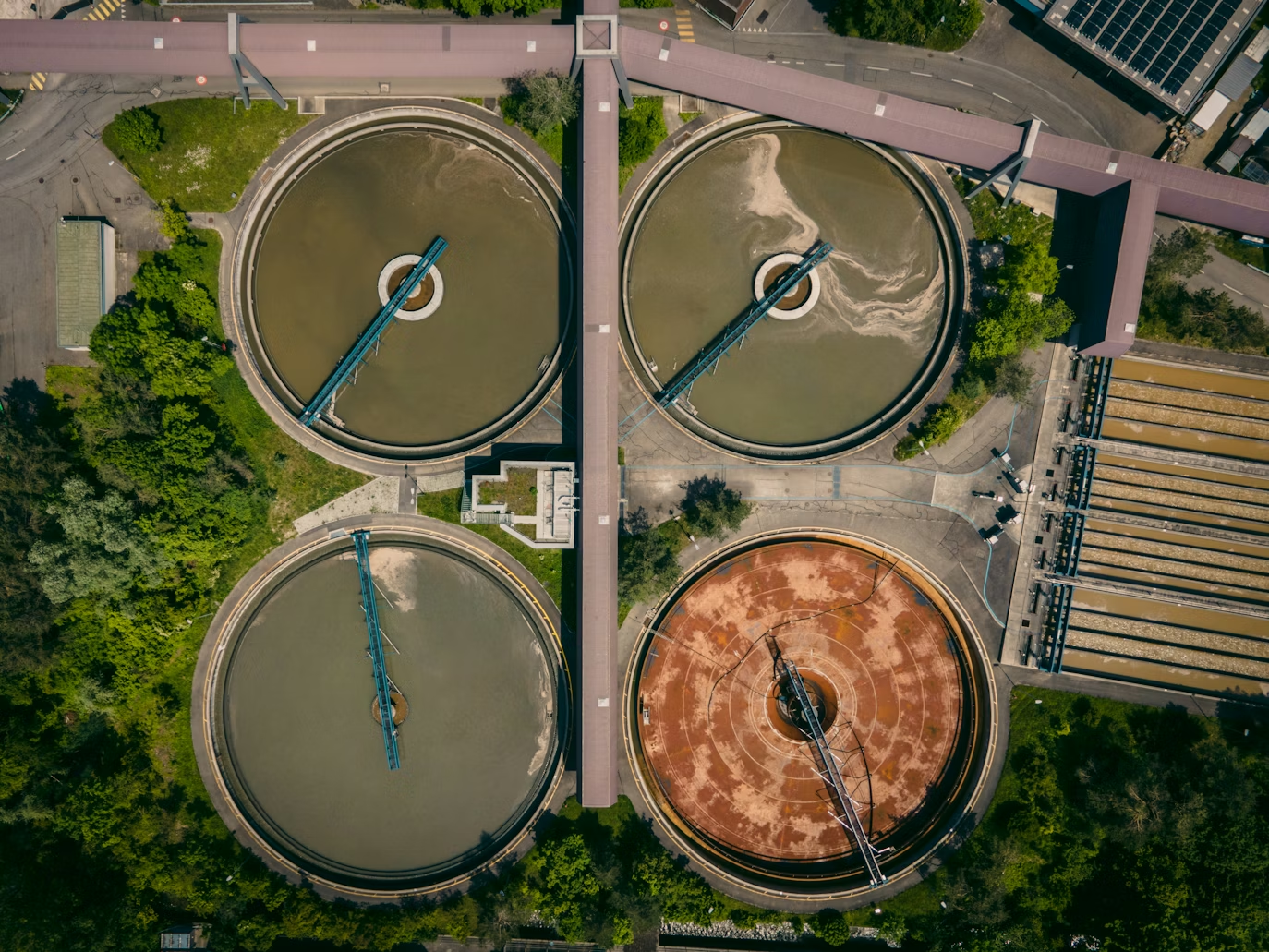

Most people think humic acid is only for plants or animals. The truth? Thousands of fish farmers, small factories, villages, and even big wastewater plants are now using the exact same natural humic acid to clean and balance water – and it often works better and cheaper than many chemicals.
First – what kind of water problems can humic acid solve?
Common Water Problems That Humic Acid Can Actually Solve
- Shrimp and fish ponds regularly turn green, slimy, develop scum, or suddenly experience mass mortality.
- Drinking water for pigs, cattle, and poultry smells bad, tastes strange, or contains very high ammonia levels, causing animals to stop eating.
- Factory wastewater contains large amounts of toxic heavy metals such as copper, lead, zinc, and cadmium.
- Village ponds or bore-well water suffers from excess iron, shows yellow-brown color, forms oily film, or gives off a fishy odor.
- Biogas pits and pig-farm waste lagoons produce extremely foul odors that make neighbors complain all the time.
- Pond water becomes extremely cloudy after heavy rain or flood, with suspended clay and silt that refuses to settle for many days.
- Reservoir or grow-out ponds look like milky coffee after storms and need to clear quickly so farming can continue.
- Rivers, canals, and channels suffer heavy organic pollution and release rotten-egg smell (H₂S) gas from the bottom.
- Dyeing, textile, or tannery wastewater stays deep black, red, or brown and normal treatment methods fail to clean it.
- Intensive aquaculture ponds accumulate too much organic matter on the bottom, toxic gases rise, shrimp float to the surface, and growth becomes very slow.
If you or your farm are facing one or more of these problems right now, humic acid is the natural, low-cost, and highly effective solution that thousands of farmers have already proven successful.
How does a black powder clean water?
Humic acid molecules are big, sticky, and full of negative charges. When you put a little into dirty water, three magic things happen:
- It grabs and sinks tiny dirt particles Mud, clay, algae, and bacteria stick to humic acid and drop to the bottom like stones → water becomes clear in hours instead of days.
- It locks up poisonous heavy metals Copper from fungicides, lead from old pipes, zinc from galvanized roofs – humic acid wraps around them so fish, animals, and people cannot absorb them.
- It eats bad smells and toxic gases Ammonia, hydrogen sulfide (rotten-egg smell), and some organic odors get bound or broken down by the microbes that love humic acid.
- It feeds good bacteria and plankton In fish ponds, a small dose creates a mild tea-color that blocks too much sunlight (less green algae) while feeding beneficial plankton that shrimp and fish love to eat.
Real stories from people already doing it
- Shrimp farms in Vietnam & Ecuador: add 2–5 kg of humic acid per hectare of pond every 10–15 days → vibrio bacteria drops, survival rate jumps from 40 % to 80 %, no more antibiotics in water.
- Pig farms in Thailand and Philippines: pour liquid humic acid into waste lagoons → ammonia smell almost disappears in 3–7 days, flies reduce by half.
- Small drinking-water plants in rural India: 5–10 ppm humic acid + sand filter removes 90–95 % of iron and arsenic.
- Catfish and tilapia ponds in Indonesia: after heavy rain makes pond muddy, 3–4 kg/ha clears the water in 24–48 hours.
- Dairy farms: add a handful to cattle drinking troughs every week → less algae, cows drink more, milk taste improves.
How to use it in real life
- Fish/Shrimp ponds
- Powder: spread 2–10 kg per hectare (depends on how bad the water is)
- Liquid: 5–20 liters per hectare
- Best time: early morning or evening, when pond is calm.
- Livestock drinking water
- 20–50 grams per 1000 liters (one small cup for a big tank) once or twice a week.
- Waste lagoons and sewage ponds
- 10–50 ppm (10–50 kg per 1000 m³ of water), repeat every 2–4 weeks.
- Industrial wastewater with heavy metals
- 50–200 ppm + lime to adjust pH → metals drop out as sludge you can remove.
- Emergency muddy water after rain
- 5–10 kg/ha broadcast + aerate → clear the next day.
How much does it cost?
- Very cheap. Good water-treatment-grade humic acid costs $1.5–4 per kg when you buy 25 kg bags.
- Example: treating a one-hectare shrimp pond once costs $10–40 – usually paid back many times by surviving more shrimp.
Is it safe?
100 % safe for fish, animals, people, and the environment.
- No chemicals, no residues.
- Fish and shrimp can be harvested the same day.
- Approved in most countries as a natural water conditioner.
Best times to use humic acid
- Before stocking new fingerlings (clean start)
- After heavy rain or flood
- When water starts smelling bad
- During hot seasons when algae explode
- When you see fish gasping at the surface
When humic acid works less or not at all
- Extremely salty seawater ponds (>40 ppt) – needs special marine humic products.
- Very acidic water (pH <4) – first correct pH with lime.
- Huge industrial plants with thousands of liters per minute – too expensive compared to chemical coagulants.
Humic Acid in Water Treatment – Extra Practical Tips
1. Exact Dosages Farmers Are Actually Using Right Now (2024–2025)
Shrimp farming
- White-leg shrimp (Litopenaeus vannamei) – Day 1–30: 2–3 kg/ha every 7–10 days – Day 30–harvest: 4–6 kg/ha when water gets cloudy or toxic gas appears
- Black tiger shrimp: 3–5 kg/ha every 10–15 days
- Best time to apply: 8–9 am or 4–5 pm, spread powder evenly or dilute and splash.
Freshwater fish (catfish, tilapia, snakehead)
- 3–5 kg/ha after heavy rain makes pond muddy
- 1–2 kg/ha weekly if you want constant light tea color (fish eat better, less stress)
Pigs / cattle
- Biogas lagoon + waste pond: 10–20 kg per 100 m³ of wastewater, once a month → smell gone in 5–7 days
- Drinking water: 20–30 g per 1,000 liters tank, twice a week → animals drink more, less diarrhea
Chicken / duck houses
- Strong ammonia smell: spread dry powder 1–2 kg per 1,000 m² floor or spray liquid 1:300 dilution
2. Little Tricks Farmers Use to Get Even Better Results
- Mix with beneficial microbes (Bacillus + Lactobacillus): apply humic acid 1–2 days BEFORE microbes → microbes explode in numbers
- Use with agricultural lime: splash humic acid first → 2 days later apply lime → heavy metals settle perfectly
- Heavy rain season: increase dose by 50 % and run aerators hard so humic spreads fast
3. Where to Buy & Current Prices
- 65–70 % powder (25 kg bag): US$1.8–2.6 per kg
- 80–85 % high-grade powder (for hatchery & intensive shrimp): US$3.2–4.8 per kg
- 12–15 % liquid (20-liter jerrycan): US$0.9–1.3 per liter
4. How to Spot Real, High-Quality Humic Acid
- Shiny jet-black color, no sand or grit
- 100 % soluble in water, no soap-like foam
- Smells like wet forest soil (slightly smoky, never chemical or oily)
- Quick test: add to water containing heavy metals → water clouds immediately then clears = excellent quality
5. Most Frequently Asked Questions
Q: Will it turn my shrimp black? A: No. At normal doses shrimp stay nice and white. Only if you overdose 5–10 times you get slightly darker shell.
Q: Do I need to stop before harvest? A: No withdrawal time at all – you can apply the same day you harvest and sell.
Q: Should I use every day during rainy season? A: No need. Every 5–7 days is enough. Daily use just wastes money.
Final Words from Farmers Who Have Used Humic Acid 3–5 Years
“Honestly, I was scared of this black stuff at first – thought it was a waste of money. Then I tried on three small ponds. Water cleared, shrimp grew evenly, smell completely gone, and I made 5–7 times the cost back. Now I never let my storage run below 10 bags!”
If you’re losing sleep over cloudy water, bad smell, or mass mortality – just try one or two ponds first. Once you see the difference, you’ll be hooked.
Final farmer-to-farmer advice
If your pond or lagoon ever looks bad or smells bad, try a small test first: take one corner or one small tank, add the recommended dose, and watch what happens in 24–48 hours.
Nine times out of ten the water clears, the smell drops, and the animals look happier.
Humic acid is not fancy new technology – it’s the same natural substance that has been cleaning rivers and lakes for millions of years. We just learned how to dig it up and use a little bit where we need it.
Give your water a chance to heal itself the natural way.
Clear water, healthy fish, happy animals, and no more neighbor complaints!

Leave a Reply