
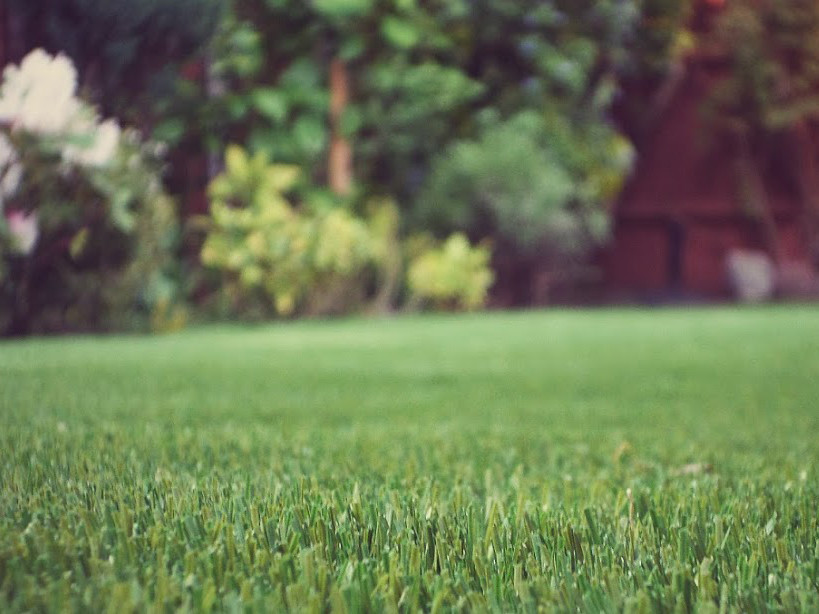

Humic acid represents a naturally occurring organic compound derived from the decomposition of plant and animal matter, forming a key component of humus in soil. Extracted primarily from sources such as leonardite or ancient peat deposits, humic acid serves as a potent soil conditioner that enhances turfgrass performance. In lawn care, humic acid facilitates improved soil structure, nutrient retention, and microbial activity, contributing to resilient, vibrant grass.
Understanding Humic Acid and Its Composition
Humic substances encompass a spectrum of complex molecules, including humic acid, fulvic acid, and humin, differentiated by solubility and molecular size. Humic acid, the predominant fraction in most commercial products, exhibits a high cation exchange capacity (CEC), enabling it to bind essential minerals such as potassium, calcium, magnesium, iron, and manganese. Fulvic acid, smaller and more soluble, penetrates plant tissues to transport nutrients directly.
These compounds mimic the organic matter naturally produced in healthy soils through microbial decomposition of clippings and roots. Commercial formulations—available as liquids, granules, or integrated into fertilizers—typically contain 12% to 80% humic substances, sourced sustainably to ensure efficacy without environmental compromise.
Key Benefits for Lawn Health
Humic acid confers multiple advantages, substantiated by agronomic research and field observations:
- Enhanced Nutrient Uptake and Retention: By chelating nutrients, humic acid prevents leaching, particularly in sandy or clay soils. Humic acid unlocks bound phosphorus, nitrogen, and micronutrients, increasing availability by up to 20-30% in deficient soils. Turfgrasses exhibit improved chlorophyll content and greening without excessive fertilization.
- Improved Soil Structure and Water Dynamics: Humic acid promotes aggregation, enhancing aeration, drainage, and water-holding capacity. Sandy soils retain up to 20% more moisture, while compacted clays loosen, reducing runoff and erosion. This buffers against drought, with studies indicating prolonged turf survival under water stress.
- Stimulation of Microbial Activity: As a carbon source, it fosters beneficial bacteria and fungi, including mycorrhizae, which decompose thatch and cycle nutrients. This biological boost suppresses pathogens and enhances resilience.
- Root Development and Stress Tolerance: Applications yield deeper roots (up to 4 inches in trials), stronger vigor, and resistance to heat, salinity, and disease. Combined with kelp extracts, it mitigates summer decline.
- Sustainability and Cost Efficiency: Unlike synthetics, humic acid reduces fertilizer needs by 10-20%, minimizing environmental impact while supporting long-term soil fertility.
Scientific validation includes turfgrass trials demonstrating superior performance under stress, with humic-treated plots outperforming controls in root mass, color, and density.
Selecting the Appropriate Humic Acid Product
Choose products based on soil type and application method:
- Liquid Forms: Ideal for rapid absorption via foliar or soil drench (e.g., 12% concentrates like N-Ext Humic12). Mix 4-9 oz per 1,000 sq ft in 1-2 gallons water.
- Granular Forms: Suited for broadcast spreading (e.g., 70-80% humic acid). Rates: 3-10 lbs per 1,000 sq ft.
- Blends: Pair with kelp, iron, or NPK for synergistic effects.
Conduct a soil test to assess pH (optimal 6.0-7.0), organic matter (<5% benefits most), and deficiencies. High-quality products list humic/fulvic percentages and avoid fillers.
Step-by-Step Application Protocol
- Timing: Apply during active growth—early spring (soil 55-80°F) and fall for root establishment; every 4-8 weeks in summer. Avoid frozen or waterlogged soils.
- Preparation: Mow lawn to standard height; water lightly pre-application for moist soil.
- Method: Use hose-end sprayer or broadcast spreader; apply evenly on calm days. Foliar uptake occurs within hours; soil incorporation via irrigation follows.
- Follow-Up: Water thoroughly (0.25-0.5 inches) to activate. Reapply post-aeration or seeding for 20-50% germination boost.
Overapplication poses no burn risk but wastes resources; adhere to labels.
Integrating into a Comprehensive Lawn Program
Humic acid excels as a complement:
- With Fertilizers: Boosts efficiency; apply tank-mixed with NPK.
- Aeration/Topdressing: Enhances incorporation.
- Weed/Disease Control: Healthier turf resists invasions.
- Irrigation: Reduces usage by 20% in trials.
Monitor progress via screwdriver probe for root depth and visual metrics. Expect gradual improvements over 2-3 applications; full soil transformation requires 1-2 seasons.
Potential Limitations and Precautions
While versatile, humic acid yields modest results in fertile, high-organic soils. Effects vary by formulation quality—opt for third-party tested products free of contaminants. Compatible with organics and synthetics; pet- and child-safe post-drying.
Conclusion
Incorporating humic acid into lawn maintenance yields healthier, more sustainable turf through superior soil conditioning and plant physiology. By optimizing nutrient dynamics, water relations, and biology, humic acid addresses root causes of lawn decline. Homeowners and professionals alike benefit from its evidence-based efficacy, fostering enduring vibrancy with minimal inputs. Regular soil testing and programmatic use maximize returns, transforming ordinary lawns into resilient landscapes.


Leave a Reply