
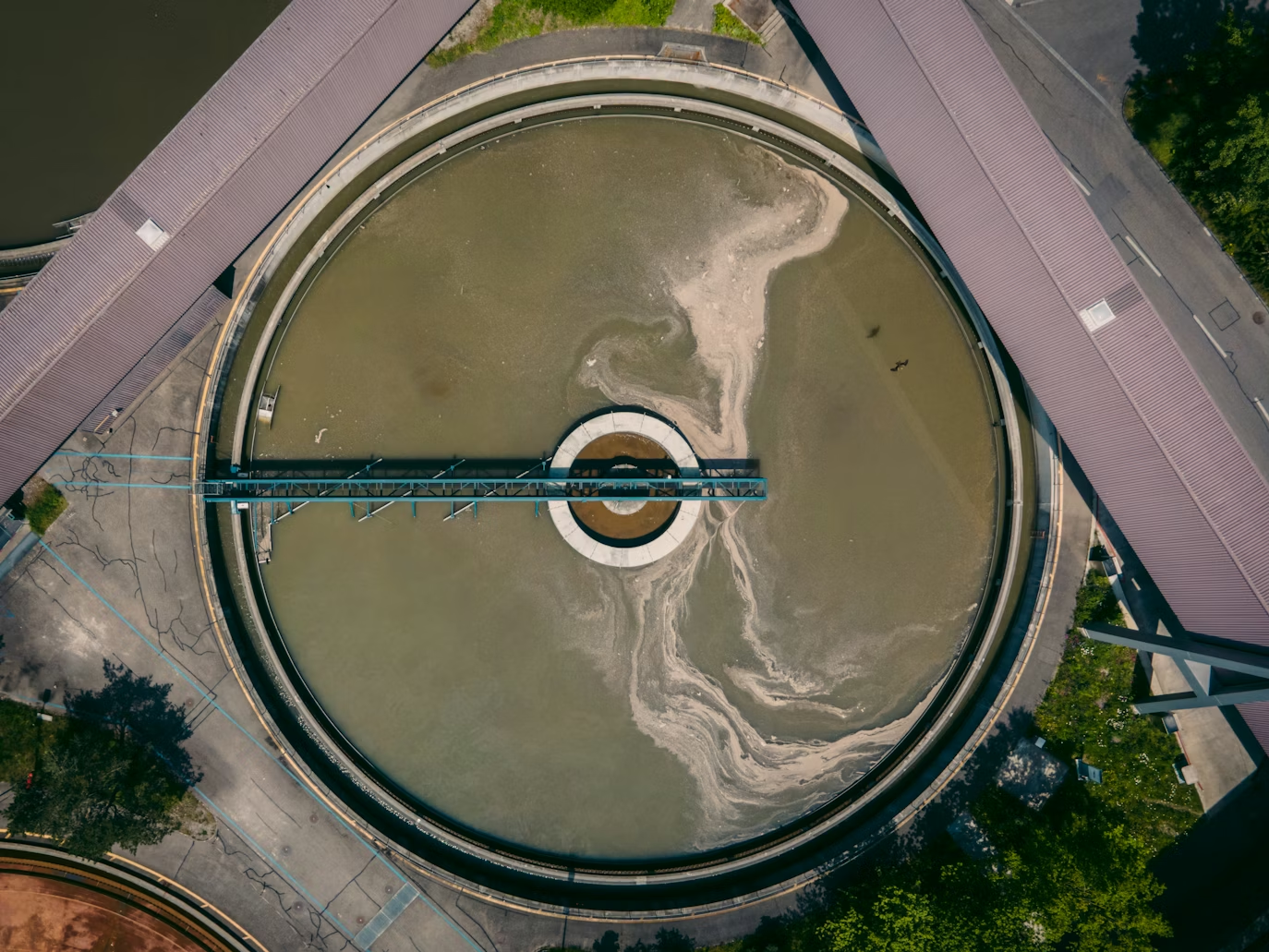

Humic acid (HA), a major fraction of humic substances originating from the microbial decomposition of organic matter, plays a dual role in wastewater treatment. Humic acid serves as a natural agent for removing contaminants such as heavy metals, dyes, and organics, while its presence as a pollutant in wastewater—often from natural organic matter (NOM), landfill leachate, or industrial effluents—poses challenges by forming disinfection by-products (DBPs) and interfering with treatment processes. Derived primarily from leonardite, peat, or lignite, HA features a complex structure with carboxyl, phenolic, and quinone groups, enabling versatile interactions.
Key Properties of Humic Acid Relevant to Wastewater Treatment
Humic acid possesses characteristics that support both contaminant removal and pose treatment hurdles:
- Molecular weight: Typically 10,000–100,000 Da, contributing to refractory nature
- Solubility: Forms soluble salts (e.g., potassium or sodium humate) in alkaline conditions (pH >7)
- Cation exchange capacity: 400–800 cmol/kg, facilitating metal binding
- Functional groups: High density of oxygen-containing sites (30–35% oxygen content)
- Amphiphilic behavior: Aids in dispersing hydrophobic pollutants
Commercial products often achieve 60–90% purity, with leonardite-derived HA preferred for consistency in treatment applications.
Detailed Mechanisms of Contaminant Removal and Interactions
HA facilitates pollutant removal through multiple pathways, while its presence can complicate processes:
| Mechanism | Description | Primary Targets/Effects | Recent Insights (2023–2025) |
|---|---|---|---|
| Complexation/Chelation | Forms stable complexes with cations via functional groups | Heavy metals (Pb, Cd, Cu, Zn, Cr, Hg) | Reduces residuals to <0.03 mg/L post-precipitation; enhances flotation |
| Adsorption/Coagulation Aid | Promotes floc formation and surface binding | Dyes, suspended solids, grease/oils | Improves removal in hybrid biochar systems |
| Surfactant Action | Disperses hydrophobic compounds | PAHs, hydrocarbons, cationic dyes | Aids dissolved air flotation for trace organics |
| Redox Mediation | Quinone groups enable electron transfer | Cr(VI) reduction, refractory organics | Accelerates degradation in electrochemical setups |
| Biosorption/Stimulation | Binds to biomass or provides carbon source | Organic matter, ammonia in anammox | Low doses (<150 mg/L) enhance nitrogen removal |
| Interference (as Pollutant) | Competes for sites or forms DBPs | Disinfection processes, membrane fouling | Increases DBP precursors; requires targeted removal |
These mechanisms enable Humic Acid integration into precipitation, flotation, adsorption, and biological systems.
Expanded Applications and Performance Insights
Heavy Metal Removal
Humic Acid effectively binds metals post-chemical precipitation or in flotation cells.
- Dosage: 0.1–1 g/L soluble humate
- Performance: Achieves >90–98% removal for Pb, Cd, Cu, Zn; residuals <0.03 mg/L
- Hybrids: Biochar-HA composites or modified activated carbon enhance efficiency
Dye and Organic Pollutant Removal
Supports adsorption and oxidation for synthetic dyes and NOM.
- Targets: Methylene blue, crystal violet, reactive dyes
- Performance: 90–98% removal with functionalized materials; nano-MgO capacities up to 1260 mg/g
- Leachate: Combined processes degrade refractory fractions
Landfill Leachate and Industrial Effluents
Addresses high-NOM streams.
- Performance: Electrochemical or catalytic wet oxidation achieves 98% HA degradation
- Anammox enhancement: Optimal low concentrations improve nitrogen removal efficiency
Emerging Hybrids
- Photo-Fenton or electrocatalytic systems for real wastewater
- Membrane distillation: HA inhibits silica scaling
- Recovery: Potential extraction of Humic Acid from wastewater for reuse
Limitations and Challenges in Implementation
HA applications face several constraints, particularly when HA itself is the target pollutant:
| Limitation | Description | Implications and Mitigation |
|---|---|---|
| pH Dependence | Efficacy drops in acidic conditions; precipitation risks | pH adjustment with alkali; use soluble forms |
| Source and Batch Variability | Content (30–85%) and groups vary; affects consistency | Rigorous COA verification; standardized sourcing |
| Interference as NOM | Forms carcinogenic DBPs; membrane fouling; competes in adsorption | Pre-removal via advanced oxidation or specialized adsorbents |
| Temporary Mobilization | Low-molecular fractions may initially increase metal mobility | Dosage optimization; monitoring |
| Refractory Nature | Resistant to biodegradation; complicates leachate treatment | Hybrid processes (e.g., CWAO, photo-Fenton) |
| Cost and Scalability | Refined products expensive; limited full-scale data | Bulk crude for large volumes; pilot testing |
| Sludge/Regeneration Management | Adds to solids; regeneration challenges | Integrated recovery strategies |
| Color/Odor in Effluent | Imparts dark hue if not fully removed | Post-treatment filtration |
Recent reviews highlight the need for integrated processes to overcome these, especially for Humic Acid removal from complex matrices.
Guidelines for Product Selection and Application
- Source priority: Leonardite-derived Humic Acid (≥65–85% content) for low contaminants and reliability.
- COA essentials: HA ≥65%; carboxyl >3 meq/g; heavy metals <10 ppm Pb.
- Form recommendations
| Application | Form | Dosage Guide |
|---|---|---|
| Precipitation/Flotation Aid | Liquid potassium/sodium humate | 0.1–1 g/L |
| Adsorption Enhancement | Granular or biochar composites | Flow-dependent |
| Bioremediation/Anammox | Soluble powder | <150 mg/L |
- Best practices: Conduct bench/pilot tests; combine with precipitants, biochar, or oxidation; monitor pH and competitors.
- Monitoring: Residual metals (ICP-MS), COD/TOC, DBP precursors, color removal.
Pricing Overview (2025)
| Product Type | Purity/Content | Form | Price Range (USD/kg) |
|---|---|---|---|
| Crude Leonardite Powder | 60–85% HA | Dry/Granular | 0.50–1.00 |
| Soluble Potassium Humate | 10–20% active | Liquid | 2.00–4.00 |
| High-Purity Extracted | ≥90% HA | Powder/Liquid | 5.00–10.00 |
| Modified Composites | 60–80% with additives | Various | 3.00–6.00 |
Bulk orders offer discounts; global market growth supports stable supply amid rising demand for sustainable treatments.
Conclusion
Humic acid provides a versatile, natural tool for wastewater treatment, excelling in heavy metal complexation, dye adsorption, and process enhancement, while its removal is critical to prevent DBPs and fouling. Advances from 2023–2025 in hybrids, electrocatalysis, and recovery underscore its alignment with sustainable goals. Limitations such as pH sensitivity, variability, and refractory behavior are addressable through quality control, integrated approaches, and testing. When selected and applied appropriately, HA contributes significantly to efficient, eco-friendly treatment, supporting water reuse and pollution mitigation in diverse wastewater streams.


Leave a Reply