
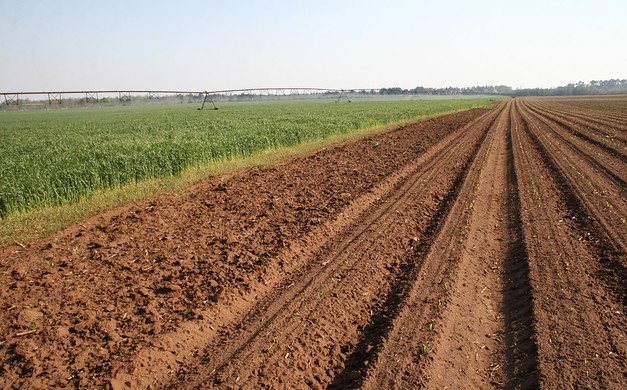

Humic acid, a complex organic polymer formed during the long-term decomposition of plant and animal residues, stands as one of the most effective natural amendments for improving soil moisture management. Derived primarily from ancient deposits such as leonardite, oxidized lignite, or well-composted organic materials, it integrates seamlessly into soil ecosystems to enhance hydrological properties. Its value lies in addressing common challenges associated with water loss in diverse soil types, including rapid drainage in sandy profiles, excessive compaction in clays, and overall degradation from intensive land use.
Fundamental Mechanisms Governing Water Retention Enhancement
Humic acid influences soil water dynamics through multiple, synergistic pathways that collectively transform physical, chemical, and biological soil characteristics:
- Structural Improvement via Aggregation: Humic substances act as binding agents, promoting the formation of stable soil aggregates. These aggregates create a balanced pore space distribution—larger pores facilitate initial infiltration, while smaller micropores retain moisture against gravitational drainage and evaporative loss.
- Elevation of Organic Matter Content: Even modest additions increase the soil’s overall organic fraction, which inherently holds several times its weight in water due to abundant hydrophilic sites.
- Augmented Cation Exchange and Surface Charge: The molecule’s numerous carboxyl, phenolic, and hydroxyl groups confer a high cation exchange capacity, attracting and retaining polar water molecules through electrostatic and hydrogen bonding interactions.
- Modification of Soil Hydraulic Conductivity: In coarse-textured soils, humic coatings on sand particles reduce percolation rates; in fine-textured soils, it counteracts density to prevent cracking and surface sealing.
- Stimulation of Biological Activity: By serving as an energy source for soil microorganisms, humic acid fosters the production of polysaccharides and other exudates that further stabilize aggregates and enhance water-holding structures.
These mechanisms operate progressively, with initial effects observable within weeks and cumulative improvements accruing over successive seasons.
Benefits Across Soil Types and Agricultural Systems
The incorporation of humic acid yields measurable and sustained advantages in water conservation and soil health:
- Significant Increase in Available Water Capacity: Research consistently demonstrates enhancements ranging from 15% to 80%, depending on initial soil texture and application rate. Sandy soils exhibit the most dramatic gains, often doubling moisture retention in the root zone.
- Reduced Irrigation Requirements: Field studies report water savings of 20-40% under comparable crop performance, attributable to decreased evaporation, minimized deep percolation, and extended moisture availability during dry intervals.
- Alleviation of Plant Water Stress: Improved retention buffers against intermittent drought, maintaining cell turgor, stomatal conductance, and photosynthetic efficiency during periods of limited rainfall.
- Prevention of Nutrient Leaching: By slowing downward water movement, humic acid keeps dissolved fertilizers within the effective root zone, indirectly supporting water-use efficiency through better nutrition.
- Enhanced Soil Resilience to Extreme Conditions: In saline or sodic environments, humic acid aids in reclaiming structure and reducing evaporation from crusted surfaces.
- Long-Term Carbon Sequestration: Incremental organic matter buildup contributes to climate mitigation while perpetuating hydrological benefits.
These outcomes extend beyond immediate moisture conservation to foster overall ecosystem stability and productivity.
Selection Criteria for Humic Acid Products
Quality and formulation significantly influence efficacy:
- Source Material: Leonardite-derived products generally offer higher humic acid content (60-80%) compared to peat-based alternatives.
- Formulation Types:
- Liquid extracts (6-20% concentration) for rapid incorporation via irrigation systems.
- Granular or powdered forms (50-80% humic substances) for broadcast or banded soil application.
- Soluble powders for precise dilution and foliar/soil drench use.
- Additional Considerations: Seek products with standardized humic acid/fulvic acid ratios, low heavy metal content, and independent verification of composition. Combinations with seaweed extracts, amino acids, or microbial inoculants often provide complementary moisture-related benefits.
Soil testing prior to selection—assessing texture, organic matter levels (typically below 3-5% indicates strong potential response), pH, and existing salinity—guides optimal product choice.
Detailed Application Guidelines and Rates
Successful implementation requires attention to rate, timing, method, and integration:
| Soil Type | Recommended Rate (kg/ha) | Application Method | Frequency | Expected Duration of Effect |
|---|---|---|---|---|
| Sandy/Coarse | 200-400 | Incorporation or fertigation | Annual + mid-season top-up | 6-12 months |
| Loamy/Medium | 150-300 | Broadcast followed by tillage/irrigation | Biannual | 8-18 months |
| Clay/Heavy | 100-250 | Surface application with incorporation | Annual | 12-24 months |
| Degraded/Reclaimed | 300-500 (initial) | Deep banding or multiple passes | Initial heavy + maintenance | Multi-year buildup |
- Timing: Optimal during periods of moderate soil moisture and temperature (10-25°C), such as pre-planting, early growth stages, or post-harvest incorporation.
- Methods:
- Mechanical incorporation to 10-20 cm depth for granular forms.
- Dilution and delivery through drip, pivot, or flood irrigation for liquids.
- Tank-mixing with compatible fertilizers or pesticides to reduce passes.
- Monitoring: Track soil moisture probes or gravimetric sampling to calibrate future rates. Initial over-application rarely causes harm but may be uneconomical.
Combining humic acid with cover cropping, reduced tillage, and organic mulch layers accelerates and prolongs water retention improvements.
Supporting Evidence from Controlled and Field Research
Numerous peer-reviewed investigations validate these effects:
- Long-term trials on arid sandy soils show sustained increases in field capacity and plant-available water persisting for multiple growing seasons.
- Experiments in Mediterranean climates document irrigation reductions of 25-35% without yield penalty in vegetable and grain crops.
- Saline-alkali reclamation studies report decreased soil evaporation rates and improved infiltration uniformity following repeated applications.
- Meta-analyses confirm dose-dependent responses, with optimal returns typically at 150-300 kg/ha annually.
Consistency across diverse geographies and cropping systems underscores the reliability of humic acid as a water retention amendment.
Limitations of Humic Acid in Water Retention Applications
Despite its efficacy, humic acid is not a universal solution and exhibits constraints under certain conditions:
- Variable Response Based on Initial Soil Organic Matter Content: Soils already rich in stable organic matter (typically >5-7%) often show minimal additional improvement in water-holding capacity. The greatest benefits occur in degraded, low-organic-matter soils (<2-3%), where incremental gains are most pronounced.
- Diminishing Returns with Excessive Application Rates: Beyond optimal dosages (generally 150-400 kg/ha depending on soil type), further additions yield marginal or negligible enhancements. Over-application increases costs without proportional benefits and may temporarily alter soil pH or microbial balances.
- Slower Onset in Cold or Inactive Soils: Effects on aggregation and moisture dynamics require active microbial mediation and warm temperatures (above 10-15°C). Applications during winter dormancy or in cold climates produce delayed results, often not fully realized until the following growing season.
- Limited Impact on Extreme Soil Textures Without Complementary Practices: In very coarse sands or highly plastic clays, humic acid alone may provide only moderate improvements. Sustainable outcomes typically require integration with other amendments (e.g., compost, gypsum, or cover crops) and management changes (reduced tillage, mulching).
- Potential Temporary Reduction in Solubility at Extreme pH Levels: In strongly acidic (<5.0) or highly alkaline (>8.5) soils, humic acid solubility decreases initially, slowing incorporation. However, this effect is usually transient as soil biology adjusts.
- No Direct Substitution for Irrigation Infrastructure: While it reduces water requirements significantly, humic acid cannot compensate for severely inadequate rainfall or irrigation systems in arid regions without supplemental water inputs.
- Long-Term Dependency on Repeated Applications: Benefits are cumulative but not permanent in intensively managed systems where organic matter mineralization occurs rapidly. Annual or biannual reapplication is often necessary to maintain elevated water retention.
- Variability Due to Product Quality and Source: Inconsistent composition among commercial products can lead to unpredictable performance, underscoring the importance of rigorous selection.
These limitations highlight that humic acid functions most effectively as part of an integrated soil health strategy rather than a standalone remedy.
Tips for Selecting High-Quality Humic Acid Products
- Prioritize Verified Humic and Fulvic Acid Content:
- Select products with clearly stated percentages of humic acid (ideally 50-80% for granular forms, 12-20% for liquids).
- Look for separate listings of fulvic acid, as its higher solubility enhances rapid moisture-related effects.
- Avoid products labeled vaguely as “humic substances” without breakdown or those relying heavily on inert fillers.
- Evaluate Source Material:
- Leonardite-derived products generally offer superior humic acid concentration and stability compared to peat or compost extracts.
- Opt for oxidized lignite sources with documented low contaminant levels.
- Check for Independent Certification and Analysis:
- Seek third-party laboratory testing certificates (e.g., for heavy metals, salinity, and actual humic content).
- Products compliant with organic standards (OMRI-listed or equivalent) ensure environmental safety and purity.
- Match Formulation to Application Method and Soil Needs:
- Granular/Powdered: Best for long-term incorporation in broadcast or banded applications; choose high-concentration (60-80%) forms for sandy or depleted soils.
- Liquid Concentrates: Preferred for fertigation, drip systems, or foliar use; select soluble versions with balanced humic/fulvic ratios for quicker water retention response.
- Soluble Powders: Ideal for precise dilution and uniform distribution in large-scale operations.
- Consider Particle Size and Solubility:
- Finer particles (e.g., <100 mesh in granular forms) dissolve and integrate faster, accelerating aggregation and moisture benefits.
- Test small batches for complete solubility in water if using liquid delivery systems.
- Review Compatibility and Additives:
- Ensure compatibility with existing fertilizers, pesticides, or irrigation water chemistry (conduct jar tests to check for precipitation).
- Products blended with seaweed extracts, amino acids, or beneficial microbes often provide synergistic water retention and root stimulation effects.
- Assess Cost-Effectiveness and Supplier Reputation:
- Calculate cost per unit of active humic acid rather than per volume or weight.
- Choose established suppliers with transparent sourcing and positive agronomic trial data.
- Conduct Preliminary Soil Testing:
- Analyze texture, organic matter, pH, and CEC beforehand to confirm suitability and determine baseline dosage.
- Trial selected products on small plots to verify local performance before full-scale adoption.
- Read User Reviews and Research References Critically:
- Consult peer-reviewed studies or extension service recommendations rather than relying solely on marketing claims.
- Favor products with documented field results in similar soil and climate conditions.
By adhering to these selection criteria, users can minimize risks of underperformance and ensure consistent, reliable improvements in soil water retention.unintended consequences.
Conclusion
Humic acid represents a scientifically substantiated, versatile solution for enhancing soil water retention and fostering resource-efficient land management. By addressing structural, chemical, and biological constraints simultaneously, it delivers enduring improvements in moisture storage, drought resilience, and overall soil functionality. Strategic, informed application—tailored to local conditions and integrated within holistic practices—maximizes benefits while contributing to sustainable agricultural and environmental outcomes. Continued research and field validation affirm its role as a cornerstone amendment in modern soil conservation strategies.
Understanding the limitations of humic acid prevents unrealistic expectations and promotes strategic use within broader soil management frameworks. Concurrently, careful product selection—emphasizing verified composition, appropriate sourcing, and compatibility—directly influences outcomes. When applied judiciously in suitable contexts, humic acid remains a valuable, evidence-based tool for enhancing soil moisture conservation and supporting sustainable land stewardship. Regular monitoring and adaptive management further optimize long-term results.



Leave a Reply