
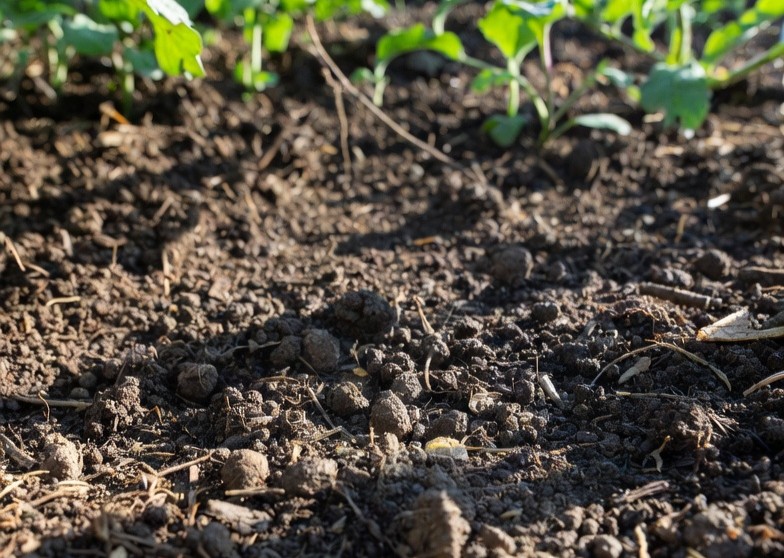

Humic substances are not a modern invention. They are simply what remains after decades, centuries, even millennia of plant material slowly breaking down under wet, oxygen-poor conditions—first into peat, later into lignite or leonardite layers buried just beneath the surface in certain parts of the world. The result is a family of dark, carbon-rich molecules that soil scientists divide, somewhat arbitrarily, into three overlapping groups: humic acid, fulvic acid, and humin.
- Humic acid is the larger, heavier fraction—dark brown to black, soluble only when the pH rises above neutral.
- Fulvic acid is smaller, lighter in colour (yellow to golden), and remains dissolved no matter how acidic or alkaline the solution becomes.
- Humin is the insoluble portion that stays tightly bound within the soil matrix for the longest time.
Despite these differences in solubility and size, all three share a common character: they are irregular, highly functionalised polymers rich in carboxyl groups, phenolic hydroxyls, quinones, and other oxygen-containing structures. That chemical promiscuity is exactly why humic substances behave so differently from ordinary organic matter.
How They Actually Work in Soil
The most immediate, observable change after applying a good-quality humic product is usually improved soil tilth. Aggregates become more stable; the soil feels less sticky when wet and less dusty when dry. Water infiltrates more readily instead of ponding or running off. These physical improvements come from the way humic molecules bridge clay particles and coat sand grains, creating a looser yet more coherent structure.
At the same time humic substances act as a slow-release nutrient bank. They hold onto cations (calcium, magnesium, potassium, ammonium, and many trace elements) far more tenaciously than ordinary clay or organic matter. Because the binding is reversible, roots and soil microbes can still extract those nutrients when they need them. The net effect is that farmers frequently observe they can reduce mineral fertiliser rates—sometimes by 15–30 % on nitrogen and phosphorus—without a corresponding drop in yield.
Root systems respond noticeably. In side-by-side trials one often sees longer, finer, more highly branched roots in humic-treated plots. Part of this response appears to be hormonal: humic and especially fulvic fractions contain or mimic auxin-like compounds that encourage lateral root initiation and elongation. Another part is simply better nutrient and water availability in the rhizosphere, so the plant invests less energy searching for resources.
Observed Field Benefits – Measured and Anecdotal
Over the past fifteen years a large number of replicated trials—mostly in cereals, vegetables, tree crops, and rice—have documented the following patterns:
- Yield increases of 8–25 % are common when baseline fertility is moderate to low or when drought or salinity stress occurs during the season.
- Grain protein content and specific weight often rise slightly, which matters for milling and malting grades.
- Fruit size and colour uniformity improve in perennial crops (citrus, coffee, apple, grape).
- Early-season vigour is consistently stronger, allowing crops to close the canopy sooner and compete better against weeds.
- Recovery from transplant shock or hail damage appears faster.
Human Health – What Is Known and What Remains Cautious Speculation
Outside agriculture the conversation shifts to supplements containing fulvic and humic acids. The claims one encounters online are broad: detoxification, improved mineral absorption, gut health, immune support, even anti-viral or anti-cancer activity.
Laboratory data provide some support for certain mechanisms:
- Both humic and fulvic acids bind heavy metals (lead, cadmium, mercury) and certain organic pollutants in vitro with respectable affinity.
- They exhibit moderate free-radical scavenging capacity, comparable to many plant polyphenols.
- Several older studies showed antiviral effects against enveloped viruses in cell culture, apparently by interfering with attachment or membrane fusion.
- Animal experiments indicate accelerated wound closure and reduced liver damage after toxin exposure.
Human clinical evidence, however, remains sparse and mostly small-scale. A few controlled supplementation trials report subjective improvements in energy, digestive comfort, or skin condition, but placebo effects cannot be ruled out. Blood mineral profiles sometimes show modest upward trends in zinc or iron status, yet changes are rarely dramatic enough to replace conventional therapy.
The prudent position is therefore straightforward: humic/fulvic supplements appear safe at typical oral doses (200–600 mg/day of dry extract) for most adults, may offer mild supportive benefits for mineral status and gut ecology, but should never be regarded as primary treatment for any diagnosed medical condition.
Environmental Perspective
From a planetary viewpoint humic substances are one of the more benign input options available to modern agriculture. They are mined from naturally occurring deposits rather than synthesised; application rates are low; and they do not persist as xenobiotics. When used thoughtfully they can help slow the degradation of intensively cropped land by rebuilding organic matter stocks and improving water-use efficiency.
In carbon-accounting terms, every tonne of humic material incorporated into soil represents roughly 0.5–0.6 tonnes of stable carbon added to a relatively long-lived pool. While not comparable to large-scale reforestation or biochar application, the contribution is real and cumulative.
Closing Thoughts
Humic substances will never replace balanced fertilisation, good crop rotation, or careful water management. They are not magic. Yet when soil organic matter is low, when nutrient-use efficiency is poor, or when growers face recurring abiotic stress, a well-sourced humic product often delivers a quietly favourable return on investment.
The appeal lies partly in simplicity: one input that touches so many different processes—physical, chemical, biological—without forcing the system in an unnatural direction. In an era when many farmers are searching for ways to maintain productivity while lowering external inputs, humic substances remain one of the more logical places to look.
If you are already experimenting with these materials in the field or considering a trial, the single most useful step is usually a basic soil test before and after application. The numbers—organic matter percentage, cation exchange capacity, extractable micronutrients—tend to tell a clearer story than visual impressions alone.




Leave a Reply