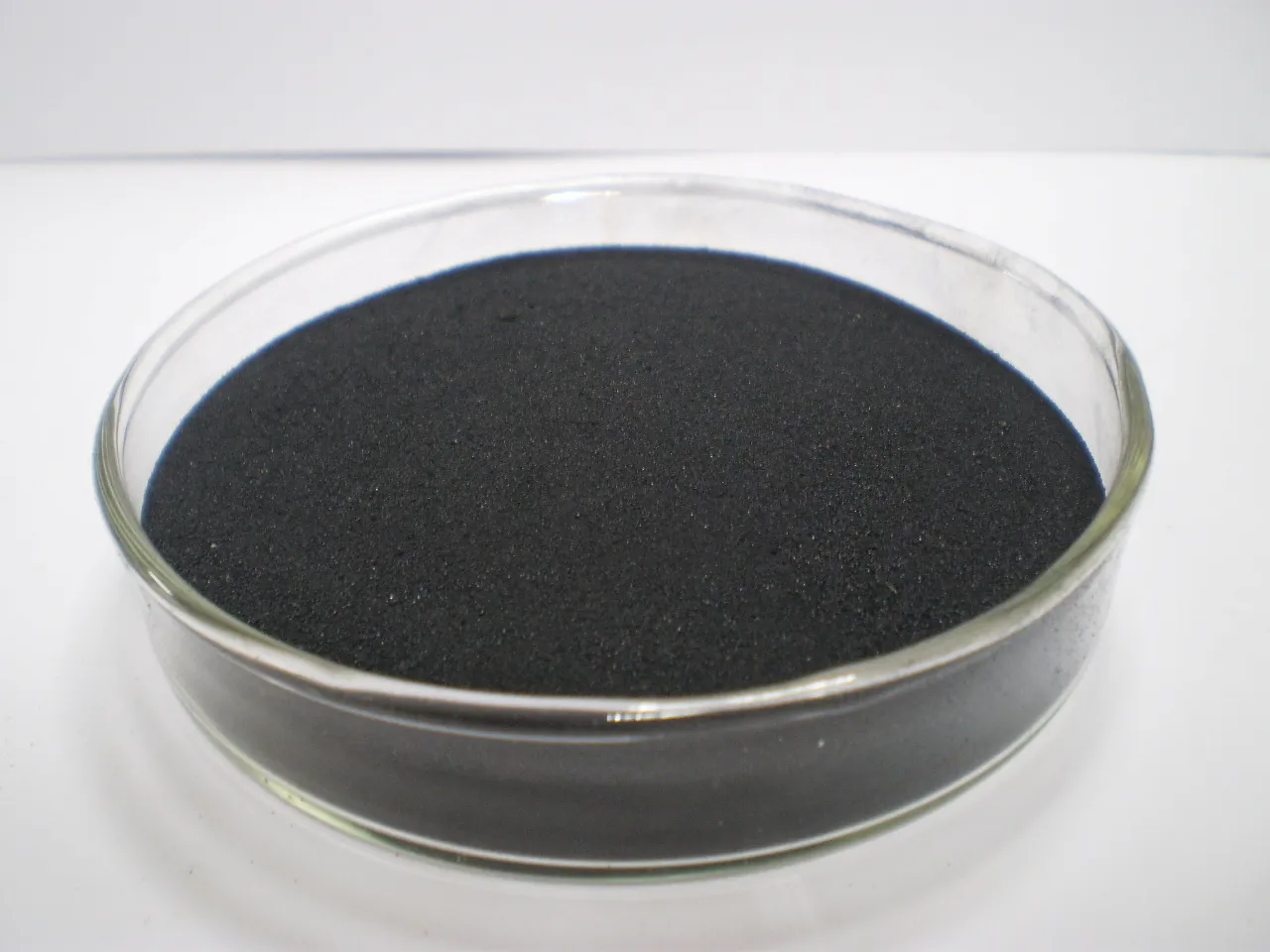
1. Description Chitin Humate is a water-soluble or partially water-soluble organo-mineral complex obtained by chemical bonding or strong ionic interaction between deacetylated chitin (chitosan) and humic acids (usually potassium or sodium humates). The product combines the biostimulant, chelating, and soil-conditioning properties of humic substances with the elicitor, antimicrobial, and nematode-suppressive activity of chitosan. It is widely used in sustainable agriculture as a soil amendment, foliar biostimulant, seed treatment agent, and plant growth enhancer.
2. Physical and Chemical Properties Property Typical Value / Range Appearance Dark brown to black powder or granules Odour Slight earthy / ammoniacal Bulk density 0.55 – 0.75 g/cm³ pH (1% solution in water) 6.5 – 8.5 Solubility in water (20 °C) 85 – 98 % (w/w) Total humic + fulvic acids 50 – 75 % (dry basis) Chitosan (deacetylated chitin) content 15 – 35 % (dry basis) Degree of deacetylation (chitosan) ≥ 85 % Molecular weight (chitosan fraction) 50 – 300 kDa Total nitrogen (N) 2.0 – 5.0 % Potassium (K₂O) (as humate salt) 6 – 12 % (when K-humate used) Moisture content ≤ 10 % Ash content 10 – 20 % Heavy metals (Pb, Cd, Hg, As) Meets EU 2019/1009 and USDA NOP limits
3. Composition
Humic acids (potassium/sodium/ammonium salts): 45 – 65 %
Fulvic acids: 5 – 15 %
Chitosan (poly-β-(1→4)-D-glucosamine): 20 – 30 %
Residual acetyl groups: ≤ 15 % of chitin fraction
Mineral fraction (silicates, carbonates): 5 – 15 %
4. Key Functional Properties
Strong cationic polyelectrolyte character (from chitosan)
High chelating capacity for micronutrients (Fe, Zn, Mn, Cu)
Elicitor of plant systemic acquired resistance (SAR)
Antifungal and antibacterial activity (MIC against Fusarium, Pythium, Rhizoctonia: 0.05 – 0.5 %)
Nematicidal/nematostatic effect (reduces root-knot and cyst nematodes by 40–70 % in field trials)
Improves soil cation exchange capacity (CEC) and aggregate stability
Enhances root development and nutrient uptake efficiency
5. Applications and Recommended Dosages Application Recommended Dosage Method Soil incorporation 50 – 200 kg/ha Broadcasting or banding Drip irrigation / fertigation 5 – 20 kg/ha (split applications) Diluted solution Foliar spray 0.5 – 2.0 kg/ha (0.05 – 0.2 % solution) 400–1000 L water/ha Seed treatment 200 – 800 g/100 kg seed (1–4 % solution) Slurry or film coating Hydroponics / soilless 50 – 200 mg/L nutrient solution Continuous or pulse
6. Compatibility
Fully compatible with most water-soluble fertilizers, amino acids, seaweed extracts, and microbial inoculants.
Avoid tank-mixing with highly alkaline products (pH > 9) or strong oxidants.
Perform jar test when mixing with copper-based fungicides.
7. Packaging
25 kg multi-wall paper bags with PE liner
500 kg or 1000 kg big bags
Custom packaging available upon request
8. Storage and Shelf Life
Store in cool, dry, well-ventilated area away from direct sunlight.
Shelf life: minimum 36 months from production date when stored properly.