
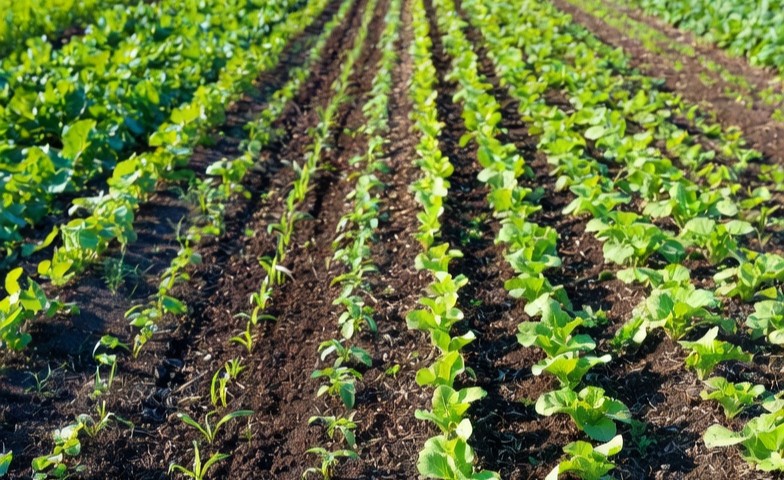

Leonardite humate holds a prominent position in the global agricultural inputs sector, serving as a primary source of humic substances for soil conditioning and fertilizer enhancement across diverse farming systems. Derived from oxidized lignite deposits, this material supplies concentrated humic and fulvic acids that support nutrient retention, soil structure improvement, and plant resilience. Its widespread adoption stems from the growing emphasis on sustainable practices, soil health restoration, and reduced reliance on synthetic inputs amid rising production costs and environmental regulations.
Why Leonardite Matters in Agriculture
The agricultural importance of leonardite stems from its exceptionally high concentration of humic and fulvic acids—often far exceeding levels in compost, peat, or fresh organic amendments. These compounds serve as natural soil conditioners and biostimulants rather than direct fertilizers.
Humic acids enhance cation exchange capacity, binding nutrients like ammonium, potassium, calcium, and magnesium to reduce leaching in sandy or heavily irrigated soils. They chelate micronutrients (iron, zinc, manganese, copper), preventing fixation in alkaline or calcareous conditions and improving bioavailability.
Soil physical properties improve through better aggregation, leading to increased water infiltration, reduced compaction, higher moisture retention, and decreased crusting. Microbial activity rises as humic substances provide stable carbon for beneficial bacteria and fungi, accelerating nutrient cycling and organic matter decomposition.
Plants benefit from stimulated root development (more extensive branching and finer hairs), enhanced nutrient uptake, improved chlorophyll content, and greater tolerance to abiotic stresses such as drought, salinity, and temperature extremes. In practice, leonardite-derived products often allow 15–25% reductions in synthetic fertilizer rates while maintaining or increasing yields and produce quality.
In regions with intensive cropping and rapid organic matter loss—like tropical and subtropical areas—leonardite offers a sustainable means to restore soil fertility, support regenerative practices, and align with environmental regulations on nutrient management.
For farmers evaluating sources, deposit quality varies: premium sites (e.g., North Dakota or select German layers) provide higher humic content and lower ash/heavy metals. Verification through lab analysis (humic/fulvic percentages via standardized methods) ensures reliable performance in field applications.
Global Production and Major Sources
Leonardite deposits occur in various geological settings worldwide, primarily associated with ancient sedimentary basins where lignite has undergone surface oxidation. North America features some of the largest and most consistently high-quality reserves. Significant mining operations take place in the United States, particularly in North Dakota, New Mexico, and parts of the Rocky Mountains and Northern Great Plains regions. These areas yield material with elevated humic acid content, often 60–80% in raw form, supporting both domestic use and substantial export volumes.
Other notable producers include Russia, which developed large-scale extraction facilities starting in the 1990s, enabling cost-effective supply to international markets. Turkey maintains active leonardite operations, while deposits exist in Canada, Mongolia, and select Asian locations. China ranks among the leading overall humic substance producers, though much of its output derives from lignite processing rather than strictly leonardite. Europe accesses supplies from nearby sources and imports, with demand influenced by strict nutrient management policies.
Global production capacity continues to expand in response to agricultural demand. North America captures a leading share in premium granular and extracted products, while Asia-Pacific countries, including China and India, contribute significantly to volume through both local processing and imports.
Market Size, Growth Trends, and Forecasts
The broader humic substances market, heavily reliant on leonardite-derived materials, demonstrates consistent expansion. Recent assessments place the global humic acid market value at approximately USD 700–800 million in 2024–2025, with projections indicating growth to USD 1.4–2.0 billion by the early 2030s, reflecting compound annual growth rates (CAGR) in the range of 7–11% depending on the specific segment and reporting source.
For potassium humate—a major processed form from leonardite—market estimates range from USD 700–1,200 million in recent years, with forecasts reaching USD 1,000–2,500 million by 2032–2033 at CAGRs of 3–8%. Leonardite granular humate specifically was valued around USD 721 million in 2024, expected to reach USD 1.42 billion by 2033 at a 7.8% CAGR, driven by applications in soil restoration and regenerative farming.
Agriculture dominates consumption, accounting for 60–76% of revenue in various reports. Other segments include horticulture, animal feed additives, and environmental remediation. Liquid formulations grow rapidly due to fertigation compatibility, while dry granular products maintain strong demand in broad-acre cropping.
North America holds approximately 28–34% of the market share, supported by advanced regenerative programs and high-grade deposits. Asia-Pacific emerges as a high-growth region, fueled by large-scale farming in China, India, Indonesia, and Vietnam. Europe benefits from proximity to certain deposits and policy incentives for organic inputs.
Usage Patterns and Regional Insights
In major agricultural economies, leonardite humate integrates into programs for cereals, oilseeds, fruits, vegetables, and perennial crops. In the United States, corn, soybean, and cotton growers apply it to unlock nutrient fixation and reduce runoff. European adoption aligns with nutrient directives, while Asia-Pacific expansion ties to population-driven food demand and soil degradation concerns.
Vietnam imports a substantial portion of its humate products, primarily potassium humate and related extracts from China, the United States, and other suppliers. Local distributors offer leonardite-based powders, granules, and liquids for rice paddies, coffee plantations, pepper gardens, and fruit orchards in the Mekong Delta, Central Highlands, and Southeast regions. Vietnam positions itself as a notable player in the Asia-Pacific sodium humate segment, though leonardite-derived potassium forms remain preferred for their performance in tropical soils.
Key Drivers and Future Outlook
Demand growth arises from several converging factors: regulatory pressure on fertilizer efficiency and nutrient loss, incentives for carbon sequestration through soil organic matter enhancement, and the shift toward organic or reduced-input farming. Leonardite humate contributes by improving cation exchange capacity, chelating micronutrients, and fostering microbial activity, often allowing 15–30% reductions in synthetic fertilizer rates without yield penalties.
Challenges include variability in raw material quality across deposits, energy-intensive extraction processes, and the need for standardized testing to verify humic/fulvic content. Reputable suppliers provide certificates confirming 65–90% humic acid in processed forms and low contaminants.
In summary, leonardite humate represents a cornerstone of contemporary soil management strategies on a global scale. Its natural origin, proven agronomic effects, and alignment with sustainability goals position it as a durable component of resilient agricultural systems worldwide.ard. Leonardite humate provides a straightforward, natural way to counteract the steady loss of soil organic matter that happens under intensive tropical farming. Its concentrated humic compounds deliver lasting improvements in nutrient holding, water management, root health, and crop stability without requiring major changes to existing equipment or routines. For producers facing declining fertility, unpredictable weather, or pressure to reduce chemical inputs, incorporating verified leonardite-based humates at sensible rates becomes a practical long-term strategy. Starting conservatively, tracking results carefully, and adjusting based on what the fields actually show remains the most reliable path forward.

Leave a Reply