

In many farming regions, particularly where intensive cropping has gradually depleted organic matter and where seasonal rains alternate with periods of drought, producers continually seek amendments that deliver reliable, measurable improvements without introducing complexity to existing operations. Liquid humate—essentially a concentrated, water-soluble extract rich in humic and fulvic acids—has gained steady recognition in such environments. Sourced typically from oxidized lignite (leonardite) or similar ancient organic deposits, the product arrives in a form that dissolves readily and integrates seamlessly into fertigation lines, foliar programs, or simple watering routines.
What distinguishes liquid humate from its granular or powdered counterparts is the immediacy of its effects. While solid humates contribute meaningfully over months through slow microbial release, the liquid format allows active components to engage with soil colloids and plant roots within days to weeks.
Core Composition and Why Liquid Humate Matters
At its foundation, liquid humate consists of two primary bioactive fractions:
- Humic acids — these larger molecules interact predominantly with soil mineral surfaces. They increase cation exchange capacity, encourage better aggregation of clay and silt particles, and help retain moisture in lighter-textured soils that otherwise drain rapidly after irrigation or rainfall.
- Fulvic acids — smaller and more soluble across pH ranges, fulvic fractions move easily into root tissues and even through foliar stomata. They function as natural chelators, forming stable complexes with iron, zinc, manganese, copper, and other micronutrients that might otherwise become unavailable due to high pH, phosphorus fixation, or leaching.
Commercial formulations often contain 8–15% combined humic and fulvic acids (expressed on a weight/volume basis), with potassium hydroxide or similar agents used for neutralization and solubility. The resulting dark-brown to black liquid typically carries a mild earthy odor and remains stable in storage when protected from extreme temperatures.
In practice, the presence of both fractions creates complementary action: humic acids rebuild long-term soil architecture, while fulvic acids provide short-term nutrient shuttling and biostimulant responses.
How Liquid Humate Influences Plant and Soil Processes
Rather than acting as a conventional fertilizer supplying N-P-K, liquid humate functions primarily as a conditioner and biostimulant. Its influence unfolds across several interconnected pathways.
First, soil physical properties improve noticeably with consistent use. Repeated applications promote the formation of stable aggregates, which in turn enhance porosity, reduce surface crusting, and allow deeper water infiltration. In regions subject to heavy monsoon rains—common in parts of Southeast Asia—this helps minimize erosion and ponding that can otherwise damage young rice transplants or vegetable beds.
Second, nutrient dynamics shift in favor of the crop. By complexing cations and anions, humic substances reduce premature fixation or leaching losses. Phosphorus availability often increases most dramatically in calcareous or iron-rich soils, while micronutrient delivery becomes more consistent even under alkaline conditions. Farmers frequently report that the same fertilizer rate produces visibly greener foliage and less chlorosis when liquid humate accompanies the program.
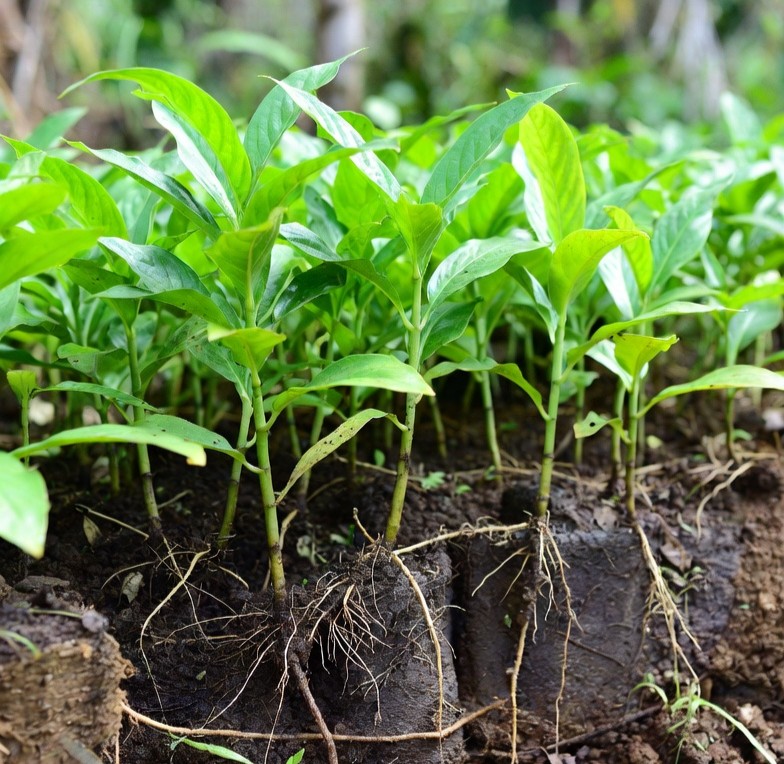
Third, root architecture responds strongly. Treated plants develop denser fibrous root systems with greater total length and surface area. This expansion improves anchorage in loose alluvial soils and expands the volume of soil explored for water and nutrients during dry intervals.
Fourth, physiological processes receive a measurable lift. Elevated chlorophyll indices, higher net photosynthetic rates, and more efficient stomatal regulation appear in treated plots. These changes translate to better carbohydrate partitioning, thicker stems, and—in many cases—earlier or more uniform fruit set.
Finally, the soil microbial community benefits indirectly. The additional carbon substrate and improved habitat favor populations of beneficial bacteria and fungi, which accelerate organic matter turnover and suppress certain root pathogens through competition.
Practical Application Strategies
Liquid humate accommodates flexible delivery methods, allowing growers to match application to crop stage, irrigation infrastructure, and budget.
- Fertigation / soil drench remains the backbone for most field and plantation use. Standard dilution rates fall between 1:500 and 1:2000 (product to water), delivering 0.5–3 liters of concentrate per hectare per pass. Applications every 3–5 weeks during active growth maintain momentum without risking overload.
- Foliar sprays provide a rapid-response option, especially useful when root uptake is limited by compaction, waterlogging, or early transplant stress. Concentrations of 0.1–0.3% (1–3 ml/L) in sufficient carrier volume (300–600 L/ha) ensure good coverage. Combining with micronutrient packages or seaweed extracts often amplifies visible greening within 5–10 days.
- Seedling dips or starter solutions at 0.5–1% concentration encourage vigorous early rooting in nursery trays or direct-seeded beds.
Regional experiences—particularly in rice, maize, coffee, pepper, and vegetable systems—suggest starting conservatively (e.g., 1–1.5 L/ha per application) and scaling upward based on visual response and tissue tests. Compatibility with most phosphate, urea, and sulfate-based fertilizers is generally good, though a small jar test is prudent when mixing with high-calcium or copper products.
Observed Outcomes and Realistic Expectations
Growers who incorporate liquid humate regularly tend to describe a cluster of practical gains rather than dramatic overnight transformations. Common reports include:
- 10–25% improvement in marketable yield in nutrient-constrained or compacted fields;
- Noticeably darker, more uniform leaf color and reduced incidence of micronutrient deficiency symptoms;
- Better drought carry-over between irrigations or rainfall events;
- Gradual rebuilding of tilth in fields that had become hard and cloddy after years of tillage.
In tropical climates with high leaching potential, the reduction in fertilizer inefficiency stands out as particularly valuable. Some producers note that they can maintain or slightly reduce N-P-K rates while achieving equivalent or superior performance—a meaningful consideration amid rising input costs.
Final Considerations
Liquid humate does not replace sound agronomic fundamentals—adequate base fertility, balanced pH, proper variety selection, and timely pest management remain essential. Liquid humate functions best as a complementary tool that amplifies the effectiveness of those fundamentals.
For operations aiming to improve resilience, lower per-unit production costs through better resource use, and progressively restore soil function, liquid humate offers a low-risk, high-compatibility entry point. Selecting products with transparent analytical specifications (humic + fulvic content, pH, and absence of undesirable contaminants) and applying them thoughtfully according to crop cycle and soil conditions will yield the most consistent returns.
Over seasons, the cumulative effect often appears in fields that feel “lighter,” drain more evenly, and support crops that withstand stress with less intervention. In that sense, liquid humate contributes not only to this year’s harvest but to the longer-term productivity of the land itself.


Leave a Reply