
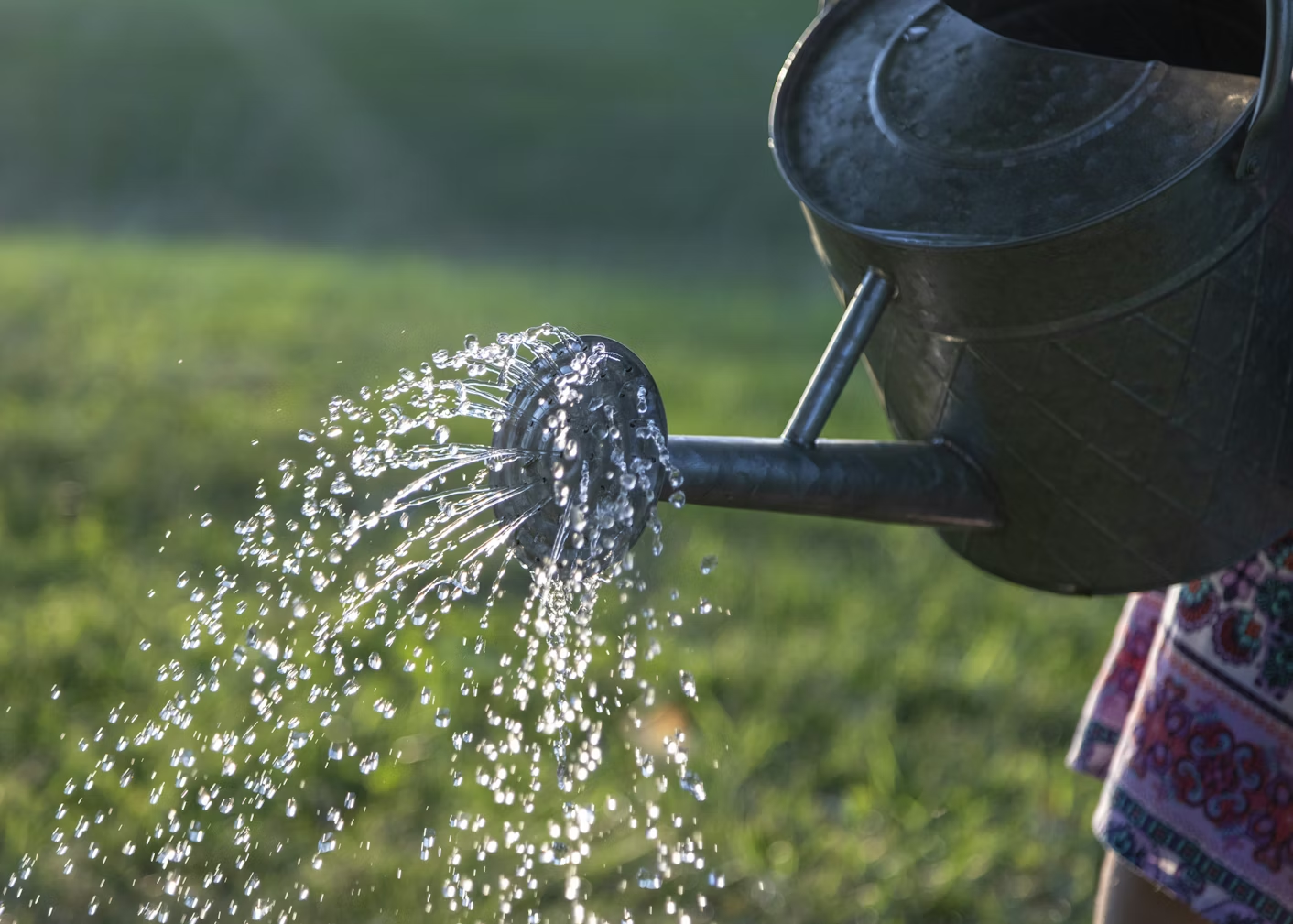

Potassium humate is one of the easiest and cheapest things you can spray on leaves to make plants grow stronger, give more yield, and fight problems like drought or poor soil. Farmers all over the world use it every day on vegetables, fruits, rice, wheat, flowers, even lawns and golf courses.
What exactly is potassium humate?
Potassium Humate comes from very old plant material buried in the ground for millions of years (called leonardite). They dig it, clean it, and react it with potassium hydroxide so it dissolves 100 % in water. The final product looks like black or dark-brown powder or shiny flakes. When you mix potassium humate in water it turns the water coffee-black or dark tea colour — that’s normal.
Why spray it on leaves instead of putting in soil?
- Roots take time to absorb things. Leaves absorb in 30 minutes to a few hours.
- When soil is dry, cold, flooded, or very salty, roots can’t take nutrients well — but leaves still work.
- You need very little quantity for big results (200–400 grams is enough for one acre spray).
- No waste — whatever you spray stays on the plant.
Full list of benefits
- Leaves turn dark green in 3–5 days after spray.
- New leaves come bigger and thicker.
- Plants make more flowers and less flower drop.
- Fruits become bigger, shinier, and sweeter.
- Fruits stay hard longer after picking (better shelf life in the market).
- Plants drink less water — they can survive 4–7 extra days without rain or irrigation.
- Less burning from chemical fertilizers if you over-applied them.
- Plants recover faster after hail, strong wind, or insect attack.
- Roots grow deeper and whiter even though you sprayed only leaves.
- You can reduce chemical fertilizers by 10–20 % and still get the same or better yield.
Exact doses used by real farmers all over the world
| Crop | Grams per liter water | How many grams for 200-liter drum | When to spray (growth stage) | Number of sprays |
|---|---|---|---|---|
| Tomato, pepper, chilli | 1–1.5 g | 200–300 g | 15 days after transplant, pre-flowering, fruit setting (2 times) | 3–5 |
| Cucumber, melon | 0.8–1.2 g | 160–240 g | Every 12–15 days from climbing stage | 4–6 |
| Potato | 1.5–2 g | 300–400 g | 25–30 days after planting + tuber formation | 2–3 |
| Onion, garlic | 1 g | 200 g | Bulb enlargement stage (2 sprays 15 days apart) | 2–3 |
| Grapes | 1–1.5 g | 200–300 g | Before flowering, berry pea size, veraison (colour change) | 3–4 |
| Mango, citrus, apple | 1.2–2 g | 240–400 g | New flush, pre-flowering, fruit development | 3–5 |
| Strawberry | 0.8–1 g | 160–200 g | Every 10–15 days from flowering | 5–8 |
| Rice, wheat, maize | 1 g | 200 g | Tillering + panicle/booting stage | 2 |
| Roses, gerbera, carnation | 0.5–1 g | 100–200 g | Every 10–12 days whole year | 10–20 |
| Cotton | 1.5 g | 300 g | Square formation + boll development | 2–3 |
| Lawns, turf, golf greens | 0.5–0.8 g | 100–160 g | Every 15–20 days | All season |
Step-by-step how to prepare the spray
- Take a small plastic bucket.
- Put 5–10 liters of clean water (warm water dissolves faster, but normal water is ok).
- Slowly pour the potassium humate powder while stirring with a stick. Keep stirring 2–3 minutes until no lumps.
- Pour this black mother solution into the spray tank.
- Fill the tank with remaining water and stir again.
- Add 5–10 ml of any liquid soap or proper wetting agent (helps the spray stick on leaves).
- Spray immediately — do not keep the solution overnight.
Best time of the day
- Morning 6–10 am (best) — stomata are open and dew helps.
- Evening after 4 pm (second best).
- Never spray 11 am to 3 pm in hot sun — water droplets act like small lenses and burn leaves.
What you can safely mix with potassium humate
YES (100 % safe):
- Urea, 19-19-19, 00-00-50, 12-61-00, 13-00-45
- Zinc sulphate, magnesium sulphate, ferrous sulphate
- Borax or boric acid
- Almost all fungicides (mancozeb, carbendazim, copper oxychloride, etc.)
- Most insecticides (imidacloprid, acetamiprid, fipronil, etc.)
- Seaweed extract, amino acids, fulvic acid
NO or be careful:
- Calcium nitrate in high amounts — may form lumps.
- Very strong acid products (pH < 4).
- High calcium foliar fertilizers — better to spray separately.
Always do a small jar test: take 100 ml water + your products → shake → wait 15 minutes → if clear, ok.
Real stories from farmers
- A tomato farmer in Maharashtra, India: “I used to get 18 tons/acre. After 4 sprays of potassium humate + micronutrients I got 24 tons and fruits were bigger and redder. Extra profit ₹80,000 per acre.”
- A grape grower in Nashik: “Flower drop was 40 %. After two sprays at flowering stage, drop reduced to 10 %. Bunch weight increased 200–300 g.”
- A rose greenhouse in Kenya: “Leaves were yellow because of high pH water. One spray of potassium humate + iron chelate — in 4 days leaves dark green again.”
- A potato farmer in Punjab: “Tubers were small and many hollow hearts. Two sprays at tuber initiation — 90 % big size and zero hollow heart.”
Cost calculation
Good quality potassium humate costs ₹250–400 per kg in most countries. For one acre spray you use only 250–350 grams → cost ₹70–140 per spray. Even if you spray 5 times = ₹500 per acre total. But extra yield easily 2–10 tons depending on crop → profit thousands of rupees/dollars. Best investment in farming!
Final tips from years of experience
- Start with small dose first time (0.8 g/liter) — see how plants react.
- Never skip the wetting agent — coverage increases 3–4 times.
- Keep the sprayer nozzle clean — humate can make very fine particles.
- Store the powder in dry place — it can absorb moisture and become hard, but still works.
- If you see results you like, keep using the same brand — quality differs a lot.
That’s everything you need to know to start using potassium humate foliar spray today and see the difference in 7–10 days. Happy farming!


Leave a Reply