
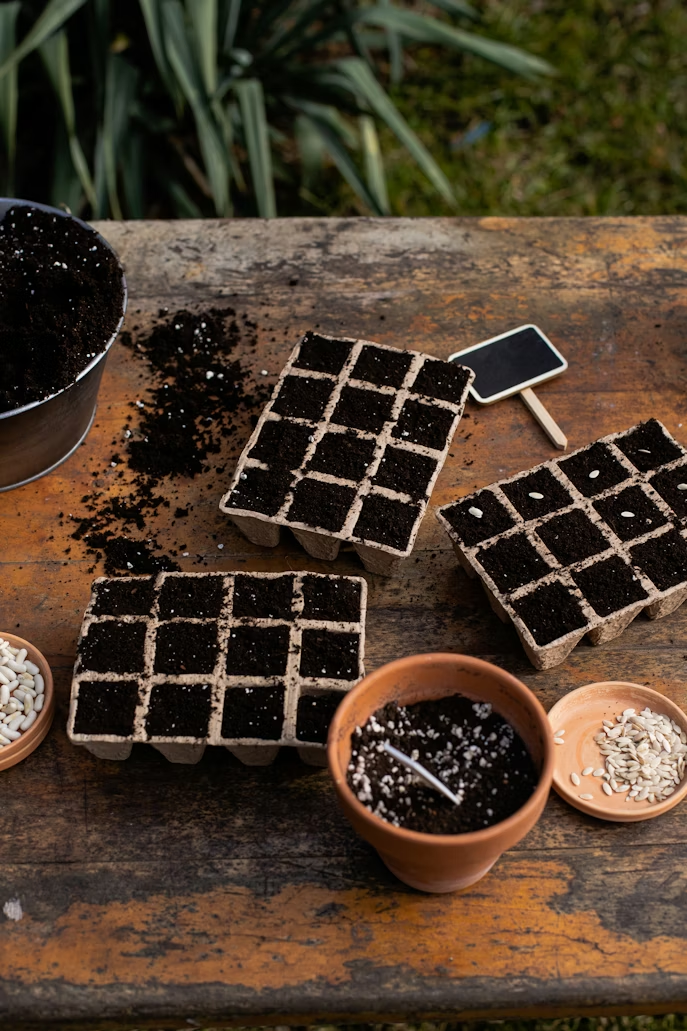

A Practical, Natural Way to Get Better Germination and Stronger Crops
In today’s farming, everyone is looking for ways to get seeds off to the best possible start without relying too heavily on chemicals. One of the simplest and most effective tools that has become very popular in recent years is potassium humate – a natural, water-soluble product made from ancient plant material. Farmers, seed companies, and researchers all over the world are now using it as a seed treatment because it gives clearer, faster, and more uniform germination, stronger seedlings, and often higher final yields.
Where Does Potassium Humate Come From?
Potassium humate is produced from leonardite – a soft, brown coal-like material found in old lignite deposits. Leonardite is basically very old, highly decomposed plant matter that has been buried for millions of years. When manufacturers extract the humic substances from leonardite and react them with potassium hydroxide, the result is potassium humate.
A good-quality product usually contains:
- 70–90 % humic and fulvic acids (the active part)
- 9–15 % potassium (counted as K₂O)
- Traces of natural minerals that were already bound to the original humic molecules
It comes as a shiny black powder, granules, or flakes that dissolve completely in water, turning it dark brown or black. The solution stays stable for a long time and has an alkaline pH (usually 9–11).
Why Does It Help Seeds So Much?
Seeds treated with potassium humate simply perform better from day one. Here are the main reasons why this happens:
- Faster and more even water absorption The humic molecules lower the surface tension of water and create a thin, water-attracting layer around the seed. This helps the seed take up water quickly and uniformly – the very first step of germination.
- Better access to nutrients right from the start Many soils lock up phosphorus, iron, zinc, and manganese, especially in high-pH soils. The humate acts like a natural chelator, grabbing these nutrients and making them available to the tiny emerging root.
- More active enzymes inside the seed Research shows that enzymes such as amylase (which breaks down starch) and dehydrogenase (a sign of high metabolic activity) work faster and stronger in treated seeds. This means the seed can mobilize its own food reserves more efficiently.
- Natural plant-hormone-like effects Humic and fulvic acids behave a little like auxins and gibberellins – the hormones that tell cells to divide and stretch. The result is longer roots and shoots very early in the seedling stage.
- Protection against stress Germination creates a burst of free radicals that can damage delicate new cells. The phenolic groups in humate act as antioxidants and clean up those harmful molecules.
- Much better early root growth Farmers repeatedly see 20–50 % longer primary roots and many more fine lateral roots on treated seedlings. A strong root system in the first two weeks makes all the difference later, especially under dry or cold conditions.
Real-World Results on Different Crops
Hundreds of university and on-farm trials have been carried out in the last 15–20 years. Here are typical improvements that are commonly reported:
| Crop | Common Dose (solution) | What Farmers Usually See | Where the Research Was Done / Year |
|---|---|---|---|
| Wheat & Barley | 0.05 – 0.25 % | 10–20 % higher field emergence, more tillers, 5–12 % extra yield | India, Turkey, Canada (2018–2024) |
| Corn / Maize | 0.1 – 0.4 % | Comes up 1–4 days earlier, stands better in cold soil, 8–25 % higher yield | USA, Brazil, Egypt (2015–2023) |
| Soybean | 0.01 – 0.15 % | Bigger nodules, better stand in dry years, 6–18 % more pods | Brazil, Argentina, USA (2020–2024) |
| Rice (dry-seeded or transplanted) | 0.2 – 0.5 % | Less transplant shock, faster tillering, stronger against lodging | Vietnam, India, Philippines (2021–2025) |
| Sunflower | 0.1 – 0.3 % | Uniform stand, better early drought tolerance | Ukraine, Russia (2019–2023) |
| Cotton | 0.15 – 0.35 % | Higher germination in cool spring soils, stronger boll set | Pakistan, USA (2020–2024) |
| Tomato, Pepper, Cucumber | 0.05 – 0.2 % | Very even transplant size, less damping-off, earlier harvest | Spain, Italy, Morocco (2018–2024) |
| Pulses (chickpea, lentil, beans) | 0.05 – 0.2 % | Better nodulation, higher protein content | India, Canada, Australia |
Even a small dose (sometimes just 100–300 grams of product per 100 kg of seed) is enough to make a visible difference.
Easy Ways to Apply It on the Farm
You do not need fancy equipment. Most farmers use one of these four methods:
- Simple seed soaking (priming) Dissolve potassium humate in water to make a 0.1–0.3 % solution (1–3 kg in 1000 liters). Soak the seed for 4–12 hours (depending on seed size), drain, and let it dry in the shade for a few hours before planting. Works great for maize, soybean, rice, and vegetables.
- Commercial seed coating Seed companies mix the powder with a safe polymer binder and apply 200–600 g of potassium humate per 100 kg of seed. The black color also helps technicians see that the seed has been treated.
- On-farm slurry just before planting Many smallholder farmers simply mix 200–500 g of potassium humate in 10–20 liters of water and pour it over the seed in a drum or cement floor, stirring until every seed is wet. Let it dry for 30–60 minutes and plant the same day.
- Pelleting for legumes Combine potassium humate with lime, micronutrients, and rhizobium inoculant to make a protective pellet around the seed. This is very popular for soybean and chickpea.
Is It Safe to Mix with Other Seed Treatments?
Yes – one of the big advantages. Potassium humate plays well with:
- Biological inoculants (Rhizobium, Azospirillum, Trichoderma, Pseudomonas)
- Most fungicides (metalaxyl, thiram, captan, carboxin)
- Common insecticides (imidacloprid, thiamethoxam)
- Polymer colorants and binders
It is certified organic in almost every country (EU Organic Regulation, USDA-NOP, JAS Japan, India NPOP, etc.) and has no re-entry or pre-harvest interval restrictions.
Extra Benefits Beyond the Seedling Stage
- Farmers often reduce starter nitrogen and phosphorus by 20–40 % because the young plant uses soil nutrients more efficiently.
- Stronger seedlings suffer less from early insect and disease pressure, so some growers apply fewer insecticide or fungicide sprays.
- Every treated seed leaves a tiny amount of organic matter in the soil, slowly building soil carbon over the years.
- Cost is low: USD 1.50 to 7.00 per hectare depending on dose and local price – usually paid back many times over in extra yield.
A Few Practical Tips from Experienced Farmers
- Always dissolve the powder completely before adding it to seeds. Undissolved lumps can cause uneven coverage.
- Use clean water; very hard water (high calcium) can slightly reduce solubility.
- Do a small jar test if you want to mix it with a new fungicide or inoculant.
- For best results, treat the seed no more than 1–2 weeks before planting. Longer storage is possible but the effect slowly decreases.
- Keep records the first year: treat half a bag and leave the other half untreated. You will see the difference in the field.
Final Thoughts
Potassium humate is not a miracle product, but potassium humate is one of the most reliable, safest, and cheapest ways to give seeds a strong head start. Whether you farm a few hectares or thousands, whether you are fully organic or use conventional methods, adding a potassium humate seed treatment is an easy decision that almost always pays off.
Thousands of farmers across dozens of countries have already made it a standard part of their planting routine. If you have never tried it, start with one field or one variety this season. The results will probably convince you to use it on everything next year.

Leave a Reply