


Sodium humate is basically the “sodium version” of humic acid. Think of humic acid as the natural black-brown stuff you find in very old soil, compost, peat, or brown coal (leonardite). It’s made by plants and microbes over thousands or millions of years as they break down. When farmers or factories take that dark natural material and mix it with ordinary baking soda or caustic soda (sodium hydroxide), the humic acid turns into sodium humate, and suddenly it dissolves easily in water.
In short: Natural dark humic substance + sodium → sodium humate (water-soluble, dark brown/black liquid or powder).
Physical and Chemical Properties
- Appearance: Dark brown to black powder or shiny flakes; highly soluble in water (typically 80–98 % solubility).
- pH of aqueous solutions: 8–11 (alkaline).
- Molecular weight range: 2,000–100,000 Da (varies with source and processing).
- Cation exchange capacity (CEC): 400–800 meq/100 g (much higher than most clays).
- Contains approximately 50–65 % humic substances, 10–20 % fulvic acids, and mineral elements (Na, Fe, Ca, etc.).
Key Applications
- Agriculture and Horticulture
- Soil conditioner and organic amendment: improves soil structure, water retention, and cation exchange.
- Plant growth biostimulant: enhances nutrient uptake (especially Fe, Zn, and micronutrients), stimulates root development, and increases stress tolerance.
- Foliar and fertigation additive: widely used in drip irrigation and hydroponics.
- Chelating agent for micronutrients (e.g., Fe-humate, Zn-humate formulations).
- Animal Husbandry
- Feed additive for poultry, swine, cattle, and aquaculture: improves feed conversion, gut health, and reduces ammonia emissions.
- Mycotoxin binder and immune modulator.
- Industrial Uses
- Drilling fluid additive (oil & gas): viscosity reducer, fluid-loss control agent, and shale stabilizer.
- Ceramic and refractory industries: binder and plasticizer.
- Water treatment: heavy-metal removal and flocculant.
- Battery electrodes and carbon materials (emerging applications).
- Environmental Remediation
- Adsorption of heavy metals (Pb, Cd, Cu) and organic pollutants from contaminated soils and water.
1. Where does Sodium Humate actually come from in real life?
Imagine a swamp or a forest that died 5,000 to 100 million years ago. Leaves, roots, wood, and moss fell in, got buried, and instead of completely rotting away, they slowly turned into a black, chocolate-like material. That black material is called leonardite (the best and most common source), peat, oxidized lignite, or brown coal. Leonardite looks like shiny black coal but it’s soft and crumbles easily. When miners or farmers dig it up, it’s already full of humic acids — nature’s own long-chain organic molecules.
Factories take this black material, grind it into powder, and then mix it with sodium hydroxide (caustic soda, the same strong base used to make soap). The reaction is simple: the acid part of the humic molecules grabs the sodium and becomes sodium humate, which now loves water instead of hating it.
2. What does Sodium Humate really look like and smell like?
- Dry powder: very fine, dark brown to jet black, feels like cocoa powder but heavier.
- Shiny flakes: look like tiny pieces of black glass or obsidian — people sometimes call them “black snowflakes.”
- Liquid form: completely black, like used motor oil or extremely strong coffee. If you hold a glass of it up to the light you can’t see through even 1 cm of it.
- Smell: almost none when dry. When wet it has a mild earthy/soil smell, never chemical or bad.
3. Why is Sodium Humate so popular with farmers?
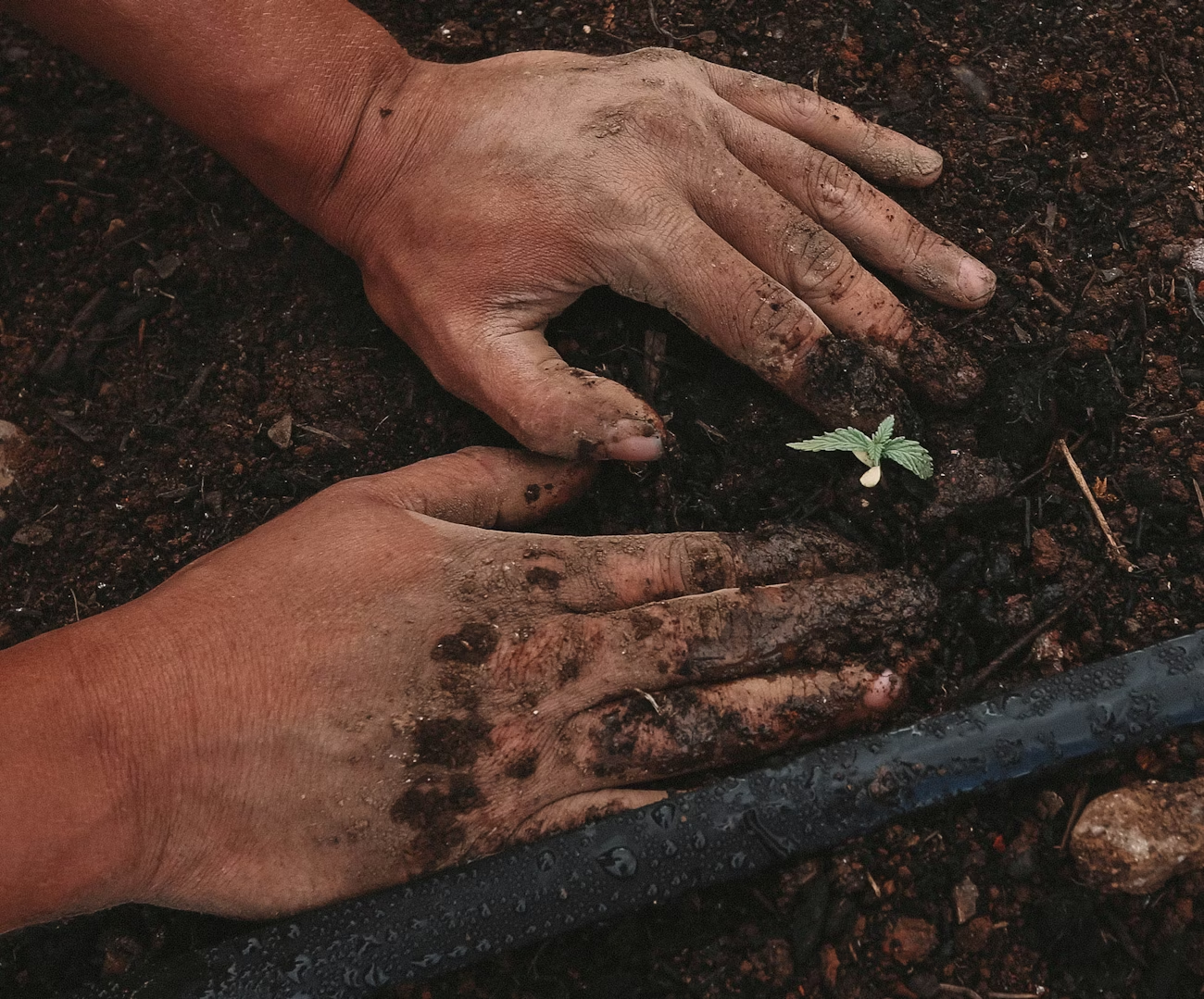
- Poor soils all over the world are missing organic matter. Sodium humate puts some of that “life” back quickly.
- Chemical fertilizers (NPK) often get “locked up” in soil and plants can’t use them. Sodium humate acts like a key — it unlocks those nutrients.
- Roots love it. Within 7–14 days after application you can often see thicker, whiter, longer roots.
- It buffers pH. If soil is too acidic or too alkaline, it gently nudges it toward neutral.
- Saves water. Fields treated with humate need 10–30 % less irrigation in many cases because the soil holds moisture longer.
- Reduces fertilizer use. Many farmers report they can cut chemical fertilizer by 20–30 % and still get the same or better harvest.
4. Exact ways farmers use Sodium humate
A. Big fields (tractors, center pivots)
- Broadcast the powder or flakes before planting: 10–30 kg per hectare, then disk it in.
- Dissolve in water and spray with fertilizer through the pivot: 5–15 kg/ha split into 2–3 applications during the season.
B. Vegetables, orchards, vineyards
- Drip irrigation/fertigation: 3–10 kg per hectare per month during the growing season.
- Foliar spray (backpack or tractor sprayer): 300–600 grams in 300–600 liters of water per hectare, repeat every 10–15 days.
C. Home gardens and lawns
- 1 tablespoon of powder per gallon (4 liters) of water, water the soil once a month. Or sprinkle dry flakes like you would with fertilizer and water in.
D. Seed treatment Soak seeds in 0.01–0.05 % solution (1–5 grams per 10 liters) for a few hours — germination usually improves 5–15 %.
E. Compost activator Sprinkle a little sodium humate on each layer of a compost pile — the pile heats up faster and smells less.
5. Animals – why farmers swear by Sodium Humate
- Chickens & turkeys: 1–2 kg per ton of feed → fewer sick birds, stronger eggshells, less smell in the barn.
- Pigs: 1–3 kg per ton → better weight gain, less diarrhea.
- Cows (dairy & beef): 30–100 grams per cow per day mixed in feed or mineral lick → shinier coat, higher milk fat, fewer vet visits.
- Fish & shrimp ponds: 2–5 kg per hectare of pond surface every 10–15 days → clearer water, faster growth, better survival after stressful weather.
6. Industrial and “weird” uses you probably didn’t know
- Oil drilling companies buy thousands of tons every year to thin drilling mud without losing viscosity at high temperature.
- Brick and ceramic factories mix it into clay so the bricks don’t crack while drying.
- Some battery factories are experimenting with humate-derived carbon for better electrodes.
- Waste-water plants use it to pull out copper, lead, cadmium, and even radioactive metals.
- A few cosmetic companies put tiny amounts in anti-aging creams because humic substances are antioxidants.
7. How to tell good quality from bad quality
Good sodium humate:
- Dissolves 100 % in cold water in a few minutes (no sandy residue at the bottom).
- Smells only like soil, never like chemicals or ammonia.
- pH of 1 % solution is 8.5–11.
- Humic acid content on the bag is at least 55–70 % (dry basis).
- Comes from leonardite, not from low-grade coal or city waste.
Cheap bad stuff:
- Leaves a lot of sand or grit after dissolving.
- Has a strong chemical smell.
- Only 30–40 % humic acid — mostly just black dirt and salt.
8. Is it really safe for everything?
Yes.
- The EU, USA, Canada, Australia, China, and most countries allow it in organic farming.
- Animals can eat kilograms of it with zero problems.
- You could technically drink a glass of the solution (it would taste horrible, like earthy and bitter), but nothing bad would happen at normal concentrations.
9. Simple home experiment you can do tomorrow
Take an empty clear plastic bottle. Put one teaspoon of sodium humate powder/flakes in it. Fill with tap water and shake. The water turns pitch black instantly. Now add a week later it will still be black and crystal clear — no settling, no mold. That’s how stable and soluble good sodium humate is.

Leave a Reply