
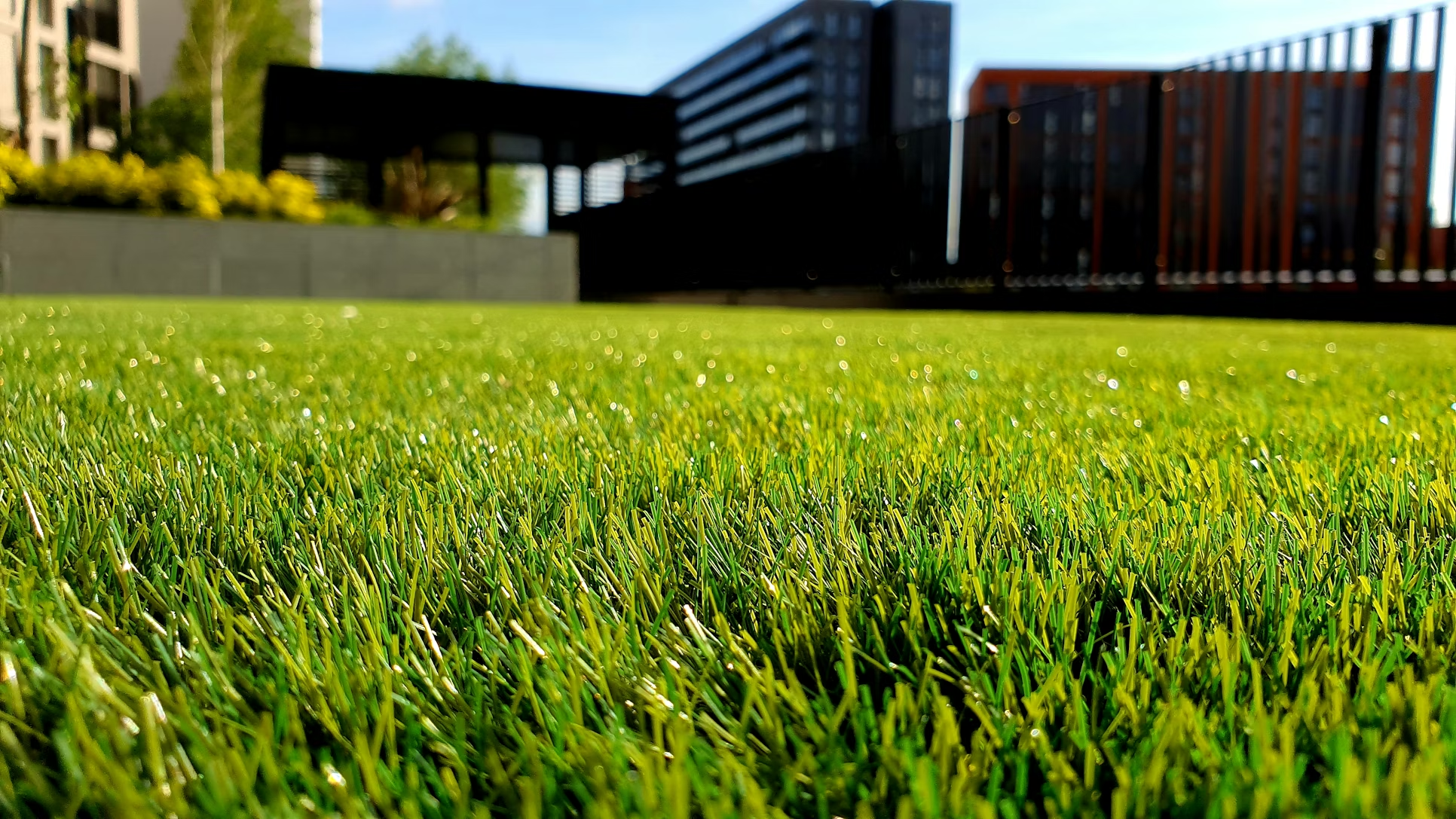

Optimizing Humate Application Timing for Lawns: A Global Perspective
Humate, which includes humic acid and associated humic substances, functions as a soil amendment that improves soil structure, elevates cation exchange capacity, stimulates microbial populations, enhances nutrient availability and uptake, and fosters deeper root development. These attributes increase lawn tolerance to stresses such as drought, heat, salinity, and nutrient deficiencies, rendering it valuable across diverse climatic zones.
Global recommendations for humate application vary according to climate, grass type (cool-season versus warm-season), soil characteristics, and seasonal growth patterns. In temperate regions with distinct seasons, timing aligns with periods of active growth and soil biological activity. In tropical and subtropical areas featuring year-round warmth and wet-dry monsoonal patterns, applications emphasize moisture availability and peak growth phases.
Temperate Climates (Cool-Season Grasses, e.g., Kentucky Bluegrass, Fescue, Ryegrass)
In regions with cold winters and moderate summers (such as much of North America, Europe, and parts of Asia), humate applications concentrate on transitional seasons.
- Early spring (March–April in the Northern Hemisphere): Apply when soil temperatures consistently exceed 10–13°C (50–55°F) and grass initiates active growth. This supports root establishment and nutrient efficiency during spring green-up.
- Early fall (September–early October): This timing promotes root recovery from summer stress and energy storage prior to dormancy, enhancing winter hardiness.
- Avoid or minimize: Mid-summer applications under high heat and drought conditions, as efficacy declines without adequate moisture. Pure humate (without added nitrogen) poses low burn risk and can be used more flexibly.
Frequency typically ranges from 2–3 applications annually for initial improvement, reducing to 1–2 times per year as soil organic matter accumulates.
Tropical and Subtropical Climates
In consistently warm areas such as southern Vietnam, Southeast Asia, southern United States, parts of Australia, and equatorial zones, warm-season grasses exhibit continuous or near-continuous growth with intensity peaking during wet periods.
- Primary window: Onset of the wet/growing season or transition from drier conditions. Reliable moisture reactivates soil microbes, accelerates grass growth post-dry stress, and optimizes humate integration.
- Maintenance applications: Every 4–6 weeks throughout the active wet/growing season (e.g., June–November in monsoonal tropics) to sustain organic matter, counter leaching from heavy rainfall, and maintain resilience.
- Opportunistic timing: Late dry season (e.g., February–April) with irrigation support to prepare for incoming moisture and aid recovery from dry stress.
- Caution periods: Peak dry season without supplemental watering, as low soil moisture limits activation and microbial interaction.
Many sources note that pure humate can be applied at any time during active growth without strict seasonal restrictions, provided soil moisture is sufficient.
Universal Best Practices and Considerations
Humate performs optimally when soil is moist and biologically active, regardless of location. Key guidelines include:
- Apply during active grass growth phases for maximum benefit.
- Follow applications with light irrigation (5–10 mm) to facilitate root-zone penetration and prevent runoff.
- Combine with balanced fertilization to leverage enhanced nutrient efficiency.
- Conduct soil testing periodically to assess organic matter, pH (target 6.0–7.0 for most grasses), and nutrient status, adjusting frequency accordingly.
- For new or stressed lawns, initiate with more frequent applications (2–3 in the first year); established lawns often require only 1–2 annually.
Product form influences application: granular forms suit broadcast spreading, while liquid forms allow foliar or fertigation methods. Rates vary by formulation (typically 2–6 kg per 100 m² for granular), so consult product labels.


Leave a Reply