
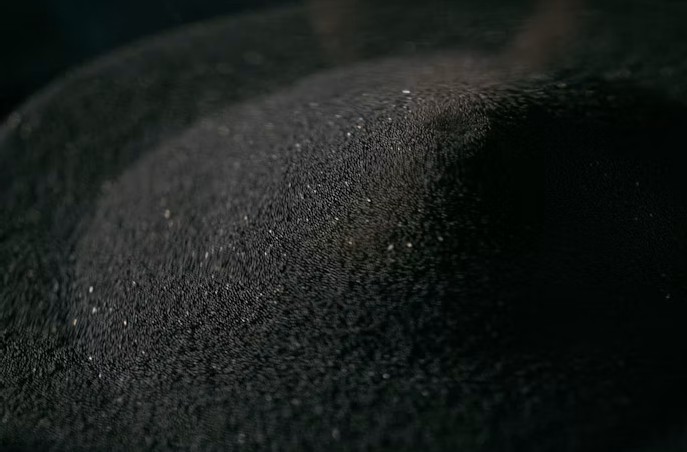

1. What Exactly Is Sodium Humate Powder?
Sodium humate is the sodium salt of humic acids. Nature took plants and animals that died millions of years ago, buried them under pressure, let them slowly rot and oxidize, and turned them into super-concentrated black organic matter. The best sources are called leonardite (a type of oxidized brown coal that can contain 75-90 % natural humic substances).
Manufacturers dig this leonardite, crush it, cook it with caustic soda (NaOH), filter it, and dry it into a shiny black powder or flakes that dissolve almost completely in water (95–99 % solubility). That’s why farmers love it — no residue, no clogged nozzles.
2. Price Range Table by Humic Acid Content and Grade
| Humic Acid Content (Dry Basis) | Grade/Application Focus | Bulk Price Range (USD/MT, FOB China) | Key Notes and Volume Discounts |
|---|---|---|---|
| 50–60% | Standard Agricultural/Industrial | $400–$550 | Entry-level for soil conditioning and drilling fluids. Discounts: 5–10% for >50 MT orders. Common in basic fertilizer blends. |
| 60–70% | Premium Agricultural/Feed | $550–$750 | Balanced for foliar sprays and animal feed additives. Importer quotes average $650/MT for 20 MT lots. High solubility (>95%) drives demand. |
| 70–80% | Super/Premium Feed & Aquaculture | $750–$950 | Refined for toxin binding in livestock and water treatment. UK/Australia importers report $800–$900/MT for certified organic grades. |
| 80–90%+ (with Fulvic Acid) | Ultra-High Purity/Organic | $950–$1,200 | Specialized for high-value crops (e.g., horticulture) and eco-remediation. Limited supply; premiums for OMRI/EU organic certification. Discounts: Up to 15% for >100 MT. |
Regional Price Variations
- Asia-Pacific (Export Hubs: China, India): Lowest entry point at $400–$600/MT due to proximity to raw materials and high-volume production. Indian suppliers add 10–15% for local processing, reaching $500–$700/MT.
- North America/Europe (Import Markets: USA, UK): $600–$900/MT landed (CIF), including tariffs and shipping (~$100–$200/MT from China). U.S. humate market trends show 10.7% CAGR, pushing premiums for feed-grade imports.
- Other Regions (e.g., Middle East, Australia): $550–$850/MT, with aquaculture demand in Southeast Asia inflating prices by 5–8% for granular/powder hybrids.
3. Real-World Application Rates
Field Crops
- Rice: 150–300 g/200 L drum, spray 3 times (15, 35, 55 days after seeding)
- Corn/Maize: 8–15 kg/ha split into 2–3 soil applications + 1 foliar
- Sugarcane: 20–40 kg/ha at planting + 10 kg/ha every ratoon
Permanent & High-Value Crops
- Durian (Malaysia/Thailand/Vietnam style): 100–250 g/tree every 10–14 days during fruit development (total 2–4 kg/tree per season)
- Coffee (Vietnam Central Highlands): 1.0–1.8 kg/active post per year, split after harvest and pre-flowering
- Black pepper: 800 g–1.2 kg/pillar/year
- Dragon fruit: 50–120 g/post every watering during “on” cycle
- Cocoa: 10–15 kg/ha every 3 months
Vegetables & Short Cycle
- Chili, tomato, cucumber: 100–150 g/200 L every 7–10 days
- Leafy greens (lettuce, kangkong): 80–120 g/200 L every 5–7 days
- Hydroponics rescue: 0.01–0.02 % continuous in nutrient solution when roots look weak
Seed & Nursery Treatment
- Seed soaking: 0.2–0.4 % solution for 6–24 hours (rice 6 h, vegetables 12–18 h, durian seeds 24 h)
- Cutting dip (grapes, roses, orchids): 0.3–0.5 % for 5–10 seconds or 0.1 % for 2–4 hours
Animal Husbandry
- Poultry layer/broiler: 1.5–3 kg per ton of complete feed
- Piglets & growers: 2–4 kg/ton
- Dairy cows: 20–40 g/head/day mixed in concentrate
- Aquaculture ponds: 2–5 kg/1,000 m³ water every 7–10 days (especially when ammonia spikes)
4. How Sodium Humate Actually Works Inside the Plant and Soil
- Enters the root → the humate molecule is big but the sodium form breaks into smaller fragments.
- Stimulates plasma membrane H⁺-ATPase → pumps more protons out → creates stronger electrochemical gradient → plant sucks in more cations (K⁺, Ca²⁺, Mg²⁺, Fe²⁺, Zn²⁺…).
- Chelates micronutrients → prevents them from becoming insoluble in high-pH soils.
- Triggers auxin-like and gibberellin-like activity → more root hairs, longer roots.
- Increases chlorophyll content and Rubisco activity → darker green leaves, better photosynthesis.
- Upregulates antioxidant enzymes (SOD, CAT, POD) → plant handles drought, salinity, heat better.
- Binds mycotoxins in animal gut → less aflatoxin damage in chickens and pigs.
5. Mixing Compatibility Table
| Safe to mix | Use caution / buffer needed | NEVER mix directly |
|---|---|---|
| Urea, MAP, DAP, KCl, amino acids | Most fungicides (copper-based OK) | Strong acids (pH < 4) |
| Seaweed extracts, fish emulsion | Calcium nitrate (add humate first) | Sulfuric acid, phosphoric acid raw |
| NPK water-soluble fertilizers | Glyphosate (small scale tests first) | Aluminum sulfate |
| Micronutrient chelates (EDTA, etc.) | Mancozeb, chlorothalonil | High-calcium foliar (CaCl₂) without buffer |
6. Storage & Shelf Life Tips
- Keep in cool, dry place (below 35 °C)
- If bag absorbs moisture and forms lumps → just break them, quality is still 100 %
- Shelf life: 5–8 years if kept sealed
- Once opened, use within 12–18 months for maximum performance
7. Conclusion
Sodium humate powder – the sodium salt of humic acids extracted from highly oxidized leonardite and weathered coal – is a shiny, jet-black, ultra-soluble (98–99 % in water) organic substance containing 50–90 % humic acid, high cation-exchange capacity (500–800 meq/100 g), and powerful chelating properties. It is, without exaggeration, one of the most versatile, safest, and most profitable natural products available to modern agriculture, animal husbandry, aquaculture, and industry today.
In simple terms: it is nature’s own soil healer, plant booster, animal detoxifier, and industrial workhorse, all rolled into one inexpensive powder.
8. Economic Reality
At current bulk prices of $550–$750 per ton for the most popular 65–75 % grades, the cost per hectare or per ton of feed is almost negligible (often $2–$15/ha or $0.50–$2 per ton of feed), while the return on investment routinely ranges from 5:1 to 30:1 depending on crop and management level.
9. Final Verdict
Sodium humate powder is not a “nice-to-have” supplement – Sodium Humate has become a foundational input for anyone serious about sustainable, profitable, and resilient production systems. It is the rare product that simultaneously: restores degraded soils, boosts plant and animal performance, cuts input costs, reduces environmental impact, and still leaves healthy profit margins.

Leave a Reply