

1. What it really is
Potassium humate is Mother Nature’s own “black magic powder” . Humic acid potassium starts as ancient swamp and forest material that got buried millions of years ago, cooked slowly under pressure, and turned into a super-concentrated black organic substance called humic acid. Factories then treat that humic acid with potassium (just like making soap from fat and lye) so the whole thing dissolves 100 % in water. The result is potassium humate – shiny black flakes or powder that look like crushed obsidian but feel silky between your fingers.
2. Where the best stuff comes from (the “gold mines” of humate)
- North Dakota, USA – the famous “Lignite Belt” (some seams are 70–85 % pure humic acid)
- Wyoming and Montana, USA
- Xinjiang, Inner Mongolia, and Shanxi provinces in China (world’s largest producer)
- Kemerovo and Irkutsk regions in Siberia, Russia
- Gujarat and Rajasthan in India
- Eskişehir in Turkey
- Andalusia in Spain
- Victoria and Queensland in Australia
- Alberta in Canada
- A few smaller deposits in Germany, Hungary, Mexico, and South Africa
The older and more oxidized the deposit, the better the quality.
3. Step-by-step factory tour (what actually happens)
- Giant excavators dig the leonardite (looks like chocolate cake).
- Trucks haul it to the plant and dump it into huge crushers.
- It is ground to fine powder (like coffee grounds).
- Powder goes into big stainless-steel tanks filled with hot water and potassium hydroxide.
- The mixture is stirred and heated to 70–90 °C for 4–12 hours – everything black turns into thick coffee.
- Pumps push the black liquid through filters to remove sand, clay, and gypsum.
- Clean liquid is either:
- Spray-dried into ultra-fine powder, or
- Dried on big rollers into shiny flakes, or
- Extruded into slow-release granules, or
- Left as liquid concentrate (15–30 % strength).
- Packed in 25 kg bags, 1000 kg big bags, 20 L drums, or 1000 L IBC tanks.
4. What a lab test sheet really says (average numbers for different grades)
| Grade | Humic Acid | Fulvic Acid | K₂O | Solubility | Colour & Form |
|---|---|---|---|---|---|
| Standard | 55–65 % | 3–8 % | 8–12 % | 95 % | Black powder or flakes |
| Good quality | 65–75 % | 8–15 % | 12–14 % | 98 % | Shiny flakes |
| Premium / “Super” | 75–85 % | 15–25 % | 14–18 % | 99.9 % | Very shiny flakes or crystals |
| Potassium Fulvate | 30–50 % | 50–70 % | 10–12 % | 100 % | Yellowish-brown powder |
| Granular slow-release | 50–60 % | 5–10 % | 8–10 % | 70–80 % | 2–5 mm black granules |
5. How potassium humate actually works inside the soil and inside the plant
Soil benefits (you can see these with your own eyes after 1–2 seasons):
- Clay soil stops cracking and becomes spongy.
- Sandy soil stops leaking water like a sieve.
- Soil smells sweet and earthy instead of sour.
- Earthworm numbers explode – sometimes 5–10× more.
- Crust on the surface disappears, no more hardpan.
Plant benefits (you notice these in days or weeks):
- Week 1–2: Roots turn white and hairy, new feeder roots everywhere.
- Week 3–4: Leaves get thick, waxy, and very dark green.
- During stress (heatwave or drought): Plants keep growing while untreated ones wilt.
- Harvest time: Fruits taste better, store longer, and weigh more.
6. Application methods explained like you’re talking to your neighbour
A. Big farm broadcasting Drive a fertiliser spreader and throw 10–30 kg/ha together with urea or DAP. Do it once at planting or twice (planting + 30 days later).
B. Drip irrigation / pivot / micro-sprinklers Buy the flake or liquid form. Put 1–3 kg per hectare every 10–14 days. Total per season: 10–25 kg/ha.
C. Knapsack or boom sprayer (foliar) Morning or late afternoon only (never in hot sun). Mix 400–600 g in 800–1000 L water per hectare. Add a few drops of dish soap or proper sticker so it doesn’t roll off waxy leaves. Spray underside of leaves too – that’s where the stomata are.
D. Seed treatment (cheap insurance) Small seeds (vegetables, wheat): soak 6–12 hours in 0.2 % solution. Big seeds (corn, soybean): quick dip or slurry coating 2–4 g powder per kg seed.
E. Transplanting vegetables & trees Dip bare roots in 0.5–1 % solution for 5–10 minutes, or water the planting hole with the same solution.
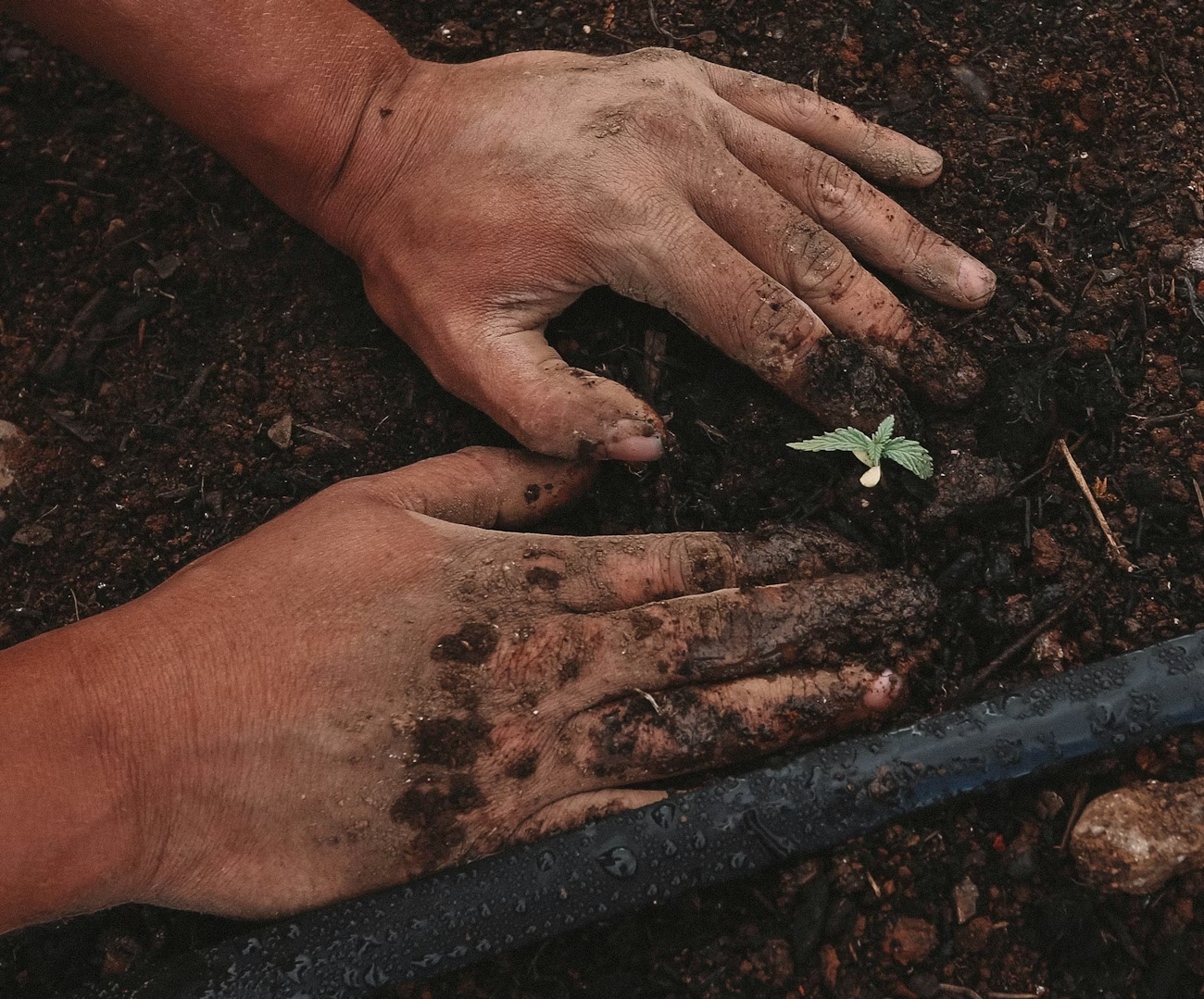
F. Home garden & pots 1 teaspoon (≈ 5 g) per 10 L watering can, use once every 2 weeks. Or scratch 1 tablespoon around each rose bush or tomato plant and water in.
G. Golf courses & sports fields 5–10 kg/ha every 4–6 weeks during growing season → grass turns almost black-green in 7–10 days.
7. Crop-by-crop success stories (real numbers from farmers and universities 2020–2025)
| Crop | Country/Example | How applied | Results farmers talk about |
|---|---|---|---|
| Wheat | Turkey, India | 8 kg/ha soil + 1 foliar | +12–22 % yield, stronger straw, less lodging |
| Rice (normal) | Vietnam, Italy | 10–15 kg/ha basal | +10–18 % yield, fewer empty grains |
| Rice (saline coastal) | Bangladesh, Pakistan | 15–25 kg/ha | Plants survive 8–10 dS/m salinity, +25–35 % yield |
| Corn/Maize | USA Corn Belt, Brazil | 10 kg/ha at planting | +15–25 bu/acre, stays green longer in drought |
| Soybean | Argentina, USA | Seed coating + 1 foliar | +4–8 bu/acre, bigger pods, higher oil content |
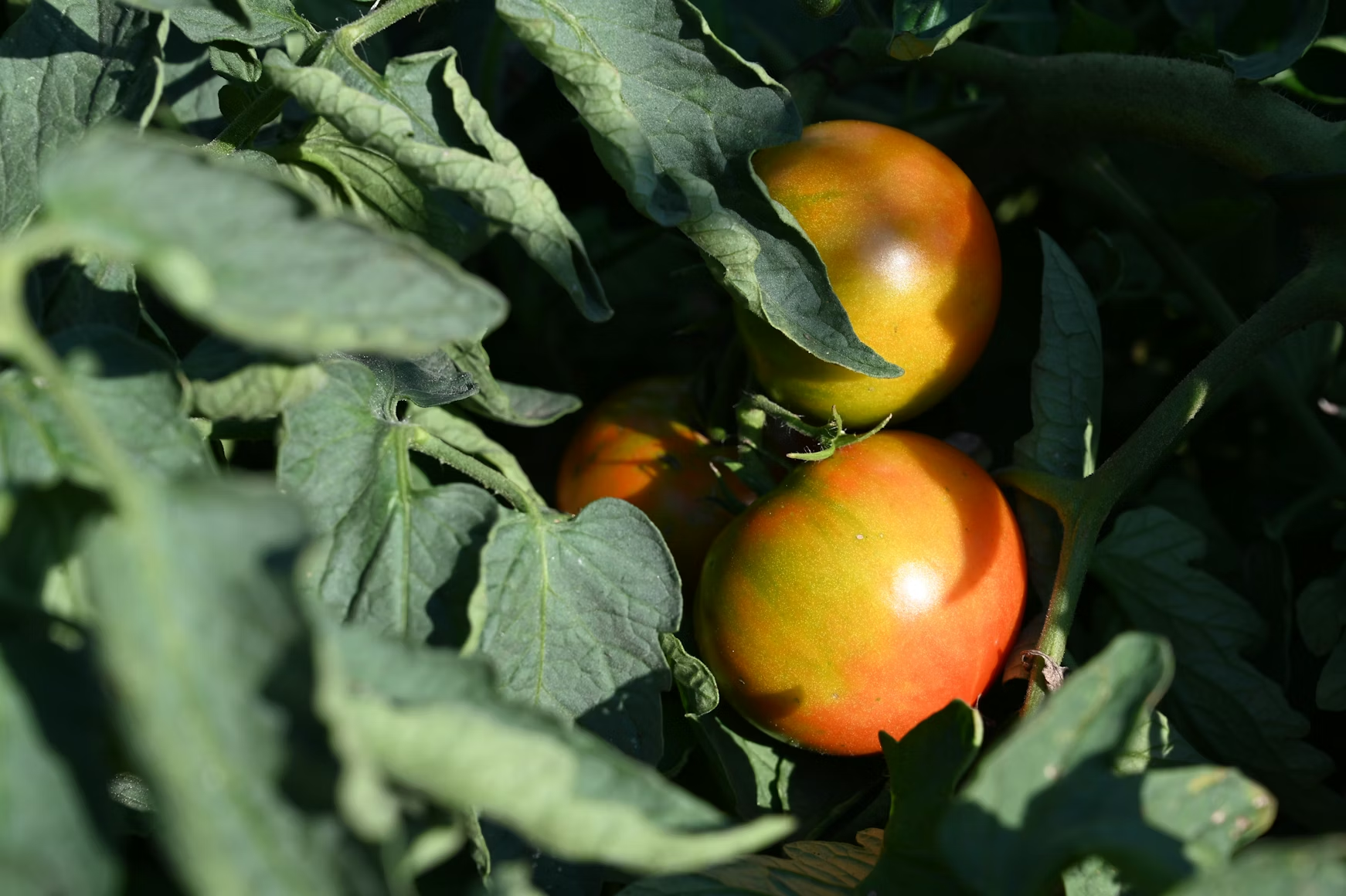
| Tomato (field) | California, Spain, Turkey | Drip every 10 days | 30–50 % more marketable fruit, earlier by 7–10 days |
| Greenhouse cucumber | Netherlands, Canada | Weekly in drip | Fruits longer and straighter, less blossom-end rot |
| Potato | Idaho, Netherlands | Tuber dip + 2 drip | 15–30 % more large tubers, better skin finish |
| Onion | India, Egypt | 3 foliar sprays | Bigger bulbs, keeps 2–3 months longer in storage |
| Grapes (wine & table) | Chile, Australia, Italy | 4–6 foliar sprays | +1.5–4 °Brix sugar, thicker skins, better colour |
| Apple & pear | Washington, South Tyrol | Soil + early foliar | Bigger size grade, no bitter pit, keeps 10–12 months in cold storage |
| Strawberry | Florida, Morocco | Drip + foliar | 20–40 % more berries, sweeter, firmer |
| Sugarcane | Brazil, India | 20 kg/ha at planting | +10–20 tons cane/ha, higher sugar recovery |
| Cotton | Texas, Uzbekistan | 10 kg/ha at planting + 1 foliar | More and bigger bolls, better lint quality |
| Coffee | Colombia, Vietnam | 3–4 foliar sprays | Bigger cherries, more uniform ripening |
| Turf & lawn | Everywhere | 5 kg/ha every 6 weeks | Deep green in 7 days, crowds out weeds, survives heat better |
8. Frequently asked farmer questions
Q: Will it burn my plants? A: Almost impossible. Even 10× overdose only makes leaves extra shiny.
Q: Can I mix Potassium Humate with glyphosate or other herbicides? A: Yes – actually improves herbicide uptake and reduces plant stress.
Q: Does Potassium Humate work in hydroponics? A: Yes! 50–150 ppm keeps roots white and prevents deficiencies.
Q: How long does one application last in soil? A: 3–6 months for potassium, years to decades for the humic part.
9. Storage & handling tips from people who use tons of it
- Keep bags off concrete floor (use pallets).
- Close bag tightly – potassium humate will suck moisture and turn into a brick.
- If flakes get damp, spread them in the sun for a day; they become shiny again.
- Liquid drums: keep from freezing and from temperatures above 50 °C.
10. Where to buy & how to spot fake/low-quality product
Good product:
- Dissolves completely in 1 minute, no residue at bottom of bucket.
- Smells like clean wet forest soil (never sour or chemical).
- Shiny surface on flakes, not dull and dusty.
Bad product signs:
- Lots of sand or grit left after dissolving.
- pH below 8 or above 12.
- Claims “98 % humic acid” for $400/ton – impossible; real 98 % costs much more.
11. Final take-home message
Potassium humate is probably the closest thing agriculture has to a true “wonder product” that is completely natural, ridiculously cheap per hectare, safe for kids and pets, approved for organic farming, and actually works every single time when used correctly.
Thousands of farmers now say: “After three years of regular potassium humate, I cut my chemical fertiliser by 20–40 %, my soil is alive again, and my yields are the same or higher.”
If you farm or garden and you’re not using Potassium Humate yet – try just one bag this season. You will be shocked how fast you see the difference.

Leave a Reply