
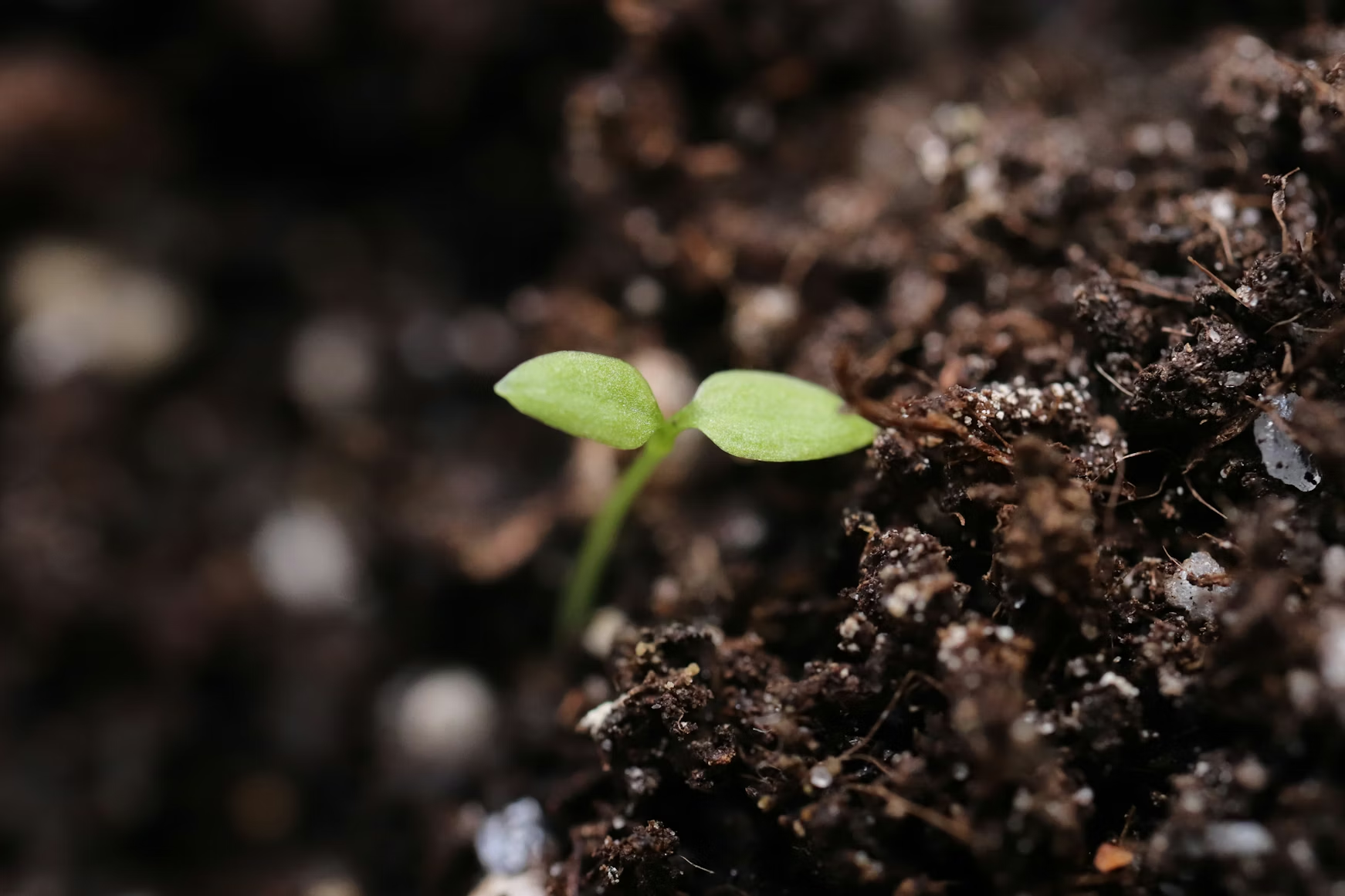

Humic acid has gained popularity among farmers, gardeners, and horticulturists as a natural tool to support plant growth. Derived from the long-term decomposition of organic matter, humic acid helps plants develop stronger roots, absorb nutrients more effectively, and better withstand environmental stresses.
What Humic Acid Is and How It Forms
Humic acid belongs to the family of humic substances, which develop naturally as plant and animal residues break down through microbial and chemical processes. These dark-colored, complex molecules are stable and rich in functional groups that allow them to interact with soil, nutrients, and plant roots.
Commercial humic acid is primarily sourced from leonardite (oxidized lignite deposits with high concentrations), peat, or well-decomposed compost. Products are available as powders, granules, liquids, or soluble salts, offering flexibility for different growing systems.
Key Benefits for Plant Growth
Stronger Root Development
Humic acid stimulates root initiation, elongation, and branching, often mimicking the effects of natural auxins. Treated plants typically develop more root hairs and greater root mass, enabling better exploration of soil for water and nutrients. This leads to improved establishment, especially for seedlings and transplants.
Improved Nutrient Uptake
By chelating micronutrients (iron, zinc, manganese, copper), humic acid keeps them in forms that plants can easily absorb, reducing deficiencies in challenging soils. Humic acid also enhances overall nutrient efficiency, allowing plants to make better use of fertilizers.
Greater Stress Tolerance
Plants exposed to drought, salinity, heat, or toxicity often perform better with humic acid. It helps maintain cell turgor, supports antioxidant activity, and reduces uptake of harmful elements, resulting in less wilting and faster recovery.
Enhanced Photosynthesis and Vigor
Higher chlorophyll content, larger leaf area, and increased biomass are common outcomes. Plants generally appear healthier, with thicker stems and more uniform growth.
Higher Yields and Better Quality
Many field trials report yield increases of 10–20% in crops such as maize, wheat, tomatoes, potatoes, and fruit trees. Quality improvements include higher sugar content, better color, increased protein levels, and extended shelf life.
Application Methods
Common ways to apply humic acid include:
- Soil incorporation (granules or powders before planting)
- Seed coating or soaking
- Foliar sprays during vegetative and reproductive stages
- Addition to irrigation water (fertigation)
Combining soil and foliar applications often provides the most balanced results.
Tips for Choosing a Quality Humic Acid Product
Not all humic acid products are equal, so careful selection is important for achieving reliable benefits.
- Check the humic acid content: Look for products that clearly state the percentage of humic acid (typically 30–80% for leonardite-derived extracts). Avoid vague labels like “humic substances” without breakdown.
- Prefer standardized extraction methods: Alkaline-extracted potassium or sodium humates are common and effective. Products certified by independent labs for purity and content are more trustworthy.
- Choose reputable sources: Leonardite-based products generally offer higher and more consistent humic acid levels than peat or compost-derived ones. Verify the origin if possible.
- Consider solubility and form: For foliar use, select fully water-soluble liquids. For long-term soil benefits, granules or powders work well.
- Read reviews and certifications: Opt for brands with third-party testing, organic certification (if needed), and positive feedback from similar growing conditions.
- Compare price per active ingredient: Cheaper products may have low actual humic acid content, making them less cost-effective in the long run.
- Avoid overly processed or synthetic versions: Natural mineral-sourced humic acid tends to perform better than chemically synthesized alternatives.
Limitations and Realistic Expectations
While humic acid offers valuable benefits, it is not a miracle solution and has certain limitations.
- Variable results depending on soil conditions: Benefits are most pronounced in poor, degraded, or low-organic-matter soils. In already fertile, high-humus soils, improvements may be minimal or undetectable.
- Not a substitute for basic nutrition: Humic acid does not supply nitrogen, phosphorus, or potassium. It must be used alongside proper fertilization and soil management.
- Response varies by crop and environment: Some plants (e.g., cereals, vegetables) show stronger responses than others. Extreme climates or very high/low pH can reduce effectiveness.
- Slow and cumulative effects: Many benefits build over multiple seasons rather than appearing immediately after one application.
- Potential for inconsistent products: Low-quality or mislabeled products may deliver little or no benefit, leading to disappointment.
- Possible temporary nutrient tie-up: Very high doses can initially bind certain nutrients, though this is rare and usually short-lived.
- Limited impact alone: Best results come when combined with practices such as crop rotation, cover cropping, reduced tillage, and balanced pH management.
Final Thoughts
Humic acid serves as a useful natural tool for supporting plant growth by enhancing root systems, nutrient availability, stress resistance, and overall performance. When selected carefully and applied thoughtfully, humic acid can contribute to healthier plants and improved yields in many growing situations. However, understanding its limitations ensures realistic expectations and better integration into a complete plant care program. For anyone aiming to adopt more sustainable practices, humic acid is certainly worth considering alongside good soil management fundamentals.



Leave a Reply