
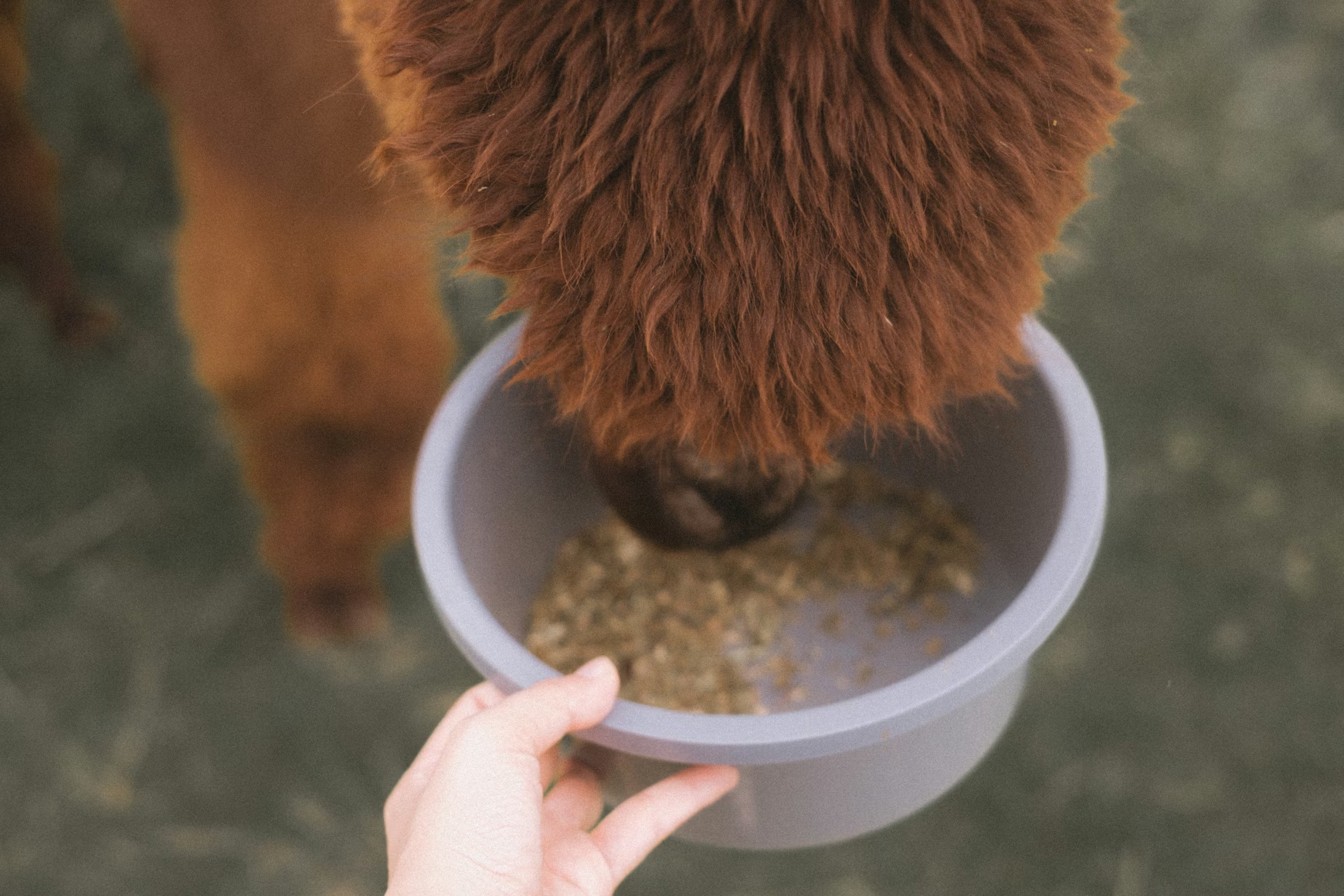

Introduction to Sodium Humate as an Animal Feed Additive
Sodium humate is a salt derived from humic acids, which are organic compounds formed from the decomposition of plant and animal matter. It is commonly extracted from sources such as freshwater sapropel, peat, or fossilized plant material. As an animal feed additive, sodium humate is utilized to enhance nutritional efficiency, support animal health, and improve overall productivity in livestock and aquaculture. Its application is based on its properties as a natural chelator, detoxifier, and modulator of gut microbiota, making sodium humate suitable for various species including poultry, cattle, sheep, and aquatic organisms.
Specifications of Commercially Available Sodium Humate Products for Animal Feed
The provided paragraph outlines key compositional and physical attributes of sodium humate products used as animal feed additives. For clarity and structured presentation, these specifications are summarized in the following table:
| Property | Description |
|---|---|
| Humic Acid Content | Minimum 40% on a dry basis |
| Water Solubility | Ranging from 80% to higher levels, depending on the formulation |
| pH Level | Generally alkaline, between 9 and 10 |
| Moisture Content | Capped at 15% |
| Physical Forms | Black flakes, powder, granules, prills, columnar, cylindrical, or pillar shapes |
| Particle Sizes | 80-100 mesh for powders; 3-6 mm for flakes |
These attributes ensure the product’s suitability for integration into feed or water systems, with lower-grade options available for cost-sensitive applications to maintain efficacy and affordability.
Benefits for Animal Nutrition and Performance
- Sodium humate performs a variety of essential roles when incorporated into animal diets, primarily by optimizing feed efficiency through the enhancement of nutrient absorption and digestion processes, thereby enabling superior utilization of the various dietary components essential for growth and maintenance.
- In ruminant animals and poultry species, sodium humate contributes to the stabilization of intestinal flora, fostering a balanced microbial environment within the gut that supports overall digestive health and resilience against disruptions.
- Furthermore, it establishes a protective barrier on the gastrointestinal mucous lining, which effectively minimizes water loss and preserves the integrity of the digestive tract under various physiological conditions.
- Sodium humate actively promotes the proliferation of beneficial probiotic bacteria while simultaneously suppressing the growth of pathogenic microorganisms, thus maintaining a harmonious gut microbiome conducive to animal well-being.
- As a direct outcome of these mechanisms, supplementation with sodium humate typically yields weight gains ranging from 5% to 15% across diverse species, including cattle, pigs, and poultry, reflecting improved metabolic efficiency and growth performance.
- In dairy cows, the additive notably elevates milk production levels, allowing for increased output without compromising the quality or nutritional profile of the milk produced.
- For geese, sodium humate enhances both the yield and quality of eggs, resulting in higher productivity and eggs with superior characteristics such as shell strength and nutrient content.
- Additionally, it refines meat attributes in various livestock by augmenting nutrient bioavailability, which leads to improved texture, flavor, and overall market value of the final product.
- In the context of aquaculture, sodium humate significantly ameliorates water quality by adsorbing and neutralizing harmful toxins, such as heavy metals and ammonia, thereby creating a safer aquatic environment for sustained animal health.
- It also plays a crucial role in stabilizing pH levels within aquaculture systems, preventing fluctuations that could otherwise stress or harm the inhabitants.
- Moreover, sodium humate encourages the beneficial microbial decomposition of organic matter accumulated in sediments, which helps in maintaining cleaner and more ecologically balanced pond or tank bottoms.
- When administered as a feed additive at concentrations of 0.1% to 0.5%, it strengthens the immune systems of aquatic species, equipping them with greater resistance to diseases and environmental challenges.
- The additive further assists in digestion processes for these species, facilitating more efficient breakdown and assimilation of feed nutrients to support optimal growth rates.
- Sodium humate increases stress tolerance in organisms such as fish, shrimp, and jellyfish, enabling them to better withstand variations in temperature, salinity, or other stressors commonly encountered in aquaculture settings.
- Ultimately, these combined effects culminate in the development of healthier stocks and elevated yields, promoting economic viability and sustainability in aquaculture operations.
Usage Guidelines and Considerations
Dosage varies by species and application: 0.1-0.5% in aquaculture feed, 0.4-0.6 mL/kg live weight in cattle, or 25-50 mL/L in poultry water. It is packaged in bags (1-25 kg) or jumbo containers (1-1.1 MT) for convenient handling. While generally safe, large-scale trials are recommended to confirm long-term effects, particularly on mineral balances like phosphorus.
Conclusions
Sodium humate represents a promising natural feed additive that supports animal productivity, health, and economic outcomes through its multifaceted roles in nutrition, detoxification, and immune modulation. Its efficacy is supported by empirical studies across species, though optimal dosing and source quality are critical for maximizing benefits. Further research could refine its applications in diverse farming systems.
Recent investigations have further illuminated specific advantages, such as its ability to reduce the incidence of diarrhea in dairy calves when combined with supplements like glutamine, thereby supporting early-stage growth and minimizing health-related losses in young animals. In addition, research on ruminants, including in vitro fermentation studies with sheep, has revealed that sodium humate can optimize rumen microbial activity, leading to better nutrient utilization and reduced metabolic disorders, with potential improvements in dry matter intake and feed conversion ratios observed in steers and heifers. Market trends also indicate growing adoption driven by increased awareness among farmers and feed manufacturers regarding its benefits in digestion and immune response, contributing to advancements in feed-grade formulations that balance cost-effectiveness with performance gains.



Leave a Reply