
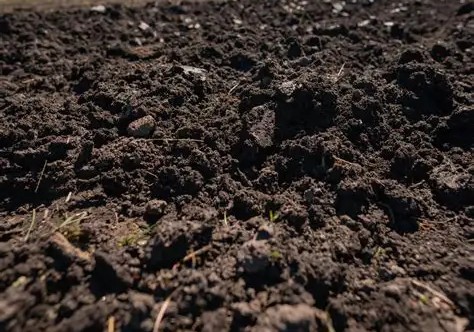

Humic Acid: The “Black Gold” for Soil Health
Humic acid is a group of complex, large organic molecules that form the stable, dark component of humus—the fully decomposed organic matter in the soil. It is often referred to as “black gold” in agriculture due to its essential role in creating fertile and healthy soil.
Simple Structure and Mechanism of Action
To explain it simply, humic acid acts like a giant magnet with a strong negative charge within the soil environment.
- Origin: High-quality Humic acid is primarily extracted from Leonardite—a soft, brown, coal-like substance that has not yet completed the coalification process but is rich in humified organic matter.
- “Net-like” Structure: Each Humic acid molecule is a large, complex structure containing numerous negatively charged functional groups (mainly Carboxyl groups).
- Chelation (Binding) Activity:
- Essential plant nutrients in the soil, such as Calcium, Magnesium, Iron, and Zinc, carry a positive electrical charge (cation).
- Humic acid uses its negative charge to tightly bind (chelate) to these positive cations.
- This binding action helps retain nutrients in the soil, preventing them from being washed away (leaching), and presents them to the plant roots in a form that is easier to absorb.
Factors Influencing Humic Acid Product Quality
Not all Humic acid products are equal. Quality is heavily dependent on the source material and the extraction methods:
- Raw Material Source:
- Leonardite: Considered the superior source because it has a high degree of oxidation, resulting in a higher density of functional groups. This maximizes chelation capacity and CEC.
- Peat: Generally has a lower Humic acid content and is more prone to impurities.
- Compost: The final product of composting also contains Humic acid, but the concentration and stability are often much lower than Leonardite-derived products.
- Humic/Fulvic Acid Ratio: A good product often has a balance. Humic Acid provides long-term soil benefits, while Fulvic Acid offers fast, highly absorbable benefits to the plant. Some high-quality products are ratio-optimized for specific applications.
Practical Benefits for Soil and Plants
Humic acid provides three core benefits, helping farmers save costs and boost productivity:
1. Soil Improvement (Physical Benefits)
- For Clay Soils: Humic acid helps break up dense clay aggregates, creating pores and spaces. This makes the soil looser and better structured, allowing for better air and water circulation and easier root penetration.
- For Sandy Soils: Humic acid acts as a natural glue, binding the loose sand particles together. This increases the sandy soil’s ability to retain water and nutrients, preventing rapid loss.
- Enhanced Water Holding: By improving soil structure, humic acid increases the soil’s capacity to hold moisture, which is crucial during dry seasons or in water-scarce regions.
2. Nutrient Efficiency (Chemical Benefits)
- Increased Uptake: Humic acid helps the plant absorb up to $60-80$ of the available nutrients in the soil, instead of the typical $20-$40 without amendment.
- Fertilizer Savings: Because Humic acid retains and enhances the effectiveness of chemical fertilizers, you can potentially reduce the total amount of fertilizer needed while maintaining or increasing yields.
- Detoxification: It can “capture” harmful heavy metals in the soil (e.g., Lead or Cadmium), reducing their toxicity to the crops.
3. Growth Stimulation (Biological Benefits)
- Stronger Roots: Humic acid directly stimulates root development, particularly the root hairs and lateral roots. A robust root system provides better anchorage and maximizes the surface area for water and nutrient absorption.
- Increased Microbial Activity: It serves as a stable carbon source (food) for beneficial soil microorganisms, encouraging them to work harder to decompose organic matter and cycle nutrients.
Humic Acid vs. Fulvic Acid
Humic Acid and Fulvic Acid are often sold together, but they differ significantly in their size and application:
| Characteristic | Humic Acid | Fulvic Acid |
| Molecular Weight | High (Large) | Low (Small) |
| Color | Dark Brown/Black | Yellow/Yellow-Brown |
| Solubility | Only dissolves well in alkaline water pH > 7.0. | Dissolves well in water at ALL pH levels (including acidic). |
| Common Use | Soil application, long-term soil structure improvement, increasing CEC. | Foliar spray (easy and quick absorption through leaves), rapid nutrient transport. |
Global Online Purchasing and Contacting Manufacturers
For purchasing high-quality Humic acid, especially in large volumes or for commercial distribution, contacting international manufacturers directly is the best way to ensure quality assurance and competitive, factory-direct pricing.
Step 1: Define Your Product Needs
- Product Form: Do you need powder, granular, or liquid Humic acid? Concentrated powder is usually the most cost-effective for international shipping.
- Source Material: The best source is generally Leonardite.
- Content Guarantee: Check the minimum guaranteed Humic acid content.
- Certifications: Look for quality certifications (e.g., ISO, organic certifications).
Step 2: Searching and Approaching Manufacturers
- Use B2B E-commerce Platforms: Major platforms or specialized chemical/agricultural trade sites are global hubs for large-scale manufacturers (especially from China, India, the US, and Canada).
- Search Keywords: Use precise English search terms:
- “Humic acid powder Leonardite”
- “Potassium Humate 80% min” (This is the most common and soluble commercial form)
- “Fulvic acid 50% min”
- Shortlist and Make Contact:
- Filter and select about $5-10$ potential suppliers.
- Send a detailed inquiry/Request for Quote: Write an email clearly stating your needs (desired quantity, e.g., ” 20-foot container”, request for a Sample, and ask for the Certificate of Analysis (COA).
- Sample Inquiry Content: “Dear [Company Name], we are a [Company/Farm] in [Your Country] interested in purchasing Potassium Humate 80% min powder sourced from Leonardite. Please send us your best quotation for 5 Metric Tons (MT), the COA and shipping costs (CIF or FOB) to [Your Nearest Port Name]. Thank you.”
- Negotiation and Sample Testing:
- Compare the prices and COA from different suppliers.
- Request Samples: Always request small samples (often free, you only pay shipping) to test yourself or send to a laboratory for independent quality verification before placing a large order.
Direct contact with the manufacturer ensures you eliminate intermediaries, get the best possible price, and receive full documentation proving the product’s origin and quality.


Leave a Reply